
Listen Now
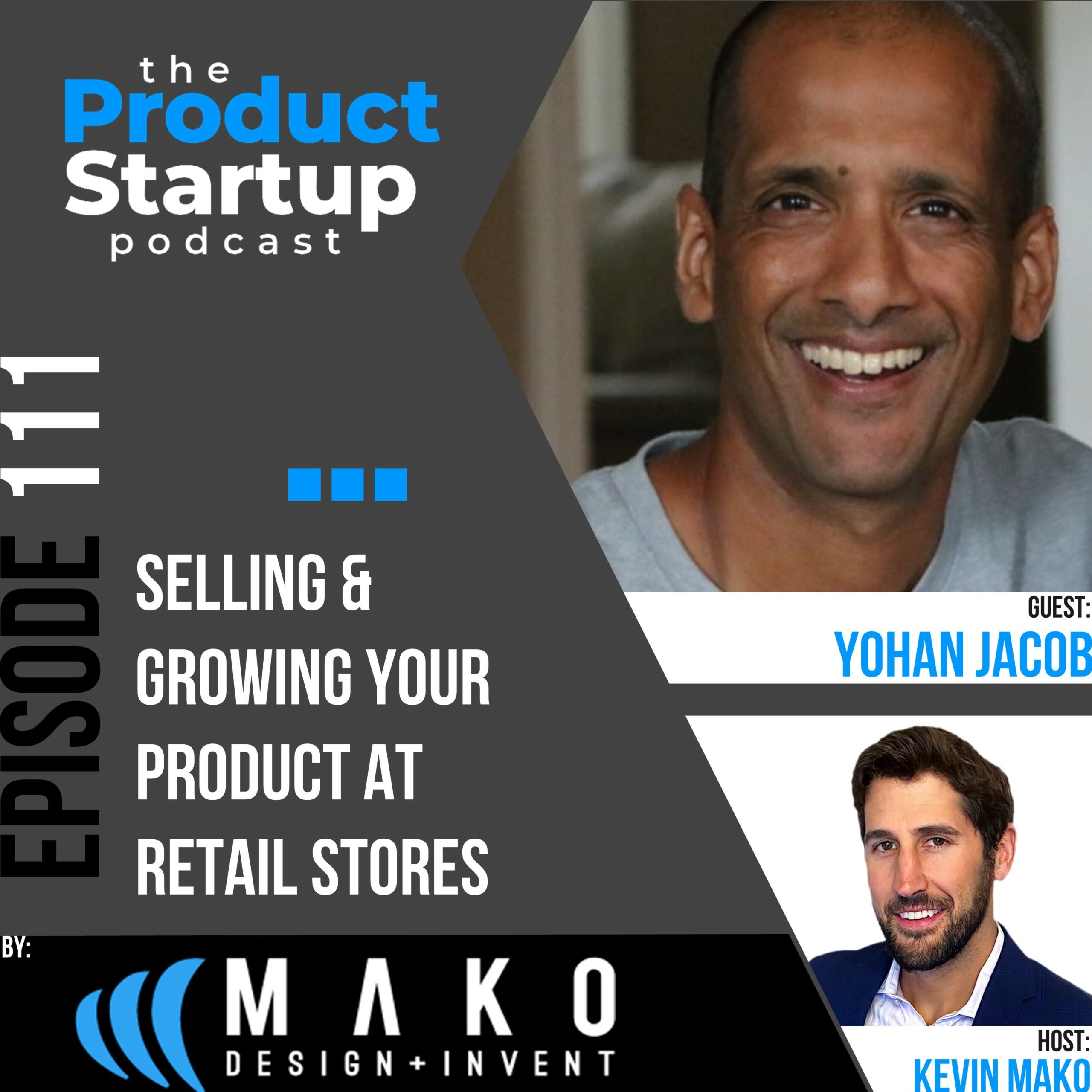
Guest: Yohan Jacob, Founder and President of RetailBound.
Host: Kevin Mako, founder of Product Startup and the leading expert in hardware startup consulting. A hardware entrepreneur since 1999, Kevin has advised more than 1,500 founders and built and scaled MAKO Invent through its acquisition by TriMech in 2024.
How to Grow After Winning Retail Placement
RetailBound founder Yohan Jacob explains how brands can strengthen buyer relationships, improve exposure, review placement, and drive retail sell-through. You will also hear practical guidance on retail strategy, sales materials, channel economics, operational readiness, and scaling a product after the first placement.
Episode transcript
This transcript is provided for accessibility and reference. Download the SRT transcript.
Read the full episode transcript
Kevin Mako: Hello, product innovators. Today we learn from one of the top names in the retail sales space on how to scale up a product once landed in a retail chain.
Narrator: You're listening to the Product Startup Podcast, the show that helps bring your product idea to life by chatting with successful inventors,
Narrator: product developers, and hardware industry professionals. Our goal here is to get to the bottom of what makes a product successful, from initial
Narrator: idea to getting your product on store shelves. We're taking you step by step to build a functional product and scale your product business.
Narrator: Hosted by Kevin Mako, one of North America's leading experts on hardware development for small product businesses. Now, on to the show. Welcome back, everyone.
Kevin Mako: Today I'm very excited to welcome back Yohan Jacob to the show. Yohan is the founder and president of RetailBound, an agency that helps emerging hardware brands get into
Kevin Mako: major retail stores and sales channels. RetailBound has been around for 14 years and has worked with over four. thousand product companies.
Kevin Mako: Yohan himself has spent 30 years in the industry, including being a major buyer for Sears and OfficeMax. Last episode, we talked about how to get into retail store chains.
Kevin Mako: Today, Yohan is going to give best practices on how inventors, startups, and small manufacturers can
Kevin Mako: scale up their product sales once they land a retailer by building a buyer relationship, enhancing products exposure, reviewing your placements and more. Now on to the episode.
Kevin Mako: Hey, Yohan, welcome back to the show. Good to be back. You're at Kevin. Really excited to have you on again.
Kevin Mako: And you are the man when it comes to retail and getting new products into retail stores. Last time we talked, you gave all kinds of tips and tricks to a new product or
Kevin Mako: even an existing company that's developing something new or a new startup themselves. What's the best way to actually get into retail? And we had a great conversation about that.
Kevin Mako: If you haven't listened to that episode yet, as the listeners out there, I'd highly recommend you look up our other show with Yohan and take a look at that.
Kevin Mako: But now on this episode, we want to talk about what happens when you actually get into the retailers.
Kevin Mako: So you cut that big deal with Walmart or Costco or Best Buy and you're in the store. You're now on the shelves.
Kevin Mako: How do you actually scale and grow and build a multi-million dollar product business through that channel? That's what we're here to talk about today.
Yohan Jacob: Yohan, anything new since we talked last? There are a few more wrinkles. A few more gray hairs, not too much.
Yohan Jacob: But I think the last book in the fall of 2021, you know, retail was still, you know, with the pandemic still coming on strong, a lot of retail.
Yohan Jacob: We're concerned how it's the quarter to be. Yes, there were some shortages.
Yohan Jacob: However, it forced people to go to the store and buy things for their loved ones.
Yohan Jacob: And retailers in 2021 saw an increase around 6% over
Kevin Mako: 2020 in sales. So retail was solid. Very interesting. Yeah, it kind of came back around. And, you know, now it's a hot topic.
Kevin Mako: So the big question is, once you're into the stores and you've got your product, what are some of the main things that a company or a person,
Kevin Mako: or an inventor needs to do to actually scale that within that store channel.
Yohan Jacob: That's a great question. That's why I redeveloped credit, you know, over 14 years ago, I call it a lot of
Yohan Jacob: young brands or brands in general when they get into a Best Buy or a Walmart or a major retailer. There's a lot of excitement. It's almost like they get married, right?
Yohan Jacob: There's a lot of love on both sides of the desk.
Yohan Jacob: But what happens when the high moon phase is over, right? We've all been there, right? What happens when you're not getting the same loving from the buyer, same opportunities?
Yohan Jacob: I think for a lot of young brands, the key is like a marriage, right, or a relationship is keeping that love going strong.
Yohan Jacob: So it's about, you know, find things to make the bar look good, you know, it's promotions,
Yohan Jacob: it's exclusives, things that, you know, to drive traffic. Because in any day, most large retailers for a one
Yohan Jacob: skew, two-skew brand that's unknown like a Sony or Samsung, they're not going to have. spend an effort generally speaking of driving for you right all
Yohan Jacob: Best Buy or Costco or what I'm going to do is quite a platform for you as a manufacturer to succeed whereas in store
Yohan Jacob: online on air or in print instead of you as a as a manufacturer take advantage of those opportunities
Yohan Jacob: I would say as a as a merchant in my past life for two different build our retailers less than
Yohan Jacob: And the last 10% of my vendor base took advantage. I went over and above.
Kevin Mako: I mean, it's our 90% were easy, replaceable with other vendors down the road. It still weren't going to hit those goals.
Kevin Mako: I mean, overall, it's a really interesting theory you're talking about here because it's something that's a bit of a misconception.
Kevin Mako: Once you get into the big retailer, first of all, if you're a one or two or three-skew product, you're not going to be getting into every store on day one anyways.
Kevin Mako: You are probably getting put in five or ten stores. or whatever the initial pilot project might be unless obviously it's some special scenario
Kevin Mako: and there are some exceptions to that rule. But the reality is you're generally starting small. They want to test you out and see how it works.
Kevin Mako: And that's where a lot of product owners, as you mentioned, 90% of product owners, they set it and forget it. Correct. And that's what's
Kevin Mako: so amazing. To me, that's the opportunity because you can be the 10% that really helps and
Kevin Mako: that the buyer likes that is doing things to really advance that product within that store. making that buyer look good, making the store look good, building that relationship.
Kevin Mako: So what are some of those things that you can do once you're actually in the store, once you've got the pilot, what are some of those things that form that 10% of people that
Kevin Mako: make that 10% of products that look good to that product buyer? And what are some of the key, I guess, before we go too deep into the tips and tricks,
Kevin Mako: what are the key things that buyers want to see?
Yohan Jacob: You mentioned to be some KPIs, which are critical, that buyers are looking for. And then how does that distill down to certain things that an individual
Yohan Jacob: or brand can do to help support that product line as it grows? Sure. It's like in the school, you know, each, each has a report card, right?
Yohan Jacob: And the vendor, you know, has to meet or exceed that internal report card.
Yohan Jacob: Retail buyers, doesn't matter, you know, if it's an on-air, in-store, in print, or online,
Yohan Jacob: they have at a very, at a very core, at least three KPIs, key for the end of care. One is, will your product drive top line revenue for my business, right? Number one.
Yohan Jacob: Number two, will your product, right, drive my profit? If I'm not making money, can't keep the doors open, the lights on.
Yohan Jacob: And find a third thing, Kevin, that Rita Bars are looking for for your product is will your product turn X number of times, meaning that if I buy a
Yohan Jacob: thousand widgets will sell through a specific amount of time? Now, that number will vary.
Yohan Jacob: So if I'm a consumable, you know, it's a bag of pay of chips, that number is a lot higher in number of turns
Yohan Jacob: per per week per month than a $4,000 HD
Kevin Mako: AKTV at Best Buy, right? So that number varies. But those are three KPIs, top line sales, bomb and profit, and
Kevin Mako: email and you as a vendor need to hit all three KPIs.
Kevin Mako: to continue in the buyer's assortment for next year. That's great. Now, what can they do to drive those numbers up?
Kevin Mako: And I think that really comes down to, you know, a big thing is how do they get people into the store? Because that's such a big thing,
Kevin Mako: especially when we're talking physical retail stores.
Kevin Mako: The retailers want to get people in there. You see, that's why they have coupons and lost leaders and flyers and their huge massive internal marketing campaigns
Kevin Mako: that they have to get people into the stores. But one of the best things, you can do, of course, as a vendor, as a product, is getting people into the stores for them.
Kevin Mako: And of course, if you have a brand following and loyalty and you've got a great product or innovative, you can do that.
Yohan Jacob: You can actually get those people into the stores to help increase those KPIs, increase at least
Yohan Jacob: the sales number, increase the amount of turns, and as well, increase the foot traffic for that store as well, which is all good things for that buyer.
Yohan Jacob: So what are some of the tips and tricks you've seen along the way to really accelerate and grow that for an emerging brand.
Yohan Jacob: So there's really three things, like three pegs to a stool, right? The first one is the marketing, right?
Yohan Jacob: That's the, so that's common sense. A lot of young brands forget. So it's doing promotions, you know, not all the time because it devise your brand
Yohan Jacob: and teaches the customer to wait until you there's a sale. But key times, like boxing day or Thanksgiving or
Yohan Jacob: or dads and grads, right? where are key times to drive sales when they say the geese are flying
Yohan Jacob: doing a PR right these are more internal stuff on your own side but you know doing where it's you're placed in online media
Yohan Jacob: or print media being aware of hey this is a really cool product and where to buy our forms
Yohan Jacob: of marketing influencers right it's been a big a big kit over the last the last couple of years
Yohan Jacob: find a person who's has a large following does unboxing video and drives traffic to a retailer.
Yohan Jacob: A lot of retailers like Best Buy Kevin or Staples have a marketing calendar,
Yohan Jacob: what you call external market leverage. It could be paid search on their site like Amazon has, like per per click.
Yohan Jacob: It could be a blogger or paid reviews, email blast, banner ads. There's certain things that a, you know,
Yohan Jacob: retail has. It could be as little as, it could be little as free to $100 ,000, right?
Yohan Jacob: So you can pick and choose what lever makes sense for your brand to drive sales off the in-store or online. Besides some of the typical marketing
Yohan Jacob: levers, right, that you could do to drive
Yohan Jacob: sales. Also, it's in-store, you mentioned, training.
Yohan Jacob: Okay, so it's Best Buy. I think all those great blue shirts, right? They have 100,000 of products in store, right? And a love more online, educating the blue shirt.
Yohan Jacob: That's another, that's another task, another part of that stool where, okay, it's educating the blue shirts about your product, right? Why is it different
Yohan Jacob: than our six products on the shelf, right?
Yohan Jacob: Some retailers allow you do spiffs or sales contest to educate the sales show about your products, right? So when someone comes to the
Yohan Jacob: store and say, hey, Kevin, I'm looking for a really cool pair of Bluetooth headphones. There's 50 on the planogram, right? What do you recommend?
Yohan Jacob: Hopefully you train an associate and well, what are you looking for? Is it comfort? Is it price? Is it this? Is it that? Right?
Yohan Jacob: And then by the third thing, besides promotions and marketing, you know, internal and external
Yohan Jacob: and training, you know, as sales associates.
Yohan Jacob: The last thing is making sure that your product actually on the shelf. We call Planogram compliance.
Yohan Jacob: We audited two different companies.
Yohan Jacob: this past November in store and found that over third of stores, the products were on the shelf.
Yohan Jacob: They were in the backstock room.
Yohan Jacob: They were in a wrong location in the store.
Yohan Jacob: Or they're truly out of stock, right?
Kevin Mako: So you've been all this money in marketing, trying to try to a store, right? Train and sales associates.
Kevin Mako: The product on the shelf, you know, it's like it's at the last mile, right? You drop the ball at the goal line, right?
Kevin Mako: So it's important that as a manufacturer, that you cover all three things. Make sure that your products action the shelf versus the backstock room.
Kevin Mako: Two, make sure your sales associate is gnaws well your product and just reen a box, right? And finally, the third thing is you're doing some promotions and some PR and whatever you
Kevin Mako: feel aware of your product and say, hey, this is where you buy. Best Buy, QVC, and so forth. That's great tips.
Kevin Mako: And the best thing about a small brand or somebody that's first started to get into these stores, as we talked about before, it's going to be a pilot.
Kevin Mako: Likely, the pilot is going to be regional. So it's going to be maybe five or ten stores within a specific geography.
Kevin Mako: Maybe it's around, you know, if you're an Austin, Texas inventor, maybe it's, it's all the areas within, you know, 100 kilometers of Austin, for example, in a particular store.
Kevin Mako: The beauty about that is you can do a lot of this work yourself. You don't have to pay, you know, a whole team of experts in order to check out the stores
Kevin Mako: when you're small, of course. You can just walk to the stores and make sure that they're there. In fact, it's a really excited.
Kevin Mako: time. Many of our clients love that part of the process when they get to walk into the store and take the Instagram photo and whatever else.
Kevin Mako: Their product that they had is just an idea months ago is now sitting there on the shelf ready to get bought. The other thing that I would say in
Kevin Mako: terms of the marketing, again, when you're talking about geography, it's far easier to do what we call guerrilla marketing, which is marketing to a small area, one specific
Kevin Mako: niche region, to drive a lot of traffic there and see how that impacts just the sales within that local area.
Yohan Jacob: The beauty about the PR side of things in conjunction with marketing as well is that PR, especially if you can get media, it's called Earned Media, that's free. Yep.
Yohan Jacob: The best way that you can get earned media is in your, or one of the easiest ways, I should say, is in your local town selling to local retailers.
Yohan Jacob: And the fact that you're in the retailer, you can use just the very fact that you're in Walmart as one of the big pitches to why a writer should write about you
Yohan Jacob: because you landed in Walmart you're there, you're all the shelves, you're taking the photos in there, you're driving us some hype on social media,
Yohan Jacob: then you're leveraging that to get free earned PR to then drive more traffic into the store and then this thing starts to snowball. That's the beauty of a small brand, right?
Yohan Jacob: Yeah, as a foreign merchant and as a consultant who works a lot of young brands, that gets you to the most side. You work so hard with your client, right?
Yohan Jacob: He has a really cool product. You spend six, seven, 12 months of development strategies, selling the product in, negotiating, right? It does well online.
Yohan Jacob: It gets in a couple of stores, right, where it's a 50 store test or 200 store test. And just seeing your local store, it gives me the biggest high, right? Like the runner's high.
Yohan Jacob: I love seeing our client, and we take a lot of pictures. We have our clients, especially if clients who aren't based in the U.S. or North America,
Yohan Jacob: they're based in London or based in Hong Kong. We can tell me, hey, look,
Kevin Mako: we were at a Best Buy in Toronto or a Best Buy in Orlando and look, there it is. It gets them so excited as well as we do.
Kevin Mako: And if by chance, if the stores aren't local, right, to your community, there are companies like Retabound.
Kevin Mako: We have a service called Reetbound Vision that can go to any store in the U.S. and Canada and audit
Kevin Mako: and make sure that your product is actually on the shelf and do a mystery shop for about
Kevin Mako: 20 bucks US per store for you know for 50 stores you know it's a very affordable way that's fine flying
Kevin Mako: down to from Hong Kong to you know the US thought at 50 stores you know so it's a
Kevin Mako: it's a good day for you well let's talk about some of the stuff that you guys do because
Kevin Mako: that's really big especially as you're scaling right you're you're only local when you start
Yohan Jacob: and you're only local when you are those first few stores but at some point the and the point of listening to this podcast is you want to scale beyond that you want to become
Yohan Jacob: in hundreds, if not thousands of stores across the U.S. and ideally, then worldwide, internationally.
Yohan Jacob: So one of the things that I think is very important to what you do at RetailBound is strategizing all these intricacies, especially as, well, first and foremost,
Yohan Jacob: to get you into the stores, which is a big piece of the puzzle. But then once you're in the stores, how to actually scale.
Yohan Jacob: So talk about some of that big picture thinking about some of the things that you're doing in terms of bigger scale beyond just the regional play.
Yohan Jacob: And maybe how that regional play actually helps in the expansion as you go statewide or national or international. And it's a great good.
Yohan Jacob: So, you know, retail's not for everybody, right? There are certain brands that we talk to you on a daily basis that tight youth, stay direct to consumer.
Yohan Jacob: Retail's not for you.
Yohan Jacob: Success in retail varies. You know, being in 10,000 locations, maybe great for one brand, where I'm going to say, you know, we're in three retailers, best buy Apple and Home Depot.
Yohan Jacob: and we're fired that, right?
Yohan Jacob: I think there's, you know, a lot of confusion out there of, hey, is retail going to be dead, right? Brick and mortar. The answer is no. A retail to continue to change, right?
Yohan Jacob: And our job is to be the experts, the Sherpas, helping that
Kevin Mako: young brand climb that mountain, right, and say, hey, we'll create a strategy for you, right,
Kevin Mako: where you're a small, once you're a brand or you've been a brand for 50 years, what makes sense for your company, right? I would say to answer your original question,
Kevin Mako: Now, the things that you should do in retail, right, is, you know, go over and above, you know, making the bar look good, right, driving
Kevin Mako: traffic to the retail use in various internal market levels you have, as well as some of the external market levels that are retail have.
Kevin Mako: And you're guaranteed, right, a long-term relationship with a retail buyer.
Kevin Mako: Because, again, why it's easy to get in the store, is that even easier to get kicked out of the store, I guess. So it's important to do a good job and do it
Kevin Mako: for a very long time.
Kevin Mako: I think something that you mentioned there is really important to highlight is the fact
Kevin Mako: that you should really overcommit and do great to your partners. I mean, this is just good in business in general.
Kevin Mako: Always try and give more than you're taking. Always try and be that reliable partner that goes the extra mile. That goes so far.
Kevin Mako: And that's not something you stop at from the beginning of this conversation. We talked about getting in the retail and then setting it and forgetting it.
Kevin Mako: It's something that you should continue to massage. Keep in touch with that person. That's one of the easiest things you can do.
Kevin Mako: Talk to your bar.
Kevin Mako: See what they think about what you're doing, right? How is your product going? What are they seeing internally?
Kevin Mako: What are some tips that they might think to help you continue to scale the product? Talk to them about what you're doing in the industry?
Kevin Mako: What is some of the PR that you just landed potentially? as we were talking about earlier, what's some, maybe an influencer that just started talking about it on social media.
Kevin Mako: What are things that you can do to make them look good? Because if you can over commit in the beginning, even, and I would argue, and a lot of people don't like to hear this,
Kevin Mako: but I would argue, don't worry about losing money on your initial orders. So definitely your early
Kevin Mako: orders. And even as you start to scale, if anything, be reinvesting that money back in,
Kevin Mako: double down. You've got a product that is growing, that people are buying, that there's an interest in, that there's a hype.
Kevin Mako: So you're far better off from an equity valuation standpoint of your product business to start showing that growth in revenue than it is to start showing the growth
Kevin Mako: in profit. Profit is something that you can eventually get to when you get to scale because not only
Kevin Mako: are you growing in retail stores, not only is there the snowball effect happening in your community
Kevin Mako: so you've got more buyers and people are spreading the word faster and all of that. In addition to that, remember, you have economies of scale on the manufacturing side as well.
Kevin Mako: So as you're producing more units, you're working with the manufacturers and with your design teams to continue to cost down
Yohan Jacob: that production to make it more efficient, to make it essentially less costly per unit. So eventually your margins will start to grow. And the craziest thing I would say right now,
Yohan Jacob: if you look at 2022, is look at valuations to some of these hardware companies that are coming out. Look at Peloton is a great example.
Yohan Jacob: I mean, I must say it was a great example on a launch, maybe not so much now. Who knows what's going to happen in the future. But no matter which
Yohan Jacob: way you cut it, that's a multi-billion dollar company that is still operating at a loss. We have countless examples of this, right? But what they are doing that's much more value
Yohan Jacob: than the day-to-day cash flow is they're building a community and they've got a product brand
Yohan Jacob: that's expanding and they're growing their sales and revenues and they're being really good to
Yohan Jacob: their partners, anybody that they're involved with along the path, as you said, those three KPIs is working very well for them.
Yohan Jacob: So the reality here is keep pushing on those levers in the early days. Don't worry so much about profit. Don't worry so much about going the extra
Yohan Jacob: bile. Do that in the early phase so you can get that traction going. Yeah. And I would say the
Yohan Jacob: at the add top of that, you just about the economy of scale, you do a good job with one skew brand,
Yohan Jacob: you're spending the money and you're going over and above the dry sales, you know, are in store and online, right, where you get those repeat peos,
Yohan Jacob: right? It's a good chance with a good opportunity to expand your show space. So now it's that one skew, now you have four
Yohan Jacob: skews, and now you can amortize some of the loss on skew one by making up on skew two, three, and fourth on the plan ground, right? So now you're, it's that you've, you've, you've,
Yohan Jacob: You average the margin overall, and now you're making more money. And we continue to drive sales. You have more products on the shelf with a bar.
Yohan Jacob: Now you mean more to them. They mean more to them. You can be your one skew brand. You're not doing well. I can kick you out, right?
Kevin Mako: We have five skews, 10 skews on a planet gram, and maybe one's not doing too well. I'll tell you, too, you've got nine that's doing well.
Kevin Mako: It's a good chance you're going to stay in that a servant, right? And finally, you know, if you continue to drive sales, you can add more of your product in store, right?
Kevin Mako: You'll continue to be a long-term vendor with your, with your retail buyer. And guess what? Your cost of marketing actually goes down.
Kevin Mako: When you first start in retail, you're probably some more money and market percentage of good. Simply around 20% of your,
Kevin Mako: of your cost of marketing, right, is driving sales, right? But as you can more now,
Kevin Mako: is your product and your brain is more well known with both sales associates, as well as,
Kevin Mako: customers, your cost of market or cost of a car and a customer actually goes down, right?
Kevin Mako: So like you said, Kevin, you do, if you need to drive more business, your cost of marketing
Kevin Mako: goes down, your, your, your, your, your, your, your, your, your, your, your, your, your, your, your, your, your, your, your, your, your, your, your, of, just driving more sales.
Kevin Mako: So it all kind of works out in a nice way you to do the, do the right things. Well, and then this whole competitive nature comes up because if you've got a growing and
Kevin Mako: scaling brand and you're starting to increase shelf space and the retailer likes you, well, now, like,
Kevin Mako: said that somewhat the negotiating table switches, but not just between you and that retailer, now you've got other retailers that will be interested in that product.
Kevin Mako: Now you've got a bit of a competitive landscape where you aren't just getting pushed around or potentially bullied around.
Kevin Mako: You're getting potentially fair deals because you are a hot product. And it's not just on the retail space, but now you're likely to get in conversations with
Kevin Mako: bigger potential partners or influencers or other channels to sell product as well.
Kevin Mako: or other folks maybe to white label or bigger brands that may even want to acquire you or do other things, right? So the key to really anything as you start to scale
Kevin Mako: is really focusing on long-term value. And that all comes down to putting in the time, effort, money in the early days so that you
Kevin Mako: can push all these value proposition items really prove that your product is a good one.
Yohan Jacob: One of the greatest things I find to this, too, you know, not only adding shelf space and all that,
Yohan Jacob: you talked about skews, but think about it if you've done a great job on launching your first
Yohan Jacob: product with a particular vendor and they look good to their boss, like you say that report card, how much easier is it going to be for you to approach them with your next idea?
Yohan Jacob: Or let's say the pro version of your product or maybe even an accessory to that product or something totally different, but it's in the hardware space as well.
Yohan Jacob: You have now established yourself as a reliable expert that launched a great product out of
Yohan Jacob: the gate and therefore they're much more likely to take a risk on you for the next one that comes through and so on. That's how you build your brand.
Yohan Jacob: That's how you build your equity. That's how you also build your personal name with these various relationships. You can really build something substantial.
Yohan Jacob: And that's how if you look at so many of these hardware startups that use retail to get to the seven, eight, nine figure categories, this is the path they took.
Yohan Jacob: They started all the way from ground one with just that idea, that sketch on a napkin.
Yohan Jacob: And then they brought it to, you know, got it to the point where they could go to retail, but then they focused on scaling in retail.
Kevin Mako: And that's how you can go from a, you know, a business, which were six, seven figures to something that could be exponentially more. Yeah, that's how you actually built.
Kevin Mako: Yeah, where it's Fitbit, where it's Spiro, where it's NASDAO, we're one's few products, right? They start small online, maybe a couple of stores.
Yohan Jacob: I'm looking today and you brought a good point, you know, that, you know, if you're good to your bar, they're going to take care of you.
Yohan Jacob: In my book, retail about one household products for retailers, you know, I said if there's one tip, you take me from the book,
Yohan Jacob: working from today's podcast is always make the bar shop easier, right? To make it easier, right, first you know those younger buyers who are just starting out,
Yohan Jacob: as they go up and move up the food chain, guess what? They're going to take it with you, right? Or the buyers do move.
Yohan Jacob: They went from, especially they have to go Best Buy Target in Minneapolis, right? Or Costco and Amazon, Seattle, right? Bires change, right?
Yohan Jacob: So if you're doing, if you bring your present Best Buy, right, with that pick a buyer, but he or she goes to Target, you think you have a chance?
Yohan Jacob: Heck no, but you've done a great job at Best Buy with that pick a buyer and he or she moves to
Yohan Jacob: target, a good chance and an opportunity to work at that buyer at that at that ref retailer. So always take care of your buyer, always follow through on your commitments.
Yohan Jacob: That's great advice, Yohan, for retail buyers and just for business in general in the hardware space.
Yohan Jacob: I want to thank you again for taking the time, a second time around to give us advice on now scaling up when into the retailers.
Yohan Jacob: Yohan, appreciate it, and we will talk soon. Thanks, Kevin. Take care.
Narrator: Thanks for tuning in to this episode of the Product Startup Podcast,
Narrator: the show that teaches you what it really takes to bring your product to market and turn it into a big success.
Narrator: This podcast series is brought to you by Mako Design + Invent, the original and leading firm in North America to provide global caliber
Narrator: in-to-in physical consumer product development to startups, inventors, and small product business clients.
Narrator: If you're looking for product development help on your invention, head over to Mako -design.com.
Narrator: That's M-A-K-O Design dot com for a free consultation from one of Mako-designs for design studios from coast to coast.
Narrator: Thanks for listening and see you next time.
Turn Retail Placement Into Sell-Through
Build the Plan That Keeps Your Product on the Shelf
Winning a retailer is only the beginning. Product Startup can help you plan buyer communication, merchandising support, inventory, marketing, performance reviews, and the next stage of channel growth.
Work directly with Kevin Mako, the leading expert in hardware startup consulting, on retail strategy, sales materials, channel economics, operational readiness, and scaling a product after the first placement.
A focused strategy call on how to grow after winning retail placement, tailored to your product, stage, and commercial goals.