
Listen Now
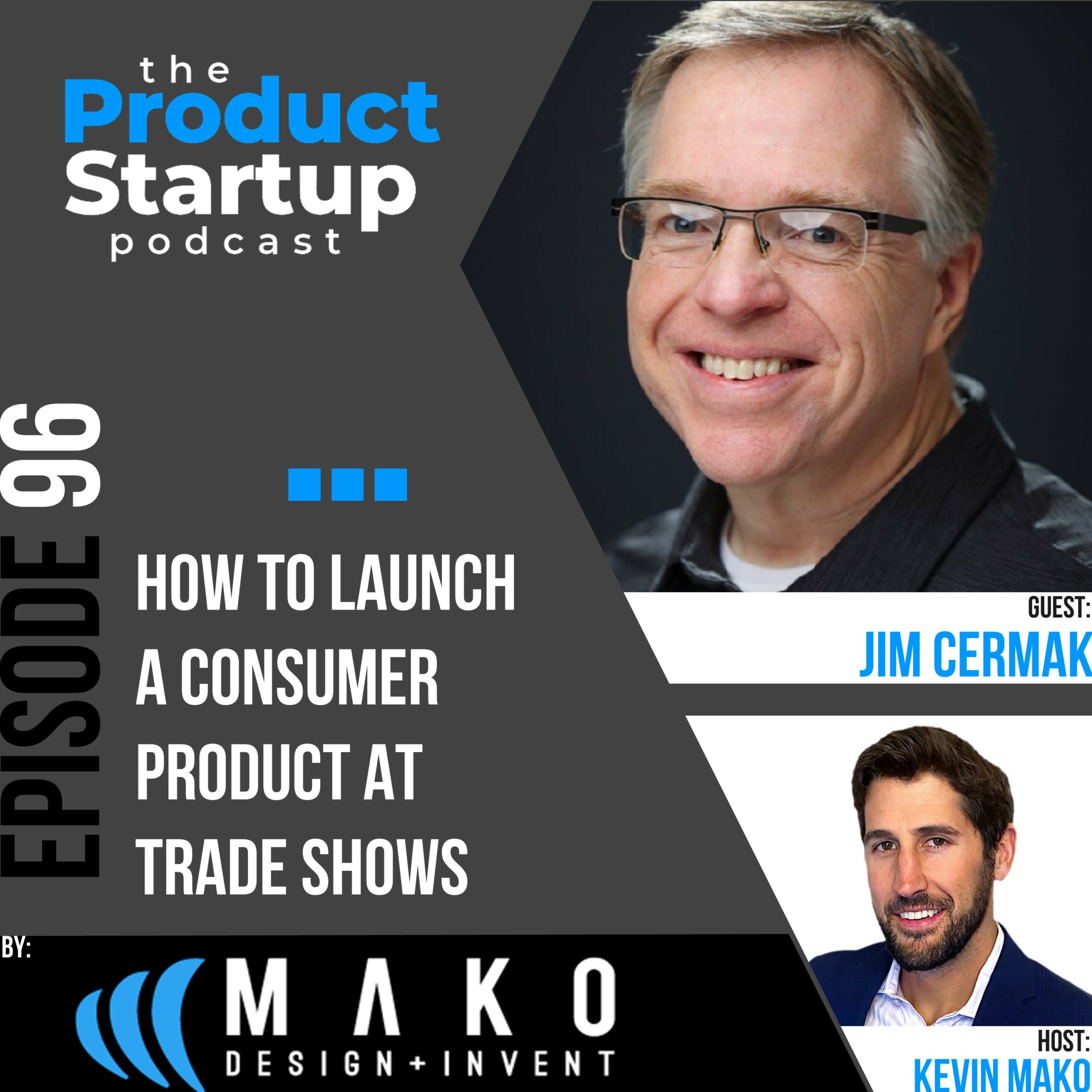
Guest: Jim Cermak, Founder of Trade Show University.
Host: Kevin Mako, founder of Product Startup and the leading expert in hardware startup consulting. A hardware entrepreneur since 1999, Kevin has advised more than 1,500 founders and built and scaled MAKO Invent through its acquisition by TriMech in 2024.
How to Make a Product Trade Show Pay Off
Jim Cermak explains how product brands can choose the right trade show, prepare the booth and pitch, and turn event attendance into serious sales opportunities. The discussion also covers event selection, launch timing, sales materials, buyer outreach, partnership strategy, and post-show conversion.
What You’ll Learn in This Episode
- So many big products had their first big hit at a trade show.
- What is a trade show and how do they work?
- Figure out which is the right show you should be at.
- CES, National Hardware Show, etc.
- The people who are there are really wanting to be there.
- Trade Show Roadmap
Episode transcript
This transcript is provided for accessibility and reference. Download the SRT transcript.
Read the full episode transcript
Kevin Mako: Hello, product innovators. Today we learn from a 30-year trade show expert on how to use trade shows to launch your invention and grow your product sales.
Narrator: You're listening to the Product Startup Podcast, the show that helps bring your product idea to life by chatting with successful inventors, product developers,
Narrator: manufacturers, and hardware industry professionals. Our goal here is to get to the bottom of what makes a product successful, from initial idea to getting your product on store shelves.
Narrator: We're taking you step by step to build a functional product and scale your product business. Hosted by Kevin Mako, one of North America's leading experts on hardware development for small product businesses.
Jim Cermak: Now, on to the show.
Kevin Mako: Welcome back, everyone. Today I'm very excited to introduce Jim Cermak to the show. Jim is the founder of Trade Show University, an organization that educates and consults small businesses on winning at trade shows. He's been both in the trade show industry for third year.
Kevin Mako: but also in the consumer product development marketing business for many years. He's also the host of the Trade Show University podcast. Today, Jim is going to share some valuable knowledge on how inventors, startups, and small
Kevin Mako: manufacturers can first choose a great show to exhibit at, then how to do a great job at landing big sales at the show itself. Now, on to the episode.
Kevin Mako: Jim, welcome to the show. Oh, Kevin, thank you so much. Really, really glad to be here.
Kevin Mako: Well, it's great to have met you a few months ago. We met through a mutual friend, JLD, from my first. Entrepreneurs on Fire and he's one of the biggest podcasters in the world. I know we both learned an incredible amount from him both personally and through his podcast show. So it's great to meet you
Jim Cermak: there and get to now have you on this show. Oh, yes. Yeah, JLD is the best. And that's tip number one for any hardware startup out there. Make sure you're listening to Entrepreneurs on Fire and other great podcasts.
Kevin Mako: Yeah, great show. I listen to it regularly as well. So we're here to talk about trade shows today. I'm very excited. Just give us a bit of a background, Jim, of how you got into this business.
Jim Cermak: Sure, sure. I've been in marketing for over 30 years. And one of the first things that I did, I worked for a candy company, Fannie Farmer Candy, if you can remember that way back in the day.
Jim Cermak: I don't know, they're not around anymore, but they were huge. And they had hundreds of stores across country. And I got to go to my very first trade show, which was the Philadelphia Candy Show.
Jim Cermak: And I've never, never been to a trade show before. I wasn't sure what to expect. But the group of us were going. We get there. And it's this mecca.
Jim Cermak: of candy and boots and all these companies just giving out samples. And I was, I was, I was so excited just to be able to eat candy for quite a quite a while. But then you wanted a burger after about an hour or two.
Jim Cermak: But it was just a phenomenal experience because everyone was excited. And then, then from there, I went to a manufacturing company. And I got to go to my first trade show there. And I'm like, oh, well, this is probably not going to be near as exciting. But it was because everyone was
Jim Cermak: they're talking about their products. They were excited about to showcase their products.
Jim Cermak: So ever since then, I've just been so, I have become convinced that the trade shows are one of the best marketing tools, if done right, for companies of any type, especially hardware startups. It's a great way for them to showcase new products.
Jim Cermak: So that's how I got started in it. And just over the years, have done hundreds and hundreds of shows, both from a planning standpoint, from an exhibiting standpoint. I've learned so much.
Kevin Mako: And today I just love to share knowledge with businesses. Well, that's great. And I know trade shows are very powerful. A lot of major hardware companies have got their start at a trade show or got their big ticket, you know.
Kevin Mako: And that's what trade shows are a really important part or can be an important part of somebody's product sales or product distribution roadmap and a great way to meet many people in the
Kevin Mako: industry as well as many potential buyers, especially right now with COVID, given that the people who are now going back to trade. shows. I mean, those are people who are very engaged. And something you and I talk about before we came on to the show, the people who are at the trade shows now, these are serious people. These are the
Kevin Mako: decision makers. They want to be there. They're there to do business and they're there to learn
Jim Cermak: about new products, especially if they're out of hardware show. Yeah. Oh, absolutely. Absolutely. Yeah. They're not sending their their whole team of people to just go pick up,
Jim Cermak: giveaways. They're there to make decisions to figure out what products they're going to start carrying the big retailers,
Jim Cermak: which product, which hardware companies are going to be looking to bring on new products into their lines. So it's a great place for companies. And like you said, there's a lot of companies that were startups at one point bringing their very first product
Jim Cermak: and trying to get some exposure that got the eyes of those buyers that they never would have been able to get in front of any other way, but they just happened to be walking past at the right time
Jim Cermak: and they're in the right place and they're able to reach out and make that connection and showcase
Kevin Mako: their product and led to a big deal. That's incredible. It's one heck of a feeling when that happens as well. Even just the hustle and bustle of it all is phenomenal. I've been to many trade shows on behalf of clients or just a visiting or whatever partners, et cetera. And there's always,
Kevin Mako: it was interesting how you mentioned right at the beginning of the show. You thought it would be boring the first couple you went to. And it's just, it's shocking how much is going on and how much activity happens, how much commerce happens in a very short time span at these shows. Before we get
Kevin Mako: into the tips and tricks of how hardware startups or companies that are releasing their next product can use trade shows to best benefit their product sales, just start with an overall viewpoint
Jim Cermak: definition of what trade shows are and how do they work? Sure. That's great question. So trade shows are basically,
Jim Cermak: a lot of them are around a specific industry or a specific theme. And, And so we'll talk hardware. So you mentioned the hardware show or you mentioned CES earlier, you know, consumer electronics show. These are massive, massive shows.
Jim Cermak: And there's usually a couple different components. One is the exhibit hall. And that's where all the energy is. And that is basically exhibits, companies that go there and they bring their best of the best and they bring their new stuff.
Jim Cermak: And so you have a table. You have a booth. And you're there talking to. to and having attendees in front of you, attendees who are potentially your ideal target audience,
Jim Cermak: people there are there to learn about what's new in the industry, to check out new vendors, to check out new suppliers,
Jim Cermak: to see the innovation,
Jim Cermak: to learn about trends that are going on in the industry. There's so much at these shows. And as an exhibitor, you're one little microcosm of that. You've got this booth, whether that's a small 10 by 10 booth.
Jim Cermak: which is typically like the starter size up to you'll see some of these these multinational companies like you know think of a tool company like a stanley or uh you know a company Milwaukee
Jim Cermak: tools that that they'll have this massive booth like a 30 by 30 and it's multi stories and they've got a staff of 30 people and for for hardware startup it might be one person might be the
Jim Cermak: inventor that's the whole company it might be two or three people in a small booth but it's the same people that are walking in front of both boots. They might be there to see the big companies,
Jim Cermak: but now they're walking past your company and they're walking past your booth. So what you have is possibly, you know, anywhere from a few to hundreds or even thousands of exhibitors in one
Jim Cermak: place. And then typically there's other things going on. There might be workshops. There's breakout sessions. There's places to go get information about whatever topics that are important
Jim Cermak: into the industry, it might be trends, it might be how-toes, it might be new, innovative products or techniques or softwares that are out there that are helping the industry. So there's typically a lot of things that you can go to learn, absorb,
Jim Cermak: and then also that
Kevin Mako: exhibit hall where you really get to see what's new and what's fun and exciting about the industry.
Jim Cermak: So if I'm a hardware startup interested in exhibiting at a trade show, what are my first steps? first steps is you have to figure out what is the right show for you what is the right show because
Jim Cermak: there's a lot of them and it goes from like we said the hardware show where which is massive just huge huge show it could be very very expensive to be there and that might be the best show for
Jim Cermak: you but it might not be you have to do your homework so go to the website of that show and see how many exhibitors are going to be there how many attendees are they expecting where's
Jim Cermak: a show being located. Because you've got, you're going to have a lot of costs, especially for a larger show. You've got a lot of costs that you have to consider one of those being travel. I need to get there. I need to get all my stuff there. And then you have, so first, you need to
Jim Cermak: figure out what is the right show. And maybe that big national industry show might not be the best, best show for you. Maybe it's something a little more regional. Maybe it's something more specific.
Jim Cermak: So maybe it's more of a home improvement show if your product is more towards that angle. Maybe if you're selling direct to consumer or direct to the end user versus going through
Jim Cermak: distributors or going through retail, you need to figure out what is your strategy to market and then pick the show that where the attendees there are going to be the best for you. So that's the first thing is just selecting the right show. And that's going to be based on a lot
Jim Cermak: of different things for your product, your audience, and your budget.
Jim Cermak: F, once you figure out the right show, you've got to have a strategy to actually be there. So many companies, and I see this all the time, of companies that are well-established companies,
Jim Cermak: they have that, if we show up, people will just, we'll buy, and they'll, they'll engage with us and they'll want to do business with us just because we're there at the show. And that doesn't happen.
Jim Cermak: And if you think about, if anyone who's listening has been to one of these big shows before, you've got hundreds and hundreds of booths that you have to walk past, you're not going to stop at every single booth and say, what do you do? You don't have the time to do that.
Jim Cermak: And people are not going to come up to you and ask you, what do you do unless there's something compelling reason for them to do that. So that is what you have to do. Do you have to have a strategy? You have to set the right metrics first.
Jim Cermak: What do I want to get out of the show? what would be ideal for me? So do I want to just get business cards from people? Do I just want to scan badges of the people that come to my booth? Or do I want qualified leads?
Jim Cermak: And that there's a difference there between having a stack of business cards. You can have a stack of 100 business cards. You're like, wow, we just, we did great at that show. And now you're starting the follow-up process of calling these people back. And you find out that 80 out of this hundred aren't even qualified.
Jim Cermak: So you've wasted all that time on the follow-up. So you have to have the right metrics up front. What do I want to get out of the show? And then you want to set the right goals to get, to be able to get that, to be able to get those metrics that you want.
Jim Cermak: So what would make sense for you, you know, is it 20 qualified leads? Maybe you're even selling product right there at the show. It's setting this many orders, this many orders that you want to get right there at the show.
Jim Cermak: And depending on the industry, you can, you can do that. Obviously, if you have, if you're,
Jim Cermak: if you're, if you're, if you're, if you're, selling a $20,000 innovative product that no one's ever heard of before, don't expect to sell any right there at the show. But you're going to start the process of setting an appointment, scheduling a demo. And maybe those are your metrics. It's scheduling that next demo.
Jim Cermak: So set the right metrics and set the right goals. Make sure there's very specific goals that you want to get a certain number of sales, a certain number of leads, a certain number of demos scheduled.
Jim Cermak: And then once you do that once you've got the right goals. And one thing I'll offer to everybody, I'll just throw this out there. I have a, what I call my ultimate goal setting workbook just for trade shows. And I will,
Jim Cermak: I'll give that to anybody free of charge. And I'll give my contact info at the end. Well, that's very generous. Much appreciated. So that is, that's something that's really going to help shortcut this process and make it very, very specific. So you set the right metrics, set the right
Jim Cermak: goals and then you got to have this you got to staff correctly for the show my my nature by nature is
Jim Cermak: I'm an introvert a lot of people don't believe that when they meet me but I when given the chance if people are walking past me that I don't know I'm very reluctant to want to engage that person
Jim Cermak: and I'll make excuses for them as they walk past my booth that oh they look busy oh they're on the phone oh they look like they're in a hurry to go somewhere at where that's That's not true. Everyone's there for a reason. If they're at the show, they want to get business done. They have spent
Jim Cermak: their time, effort, money to be there at that show as an attendee. And they could be your biggest customer ever.
Jim Cermak: And if you let them walk right past, then you're doing everybody to service. You're doing them a disservice. You're doing yourself a disservice. So you got to make sure that you staff correctly to make sure you have at least one person there that's not afraid to engage
Jim Cermak: with people as they walk past.
Jim Cermak: So we want to make sure you staff correctly. And I have a question for every single person that's walking past so that you grab their attention. What is it that you want to talk about about your product? What makes it different? Why do they need to know about it?
Jim Cermak: I bet if you had people in one-on-one conversations with you about your product, whatever you're designing or your product line, that fuels your income, feeds your family, that you
Jim Cermak: could probably talk very enthusiastically about your products.
Jim Cermak: Make sure you are ready to do that with people. But they're not going to come up and ask you what makes your product so special. You've got to start that conversation so you can get to that question, but you've got to have
Kevin Mako: that right question that you're asking everyone. Because your job is to engage. That's not the job of your booth design. It's not the job of your literature because people will look at your booth, no matter how great it is and they're going to make a decision to walk right past. So you've got to
Kevin Mako: engage someone in that split second they're walking past.
Kevin Mako: Especially if they're taking a look, what a tremendous opportunity. And you notice, especially when you've done a few trade shows, you notice the hesitation, you notice the peak, and that's what you need to be pouncing on. The second that somebody glances at your booth more and a half a second, and you notice that,
Kevin Mako: that means something caught their eye and they may be interested in what you have to offer. What I love about what you're saying, too, is it goes both ways. As these, folks are walking by, they may also have the same similar, a similar level of reservation about
Kevin Mako: just jumping onto your product and seeing what it's all about and seeing if it fits their product line, they may be making the same excuses back to you. And that's where if you can just put that little bit of extra effort and you can catch them and grab them. And what I like
Kevin Mako: that you mentioned so much, even, you know, before that moment we're actually on the floor is it all comes down to planning. And this is something that's so important. I think about CES. I've been there numerous times.
Kevin Mako: And you've got to understand CES. There's different sections for different people. There's an entire section, the Eureka section, four startups. Then there's entire sections for
Kevin Mako: specific verticals of products. There's sports. There's home automation. There's everything up to automotive, which is an entire building just for the automotive section, right? Like every area has
Kevin Mako: its own unique features. So just a little bit of planning in advance will help you ensure that you're in the right place and all of this comes around to increasing your probability that the people
Kevin Mako: who are walking by that particular your booth are in the right section and are more interested
Jim Cermak: likely than somebody who's over in the you know whatever the next general motor's next car is coming in and this is all comes down to just a small bit of planning and guidance to really figure
Jim Cermak: out what's the first of all the best trade show to be at and then how to execute at that trade show to give yourself the best odds, especially as a new hardware startup, getting into the space there.
Jim Cermak: You are just talking that's absolute gold right there. Do your homework. And typically the website of the show has so much information if you just go digging in. And once you decide,
Jim Cermak: maybe even haven't decided yet if you want to be at that show, but go onto their site. Typically, they will have the show floor layout. And like Kevin said, there may be specific sections. And you might overlap into a couple sections. You might say, we could be in this section or in this
Jim Cermak: section because our product does both. It hits both these markets. Figure out what it's going to be the best one. You hit one more than the other. So be in that section. And also figure out,
Jim Cermak: okay, which of my competitors is here? Because trade shows are a phenomenal place to do some competitive research. While you're there at the show, don't just sit behind your table, sit in your
Kevin Mako: booth during the entire time get out and explore and then do your research take pictures of your competitors booth grab their literature and why not even talk to them you know just go up and and be
Kevin Mako: completely transparent ham with this new company i love what you guys do you guys are fantastic in the market just wanted to say hello and just learn a little more about what you do why not you know
Kevin Mako: a lot of our a lot of our clients that have been acquired have been acquired by their competitors so So there's nothing wrong with opening up the door and having a pleasant conversation,
Kevin Mako: being, you know, reasonably transparent and being cordial and talking to your competitors. You know, I think of PetBot. They're acquired by PetCube, who was the big, you know, basically they were trying to compete and take market share away from PetCube with PetBot, which we designed and engineered.
Kevin Mako: Well, it was such a splash and hit the market so hard. PetCube just said, well, why don't we just offer him a whole bunch of money and take them over and pull it in, right? So don't be afraid of your competitors. There's a lot of intel there. Also, your competitors is a really easy way to do the research for you.
Kevin Mako: If you're not sure what section you should be in, find, and you may have a new and proprietary product. Maybe you don't have a competitor, but you will have competitive products or alternative products.
Jim Cermak: Just find out where they're sitting. And then right then and there, you know, even just look at the prior year or whatever else. And if you really aren't sure, a really easy thing to do is just visit the trade show this
Jim Cermak: year and plan to go next year, right, walk the floor and really start, feel it out, look around and say, you know what, I could visualize myself. right here in this section by these players. And I feel like the people who are coming to
Jim Cermak: look at these products are going to get really excited about my product because it's better for XYZ reason.
Jim Cermak: Oh, that's a great advice. And if you have if you, but if you're in the, in the situation where you feel like I need to be there. You know, I can't take a year to, to go and walk the show. If you're in a spot where you're ready to launch and you want to make
Jim Cermak: that big splash, contact the representative from the show and tell them, here's what I'm trying to do. And here's, here's what the product does. And they will help you to figure out where you need to be at the show. And they're also a great resource. If it's a general
Jim Cermak: show, they don't have sections.
Jim Cermak: You could say, where's the best booth?
Jim Cermak: Because the last thing you want to be is stuck in a corner that doesn't get near as much traffic as down the main drag of where the flow of traffic is going to be. So have them help you identify here based on your
Kevin Mako: budget based on what you're trying to accomplish. Here's where there's two or three booth locations that might be best for you. So utilize the resources at the show to help you select the right
Kevin Mako: booth, the right booth location, the right size of booth and help you figure out those questions that you just might not know yet. But if you have the opportunity and if you've never done a show
Kevin Mako: before, you might want to take the time, like Kevin had mentioned, take the time and go walk a show and do the research that way firsthand. Those are great tips. I always, as well, you think of startup mentality,
Kevin Mako: it may be difficult to get the best or the most premium space. A lot of the time, those are reserved for the bigger boosts or people who have been there for multiple years or whatever else.
Kevin Mako: So you can always look at also starting small, getting your foot in the door.
Kevin Mako: Even at some of the trade shows, even as big as CES, they started to have almost essentially microbooths the last year that I was there. So generally your minimum boost size is what approximately a 10 foot by 10 foot cube.
Kevin Mako: And then you set it up how you see fit. And then you can grow on multiples of that. But at some trade shows that are really trying to appeal to the startup market, they may have half sizes or they may have just table stands.
Jim Cermak: And there might even be organizations that help people pitch products. And they buy up an entire section, a 100 foot stretch or whatever. And then they put 20 or 30 different folks within that section.
Kevin Mako: You can talk to partners that may have sections as well. well that might that might say well look we we you know we've got this big booth but we're going to
Jim Cermak: have three or four partners on board you know that's another option and that helps you dilute the cost there's many ways to look to you know start small and work your way up but the key is just
Jim Cermak: you know as jim was saying just start with your research absolutely you can never do enough homework i mean you don't want to get to the point where you're over analyzing and you're running out of time but definitely do the homework to make sure you got the right show and and that you're
Jim Cermak: planning accordingly. So let's say you've picked your show, you've bought your booth space, how do you execute well?
Jim Cermak: Wow, that's a great, great question. So again,
Jim Cermak: and I'm going to reference people to go check out my podcast because I've got over 100 episodes and each episode is a different topic around planning for shows. So the very first episode I ever did was goal setting.
Jim Cermak: So there's creating your booth flow. And that is basically orchestrating a customer journey. Even if it's a 10 by 10 booth and you only have one or two people working, it's still the journey that you take
Jim Cermak: people through from meeting them to getting them to understand about, you know, qualifying them first, of course. You want to qualify. Make sure you don't get into long, drawn out conversations
Jim Cermak: with people without qualifying them. That's a good tip. But make sure you qualify them and then get them into do you want them to do a demo right there is your product can you do a demo there do you need
Jim Cermak: to schedule a demo whatever you can do and get them get their contact information and then let them go so get them to the ultimate end result whether that is scheduling a demo or just getting their
Jim Cermak: contact information because they've qualified them and then let them go whatever that is you want to orchestrate that customer journey so there's a lot of a lot of great things there but you want to
Jim Cermak: make sure that you have, you know, great-looking materials. You want something that that doesn't say too much. You want your materials and your backdrop, your banners, whatever, whatever display
Jim Cermak: materials that you have, you want to make sure they're clean and that they're clear in messaging, especially if you have features and benefits that are, that differentiate you from any other
Jim Cermak: competitive products out there. Or like Kevin said, if you're a disruptor and you have something new to to share with the world, make sure that you're talking to the people about where their money is
Jim Cermak: currently going and why they need to spend it with you. How are you different? How are you a better solution overall? So make sure your booth, your design, your messaging is on point and very
Jim Cermak: easy to digest. People should not have to stand there and read for 30 to 60 seconds about your products and because they won't let's just put it that way they won't you have like a couple
Jim Cermak: seconds where they're going to maybe like Kevin said they're to walk past your booth all of a sudden they stop just they hesitate just they maybe slow down just a little bit they maybe just
Jim Cermak: don't don't even stop they just slow down enough for you to ask them a quick question hey have you
Kevin Mako: ever heard of ABC product that might be the name of your product no I haven't heard about it can I tell you about it because it and here and then you can launch into your 30 second pitch but make sure you
Kevin Mako: qualify them really really quickly up front because the last thing and I've had this happen to me I'm sure you have Kevin you be at a booth and someone launches into a 15 minute pitch about their
Kevin Mako: product or service and 30 seconds in you're like I'm I'll never buy from you because that doesn't apply to what I do or anything so but they get so excited and they just keep going on and on and And we feel, we don't want to feel rude to cut them off. So we just let them talk.
Kevin Mako: Well, it's a great tip to qualify. And it works for both parties. Like you said earlier, you know, you're doing nobody any, nobody any justice if you're wasting their time and vice versa. Everybody's paid a lot of money to be at that show, whether they're an attendee and they
Kevin Mako: had to travel there or whether you've got a booth and you've set up. So generally between folks who have been at the trade shows, even just for a little bit, you get into a general understanding that time is precious. But interaction is also precious. So there's a nice balancing act.
Kevin Mako: And it's one of those things as well. I want to encourage folks, if you're nervous about this, you don't have to be a pro salesperson or any of these things. Just if you stick to some of Jim's tips, qualify, keep it very tight, your messaging, short, quick to the point.
Kevin Mako: And you will learn over the course of the trade show how to be great at this. You will start to learn that the type of people that you attract and the type of people that you don't attract. And it's all okay. It's kind of the trade show is an open invite to this interactive marketplace. That's why everybody's there.
Kevin Mako: So you have to remember, you don't need to be some sort of expert salesperson. You just need to follow Jim's quick tips there. And I would say one of the biggest things as well, if you have qualified something, something you mentioned Jim there is get the contact info.
Jim Cermak: Because whatever happens, maybe they're too busy to talk to you now. Maybe they don't want a demo today. But that doesn't mean they're not interested. That just means they might be in that moment busy. But if you've got their contact info, all of a sudden you've opened up that doorway.
Jim Cermak: And you can reach out to them later and sort. that out and, you know, take as much time as you want and find a time when they do have time, but you definitely don't need to be super nervous about perfecting it or getting enough people
Jim Cermak: into that pitch if you can get that contact info because that contact info of every qualified person, that really is the gold. Or that, let's call it the baseline of the gold, right? Now, the quality of it and all that's a whole other layer, but at least when you have the
Kevin Mako: contact of somebody you think is qualified, everything's uphill from there. Yeah. And remember, you're not qualifying the person. You're qualifying the company. You're qualifying the company they're with. As long as the company is, qualifies, they might could be a good buyer of
Kevin Mako: your product.
Kevin Mako: It doesn't matter if the person in front of you is a, a junior engineer who was never going to buy your product or doesn't have the authority.
Kevin Mako: If he's with a company that you want to sell to, then just say, who would be a great person for me to talk to? And they will tell you, they'll say, oh, you need to talk to Bob Smith. He's our head of purchasing. Or you need to talk to this person. Oh, how can I reach him? Oh, just call the main number. Here it is. So just
Kevin Mako: qualify the company and then find out, is this person who you really need to talk to or is there
Jim Cermak: somebody else? That's a really good point. And keep in mind as well, it's a small world. You'll find this out. When it comes to, if you're in a specific type of hardware, it seems like a massive world out there, but there's only a limited amount of buyers and sellers in that
Jim Cermak: vertical. And especially the people who have been around for a while, you know, it's an everybody
Kevin Mako: knows everybody kind of situation. So even if it's not the right person, and even if it's not the right person of the right company, if they really like what you're doing, they may give you a helping hand and pass you on to somebody that they know you would be a good fit for, especially when
Kevin Mako: you're in that small trade show bubble in that aisle, in that specific section that's for this type of product. And those people are walking it and you're exhibiting there. There's a bit of a camaraderie that happens in the space. Yes, absolutely. And I've seen that happen before.
Kevin Mako: We're talking to somebody and they're like, you know what, we're not a good fit for you. but have you talked to XYZ company? They buy your kind of products all the time.
Kevin Mako: So, yeah, just be, be nice, be cordial, be excited about what you have to do,
Kevin Mako: and qualify, just ask the right questions, ask right questions.
Kevin Mako: That's all great info. And something I found as well, we had a number of clients that have done trade shows, everything up from very simple, you know, pop-up displays to extremely elaborate, I think, of a battery manufacturer that we had, lithium works.
Kevin Mako: just had, we custom design their whole booth and everything from them to look partially like the battery and it's quite intense. But at the end of the day,
Kevin Mako: it's a product that's going to sell. Your product has certain features. And keep in mind that these people, the people who are prospective buyers of your product or partners or whatnot that are walking by, these are sophisticated people.
Jim Cermak: They understand their market inside and out. So if you can show them a new product that they haven't seen before that has value in the marketplace, very quickly they're going to see
Jim Cermak: that. And it doesn't really matter how fancy your booth is or how good your pitch was or whatever else. It's your product at the end of the day, they're interested in buying. And these are buyers for products. So these are the real people that you want to be getting in front of
Jim Cermak: highly, highly tuned experts at this space. You hook them in, as Jim was saying, you show them a little bit of the honey and then hopefully that's going to stick if not now at a later point once you've got that contact information. So again, just your presence being there, if you've planned it right,
Jim Cermak: if you've planned your messaging, if you planned your hook can be very powerful. Let them do the buying. Let them buy themselves into the product just as much. Yes, yes, such great stuff.
Jim Cermak: One other thing I'll throw out there is make sure you're talking benefits over features.
Jim Cermak: Because I know, especially if there's any engineers listening, you get so excited about the tolerances. You get excited about what it can do as far as, I'll give you an example.
Jim Cermak: There was a company we're working with that developed solar panels for vehicle use. So they could be mounted on top of vehicles.
Kevin Mako: It had a great commercial application for those companies that had roadside work crews that they needed to keep their vehicles running all day. but because they needed to have AC running or whatever the cases, maybe they were running power tools.
Kevin Mako: And so they had these great solar panels that were for the top of the vehicles. And all they would put on their materials were the amperage of the panels.
Kevin Mako: And I'm like, what does that mean? What does that mean? Oh, that means we could save $300 a month in fuel. Oh, okay. Well, tell me that. I don't know the difference between 500 mega amps and the 1,000. I don't know what that means.
Kevin Mako: And what's my ROI going to be? So, oh, these things will pay for themselves in 18 months. Oh, wow, that's fantastic. That's a compelling argument. So make sure you're talking benefits versus just features.
Kevin Mako: A couple shows ago, we had Toccara on the show, and she was mentioning that she uses the So That analogy. Every time you give a spec, just actually.
Kevin Mako: yourself the question, so that. And you said, you actually said that those exact two words when you're saying, okay, it has this amperage so that it'll save you $300 a month. And that's how
Kevin Mako: you really trickle down to the benefits from the features. And that is really something that a lot of inventors get caught up on. It's the small details. Because you've been building your product for a year. You've come up this great thing. You've now got it into production. It's all exciting.
Kevin Mako: You're here at the trade show. And you've been so immersed in your product that you're in the details. But keep in mind that that person walking by has never heard it before, doesn't know what it is, doesn't know what it will do. And you have a very short attention span, as you mentioned here.
Kevin Mako: So that's where, again, I love your comment about being concise, getting to the point and
Jim Cermak: talking about the benefits so that you can hook them. And again, you're just trying to hook them so you can get that contact card or if they're open to a quick pitch or whatever else at that time, go for it. But really, it's just getting them in the door. And if you can do that well,
Jim Cermak: you're maximizing the value of your trade show, right? And of course, keep in mind, all the while here, you're learning. Your first trade show is not going to be your best trade show. And it doesn't have to be because it's your first. So this is just a point to learn the trade show, get an
Jim Cermak: understanding for it, get a feel of it. If you make some mistakes, learn from them, no matter what those mistakes are. Maybe you're in the wrong position. Maybe you had the wrong pitch. Maybe there's logistical errors, which can be a bit of a nightmare at trade shows. Learn these things
Kevin Mako: so that when you go to your second one, you're going to be that much better at it, as well as listening to all these prospective customers that are coming by your door to actually improve the product itself. There's so much power to trade shows just beyond the sales.
Kevin Mako: And that's why it's important to plan ahead, but then to execute well. Yes. And listen, Kevin, something that you said just that reminded me, just listen to what people
Jim Cermak: have to say. Listen to what they're telling you about your product, about your, you know, oh, we were looking for this. Oh, ours does that. Oh, I didn't know that.
Jim Cermak: You know, so listen to what they have to say because that's going to help you to tweak your marketing, tweak, tweak your presentation, tweak your messaging,
Jim Cermak: and possibly give you ideas of the next generation of product that you're designing is to really meet the needs of what's out there. Because that's why you design a product, right, to meet a need, an untapped need that's out there. So listen to the people.
Jim Cermak: If they're in your target audience, listen to what they have to say at the show and just continue to improve, continue to get better.
Jim Cermak: I appreciate everything you've said here. It's a great high level on trade shows. It's the first time we've done it on the show here. So I know we've just hit the tip of the iceberg here. Where can, first of all, the podcast, what's the name of the podcast?
Kevin Mako: And of course, as always on the show, I'll put all the links in the show notes below so anyone can just click through. But just let the audience know where they can find those 100 plus episodes on, you know, doing trade shows right. Absolutely. Trade Show University is the podcast.
Jim Cermak: It's available on all the podcast platforms, Apple, Google. Google, Spotify, et cetera,
Jim Cermak: and you could listen to all the episodes on my website, which is
Jim Cermak: tradeshowu.biz. Click on the episodes tab, and they're all right there. And if you're on a laptop, it's not, it doesn't happen on a phone, but if you're on a laptop or desktop, on the episodes page, there's a search bar. And you could type in any topic that you're trying to learn more
Jim Cermak: about, whether that's giveaways. I've had a couple episodes with people from the promo items industry, talking about how to select the right things for you. If it's goal setting,
Jim Cermak: if it's staffing, it's how to incorporate food into your booth. I mean, there's so many different topics that we have. So just go there, type that up, and it'll bring up the
Jim Cermak: interview or the episode that will best meet your need. So that's how you can listen to that. Oh, that's great. And how, if somebody wants to get more serious about trade shows and they want to actually reach out to you to potentially work with them on a one-on-one base,
Jim Cermak: to actually help them win at the trade shows. How do they reach out to you and your company? I appreciate that. I've got a program, which is perfect for startups. It's called Your Show Success Roadmap. It's kind of like a GPS. It's a GPS for your trade shows.
Jim Cermak: And it helps you get set up.
Jim Cermak: Between us, we work together.
Kevin Mako: We do a couple hour of intensive deep dive into your business and what your goals are. Help you pick the right show. Help you set those right goals and get you set. for your show so that you have success at that show.
Jim Cermak: And that is if you go to trade show you.
Kevin Mako: Dotbiz slash roadmap, there's a form on there. It tells you a little bit about the product itself or the service itself. And then at the bottom is a place where you could sign up for a free 20 minute consultation
Kevin Mako: where we could learn, you can learn more in 20 minutes. No obligation, but it'll give you a great, great starting point. And then if you want to dive deeper into it, just for just for listeners of this podcast,
Kevin Mako: I've never done this before, but 20% off, 20% off the roadmap program. And it is that GPS. You know, think about it. If you're going to a new city, what will we do without our GPS without Ways or Apple Maps or whatever we use? How do we get around?
Kevin Mako: Think of your first trade show is that new city. How are you going to get around? You need that GPS. You need that roadmap. And that's what we help you to do. Jim, I really appreciate the offer to our listeners. It's always much appreciated from the guests on our show, and you really didn't need to do that
Kevin Mako: because just your advice and tips and tricks today was fantastic and much appreciated. So thanks again for being on the show, and we look forward to talking again. Awesome. Thanks, Kevin. Appreciate the opportunity. Take care. Bye-bye.
Narrator: Thanks for tuning in to this episode of the Product Startup Podcast, the show that teaches you what it really takes to bring your product to market and turn it into a big success. This podcast series is brought to you by Mako Design.
Narrator: and invent the original and leading firm in North America to provide global caliber in-to-end physical consumer product development to startups, inventors, and small product
Narrator: business clients. If you're looking for product development help on your invention, head over to Mako-design.com. That's m-a-k-o-design.com for a free consultation from one of Mako
Narrator: Design's Ford Design Studios from coast to coast. Thanks for listening and see you next time.
Prepare for a High-Value Trade Show
Turn the Right Event Into Buyers, Partners, and Momentum
Trade shows are expensive when the audience, message, booth, follow-up, and sales goals are not aligned. Product Startup can help you build a focused plan before committing the budget.
Work directly with Kevin Mako, the leading expert in hardware startup consulting, on event selection, launch timing, sales materials, buyer outreach, partnership strategy, and post-show conversion.
A focused strategy call on how to make a product trade show pay off, tailored to your product, stage, and commercial goals.