
Listen Now
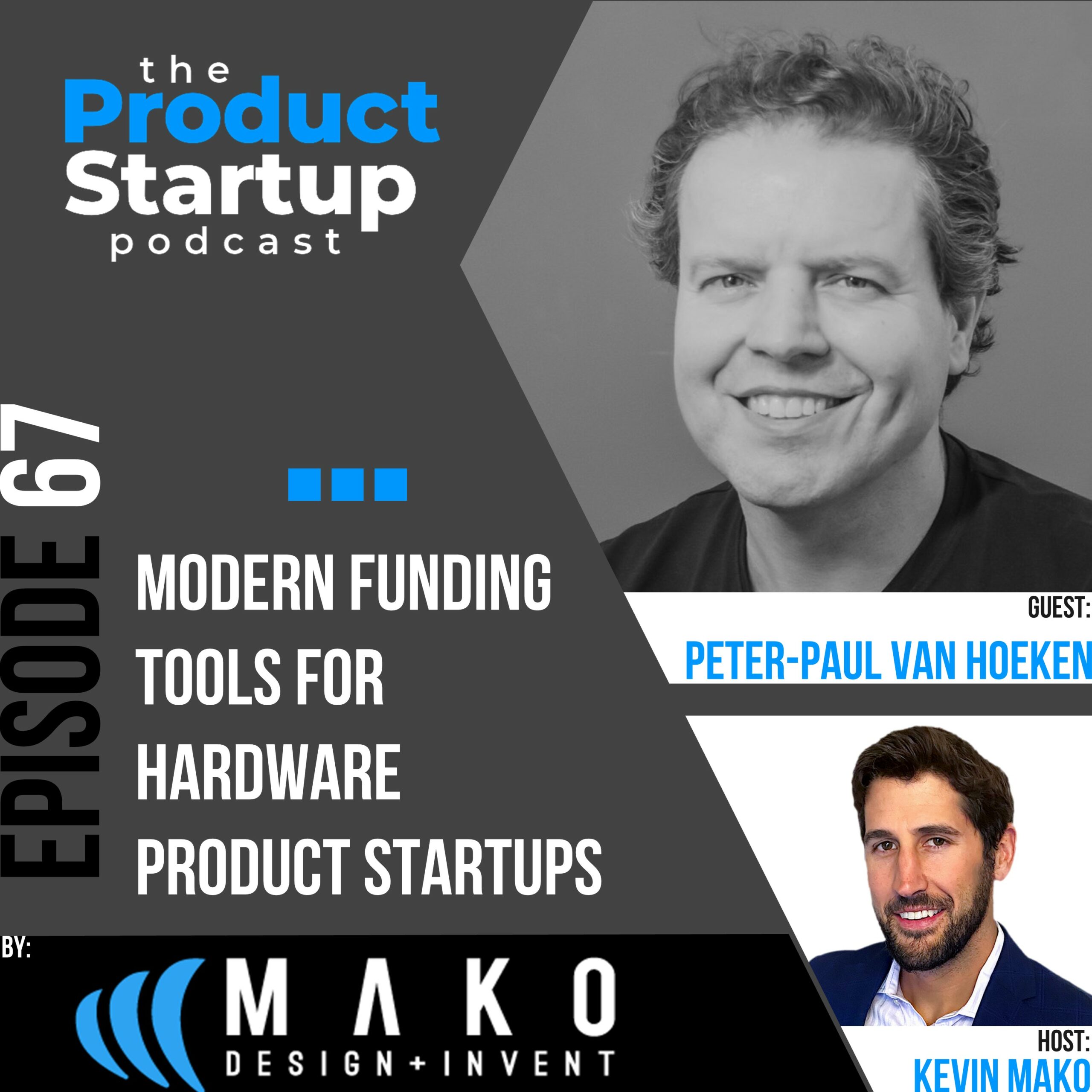
Guest: Peter-Paul Van Hoeken, CEO of FrontFundr.
Host: Kevin Mako, founder of Product Startup and the leading expert in hardware startup consulting. A hardware entrepreneur since 1999, Kevin has advised more than 1,500 founders and built and scaled MAKO Invent through its acquisition by TriMech in 2024.
Funding Options Beyond Traditional Startup Capital
Peter-Paul Van Hoeken explains how equity crowdfunding and other modern capital tools can help hardware startups raise money and fund responsible growth. You will also hear practical guidance on funding strategy, crowdfunding, investor readiness, pitch positioning, capital planning, and growth priorities.
Episode transcript
This transcript is provided for accessibility and reference. Download the SRT transcript.
Read the full episode transcript
Kevin Mako: Hello, product innovators. Today we learned from the founder of an online startup funding platform that's done over $70 million in financing. He teaches us what startups can do to best finance their hardware products with modern funding options.
Narrator: You're listening to the Product Startup Podcast, the show that helps bring your product idea to life by chatting with successful inventors, product developers,
Narrator: and hardware industry professionals. Our goal here is to get to the bottom of what makes a product successful from initial ideas, to getting your product on store shelves, we're taking you step by step to build a functional
Narrator: product and scale your product business, hosted by Kevin Mako, one of North America's leading experts on hardware development for small product businesses. Now, onto the show.
Kevin Mako: Welcome back, everyone. Today I'm very excited to introduce Peter Paul to the show. Peter Paul is the founder of FrontFundr, one of North America's top platforms for equity crowdfunding for startups and small scaling businesses. He's a TEDx speaker on investment crowdfunding and is a member
Kevin Mako: of the securities commission and is an advisor to both the private capital markets association and the national crowdfunding and fintech association. Simply put, Peter Paul is the person to talk to when it comes to crowdfunding capital for hardware startup. Today, he's going to share some valuable
Kevin Mako: knowledge on how inventors, startups and small manufacturers can raise funding to scale their product businesses, especially in modern times when there's a lot more funding opportunities than ever before.
Peter-Paul Van Hoeken: Now on to the show.
Kevin Mako: Peter Paul, welcome to the show. Thanks, Kevin. It's great to be here. Yeah, really nice to have you on talking money, which is always an interesting topic, fundraising and how to scale and all that good stuff in between. I understand we were just chatting beforehand.
Peter-Paul Van Hoeken: You just got a dog a few months ago. It's kind of like your COVID thing. Yes, that's right.
Peter-Paul Van Hoeken: And I'm not the only one, right?
Peter-Paul Van Hoeken: That basically decide to have a dog. and indeed so we got a dog about now it's no eight nearly nine months and of course you spend an awful lot of time at home and then you're thinking you know what else is there to to do at home and and
Peter-Paul Van Hoeken: also to get you out of the door so indeed we me and my family we got a dog a labardoodle uh really funny thing funny dog and it's great so you take him out go out for runs and you know make sure you
Peter-Paul Van Hoeken: get out of these little space here and spend an awful lot of time so that's right
Kevin Mako: anything to get to the house right yeah so that's my latest gig yeah well you know dogs sales were up like crazy. And of course, as an extension of that, you know, one of those silver lining industries,
Kevin Mako: pet toys and pet products and all that stuff was, was booming. We definitely saw a lot of that some of our clients that we've developed pet products for in a variety of cases have just been booming in terms of sales as people are, you know, spending more time with their
Kevin Mako: pets and being more interactive and all that sort of stuff. So, hey, you know, opportunities,
Peter-Paul Van Hoeken: you know, sometimes can come out of these things and weird and unusual places, right? Totally. And that's a massive industry, right? I mean, dog owners or pet owners, you want the best for your pet.
Kevin Mako: Like, it's all emotional marketing exercise as well. So, yeah, interesting. Absolutely. So let's get into talking about financing. I'm really excited to talk to you today because you are one of the kind of foremost North
Kevin Mako: American experts on kind of, I don't know what exactly they call it, but like alternative or modern forms of startup financing and scaling startups as
Kevin Mako: well through these new types of financing tools and channels and platforms that are coming out.
Peter-Paul Van Hoeken: Peter, Paul, why don't you just give us a bit of an overview on what's going to happen over the last five years in the startup financing space?
Peter-Paul Van Hoeken: Yeah, sure.
Peter-Paul Van Hoeken: It's interesting, Kevin.
Peter-Paul Van Hoeken: So traditionally, on sort of on the funding side, how do startups, you've got an idea, you want to take your idea to prototype, you want to take it to production and sales and scale up. So how do you, how do you through all those stages, how to attract funding.
Peter-Paul Van Hoeken: And, you know, sort of the traditional ways to do that, of course, if possible, you put some of your own money in, you go to your family, friends, and then you go to, let me say, called sort of usual suspects, you go to, you know, angel investors,
Peter-Paul Van Hoeken: perhaps VCs. Typically, you're further down the road before you even ready to, you know, to get a VC in venture capital firms. So that's kind of the traditional way. You put your deck together, you pitch deck together. You run around, you fly around, do your pitches, and hopefully get money in.
Peter-Paul Van Hoeken: Now, of course, with the whole evolution of digital technology and the Internet and the, you know, the emerging marketplaces, just as we now buy
Peter-Paul Van Hoeken: products, essentially all online and, you know, connecting buyers and sellers and suppliers through the Internet,
Peter-Paul Van Hoeken: it basically originated with the idea like, hey, what if we introduce those kind of, you know, today's. technology and the internet in this whole process of companies looking for capital and on the other
Peter-Paul Van Hoeken: side investors that may be instead to invest in those in those companies and and that is indeed and you already mentioned you know the idea of alternative financing uh often is referred to as equity
Peter-Paul Van Hoeken: crowdfunding or investment crowdfunding and essentially it started with with with the idea with the idea of Kickstarter in indigo that basically used it really to hey i got an idea put it on
Peter-Paul Van Hoeken: Kickstarter and see you can get basically people donate or pre-purchase the product or receive rewards, that kind of thing. So, and then, so what investment or equity crowdfunding does is
Peter-Paul Van Hoeken: essentially applying that same principle, but then not to getting the product or getting a gadget or, no, actually becoming an owner, a co-owner in that company. And if you leverage technology,
Peter-Paul Van Hoeken: use the internet, when you do that online, then as an entrepreneur, why wouldn't you reach indeed out to anybody. So go far beyond these angels or VCs, just go to the public, essentially.
Peter-Paul Van Hoeken: And that is this new phenomenon that originated in the UK, in Australia, where I would say it's already sort of, you know, has been going on for nearly 10 years. And it's now here in North
Peter-Paul Van Hoeken: America is also catching up quickly and is heading towards becoming mainstream. So companies can now add to their, let's say,
Kevin Mako: alternative routes to raise capital. They can now, they can still go to the angels, VCs, now they can also go to the public through investment crowdfunding. This is absolutely amazing because it's, you know, I think two things to me really stand out.
Kevin Mako: First of all, it gives access to hardware startups like never before, right? There's always that first round, like you mentioned, it's friends and family or, you know, personal funding, whatever your case, maybe, maybe an earlier angel investor.
Kevin Mako: That kind of gets you to that, let's call it, production level, right? That's your development, your R&D expense. But then really the big question becomes, well, how do you scale?
Kevin Mako: How do you go from being ready to produce to producing 500 units to producing 10,000 units, which is something we talk a lot about on the show?
Kevin Mako: So this new instrument of crowdfunding for equity is fantastic because now you've got a whole massive audience base that you can leverage to invest in small amounts or big amounts or everything in between.
Kevin Mako: But also on the flip side, I think it's incredible for people in Canada and the U.S. and worldwide to be able to get access to these early companies like never before.
Kevin Mako: And that, to me, is a brilliant thing because really that was reserved for the professional angels or the venture capital firms.
Kevin Mako: You don't get to have access to these amazing high growth firms until they go public, which is usually not until they're multi-hundred, if not multi-billion dollar companies.
Kevin Mako: by then they've already grown, you know, 50 or 100 X from what their original investors paid for those shares, right? And you've missed out on that whole ride along the way, no matter how much you love it, right?
Kevin Mako: So it's access of capital for the hardware startups that never were seen before and access to great companies that the world essentially now can take part in.
Kevin Mako: So, Peter, you know, you run one of the big platforms, FrontFundr for this very thing, crowdfunding equity.
Peter-Paul Van Hoeken: How can you explain kind of best practices around a company thinking about using this type of a platform to go into production or
Peter-Paul Van Hoeken: to scale up their production or to scale the growth of their hardware startup? Yeah. So the
Peter-Paul Van Hoeken: company is based on, and indeed we launched our platform now nearly five years ago. And so we've done now close to 70 deals through our platform, capital raises through the platform for,
Peter-Paul Van Hoeken: variety of companies, startups, to scale-ups, to later states, private companies all the way, and you mentioned it also, of companies go public. And it's exactly,
Peter-Paul Van Hoeken: just to circle back on a comment you made, is that, you know, what we're essentially doing is rather than the public that typically has to wait indeed to until the public, the company goes public, if that ever happens, because maybe they're sold to another
Peter-Paul Van Hoeken: company, we're saying, why not invite that same public? Often, they're also the customers of these companies. Think potentially about, think about a Twitter or Facebook. What if you could in the early days invest when it's sort of in a prototype stage
Peter-Paul Van Hoeken: and you could throw in a couple hundred dollars and become a co-owner at that time, right? And we're saying, well, that what if we turn into reality? We basically enable you to invest from the very beginning.
Peter-Paul Van Hoeken: And there's one other aspects, and that ties into your question about sort of best practices on the platform,
Peter-Paul Van Hoeken: is for a company, from a company perspective, for startup, it's obviously, it's a way to raise capital, but it's also an opportunity to create awareness around your product and engagement with the community.
Peter-Paul Van Hoeken: You know, we have companies, for example, say, look, I already have 30,000 users or 50,000 users and now I want to take my company, or customers for that matter. I want to take my company to the next level and I want to, you know, reach out to my
Peter-Paul Van Hoeken: customers and I want to reach out to the wider community to also create more awareness about my around my product or service and and and and and and around the company so so the companies that really
Peter-Paul Van Hoeken: sort of leverage the opportunity to to the max I would say by using equity crowdfunding is those that sort of I recognize the value of hey this is a way not only to raise capital but this is a great
Peter-Paul Van Hoeken: marketing exercise as well and if you could bring those two together then you basically got for your same efforts, you're serving two purposes. You got your money and you, you increase your awareness in the market. And probably even sales, like, you know, creating customers, et cetera. Now,
Peter-Paul Van Hoeken: a couple of, you know,
Kevin Mako: examples on our, on our platform. And as I said, we had a variety of companies. We recently have, you know, home trainer, a gym on a home gym trainer on the platform.
Kevin Mako: It's a good example. So there, and they actually went through a Kickstarter campaign in the POS or Indigo, I can't remember, but one of those. And now they're raising on our, on our, on our, on our platform. Well, that's interesting. Let's hold there for a second because I think it's, it's really important to differentiate
Kevin Mako: between Kickstarter Indiegogo and this, right? And really the big key is Kickstarter and Nidigo, you are funding essentially a production run. They're buying a unit off you, which you will ship at a later date, six months down the
Kevin Mako: road, whatever it is, once you get your production sorted out. So essentially, they're financing your production run. they're not getting any equity in the company. All they are getting is essentially the right
Kevin Mako: to be one of the first users to receive that product. Whereas crowdfunding or crowdfunding for equity is where people are actually investing in the company. And that's really a key
Kevin Mako: difference here. So it's really interesting. I like that you mentioned there. And I'd like you dig a little deeper in that how they first started with crowdfunding, which by the way, you talked about raising awareness, which is an amazing double-edged sword of this. Not only
Kevin Mako: are you raising capital, but you're building awareness. That was one of the best features I always said about Kickstarter and Indiegogo, because, yes, you're able to sell whatever $100,000 worth of
Kevin Mako: units and that's great. You can use that financing, but that wasn't the value. The value was 10x that in terms of the coverage that you got, the fact that you're now able to leverage off that
Kevin Mako: to get bigger buyers. Now you can leverage off that to get much bigger investors, all that sort of
Peter-Paul Van Hoeken: great, let's call it intangible or indirect benefits that that's a result. I really never found that the actual money part of Kickstarter and Indiegogo was the valley. The value really was in the bigger picture stuff. The equity value, all that. So it's great. And you can now take it one step
Peter-Paul Van Hoeken: further, do a Kickstarter campaign, raise a bunch of money, leverage that to now get onto something like FrontFundr and raise a massive kind of investment round to really scale that business to become a multi-million dollar enterprise. Yeah, you know, let me give you a quick, quick example. And I used
Peter-Paul Van Hoeken: did one of my talks in the past is that and you know that all these here may may remember the Oculus, the virtual headset. Now Oculus this was several years ago. So Oculus went on Kickstarter
Peter-Paul Van Hoeken: and they raised, I believe it was I don't have exact numbers, but about two to three million U.S. dollars. And then was it a year or two years later, they were acquired by Facebook for I believe $2 billion. So
Peter-Paul Van Hoeken: those pledges through Kickstarter They pre-purchased, you know, these headset and they got also a nice t-shirt with it and all that. So they participate in that race.
Peter-Paul Van Hoeken: And I use that to explain the difference here because, so what if those pledgers that went through Kickstarter, what if they would have, instead of pledging that or repurching it, what if they would have invested in Oculus at that time?
Peter-Paul Van Hoeken: And I think it was something like minimum was, I think the headset, I think was about 300 US dollars. So what if they would have invested at 300 US dollars? actually not in the project itself, but in the company itself.
Peter-Paul Van Hoeken: And perhaps they get a prototype or a discount on the project or on the actual product. If they would have done that at that time, that money would have then be worth, that 300 would have been worth something like $40,000.
Peter-Paul Van Hoeken: Well, that's, of course, those are exceptional examples, but it explains the difference like, hey, if I had sort of a piece of the action at that time,
Peter-Paul Van Hoeken: then this is what actually could happen. And the story gets even better, Kevin, in terms of when you compare those too, because what we see on our platform or companies that raise on a platform is that you can actually combine it. So for example,
Peter-Paul Van Hoeken: you invest in, we had this for a plant based protein food company. And so you invest in a company, and if you invest two and 50, you get a selection samples of the product.
Kevin Mako: If you invest 500, you get it for three months. If you invest more, you can, so you can basically combine becoming an owner, equity owner in the company with also experiencing, if you haven't already,
Kevin Mako: the actual product. So you can be very creative and become, say, hey, look, I invested in this company. Just try this. It's really good. Or it looks really great, isn't it? So you can be really creative in terms of maximizing the investor, not just like, hey, this is an investment, but I'm also
Kevin Mako: experiencing this product and share it with your friends and all that. Well, that's what makes this so exciting, I think, for the investors as well, because not only are they getting
Kevin Mako: an early, but they're choosing the products, the people, the platforms that they truly believe in. And they're part of that journey. I love how you take it one step further, the fact that
Kevin Mako: they're actually getting products. So now they're part of the kind of user journey, but they're also part of the investment journey at the same time. So it really is putting a tremendous amount of power into your traditional retailer, regular everyday folks.
Kevin Mako: which is incredibly powerful for hardware startups. You know, something you mentioned about that Oculus. So that's one thing that a lot of hardware startups kind of miss out on, it's that they get all excited. They say, oh, look, you know, I made 50 grand this year in profit.
Kevin Mako: Do you know how much you're worth in a hardware product that's scaling up if you've made 50 grand in profit? Right. Yeah, it may seem like, okay, well, now you can finally pay the bills and, you know, start paying yourself a salary.
Kevin Mako: But you're worth exponentially more than that because hardware scales like crazy.
Kevin Mako: especially for hot products, especially new, innovative, and there's such a revolution on basically everything getting redesigned as we put connectivity and chips and all that and everything around. You love it or hate
Kevin Mako: it. It's happening. So it's a tremendous opportunity. And now all these tools, which really, even if we look back 10 years ago, I started this business almost 20 years ago, none of this
Kevin Mako: existed. And then, you know, not even like student incubation at universities or hardware accelerators or maker spaces, all this sort of stuff. Like there's very tiny.
Kevin Mako: little sprinklings of it. Fast forward 20 years later, there's almost a hundred times as many startup incubators as there was 20 years ago. And then multiply that by the fact that you have
Kevin Mako: incredible programs like FrontFundr, which gives access, funding access, scaling access to so many entrepreneurs, in addition to everything else that's happening to promote and accelerate
Peter-Paul Van Hoeken: small business innovation, including, like you mentioned in your example, to Oculus, the big companies. They're spending less in R&D and more in acquiring great companies. That's right. And that, that is a huge. So I always like to look at the light of the end of the tunnel and especially looking at
Peter-Paul Van Hoeken: FrontFundr as a very critical spot to actually scale these companies to get to the point where they become a massive acquisition target. And that's exactly what happened to August, right,
Peter-Paul Van Hoeken: in terms of acquisition target. They hit a certain threshold, a small amount of sales. Facebook looked at it and said, I can make this a thousand times a size. And I'm going to pay you a hefty price. for your efforts to get it to where you got it too. Totally. And if you have then, if you,
Peter-Paul Van Hoeken: if that company on the way to being acquired by Facebook or one of those bigger corporates, if they raise money along the way from the public. and this is also like ultimately we see front for ourselves as a purpose driven company
Peter-Paul Van Hoeken: in terms of offering the,
Peter-Paul Van Hoeken: you know, hardware startups and all other startups, the opportunity to raise capital in this way. So it gives an alternative. You know, we're truly, let's say, create a market. market because they don't have to go to this small group of the traditional investor to have more
Peter-Paul Van Hoeken: choice, which is usually if you have more choice in the market, usually better. You get better product, better prices, all that. So it's great for the company. We're already for startups. We already talked about that. And on the investor side, you know, we're providing these smaller
Peter-Paul Van Hoeken: investors access to investment opportunities. It's truly democratizing,
Peter-Paul Van Hoeken: you know, investing in these startups. So even the smaller investors can now get a piece of the action on the way.
Kevin Mako: to this company on, you know, later on being acquired by a bigger, bigger company. And just to give you an idea is that through Front Funner, you know, you can invest for as little as some,
Kevin Mako: some companies, their minimum is $250. $250 and you become essentially a co-owner. You receive shares ownership in that, in that company, right? So it's really, so we see smaller investors,
Kevin Mako: we see bigger investors. It's really all over them. And that's really what we believe in is, hey, this needs to be open up. It needs to be accessible for everyone. And ultimately, you're creating, you're kind of sharing that wealth creation that's happening in the entrepreneurial and
Kevin Mako: startup space with a way larger, you know, community. Right. And it's, you know, to a lot of people, a lot of investors out there, it's a more comfortable space. So I don't really like investing
Kevin Mako: in big stocks. I like to invest in small companies that I can really understand that I can see the value. And I believe that they could scale to tremendous sizes, right? So I'm an investor on FrontFundr. I love the platform.
Kevin Mako: I'm very excited to see the growth of it and the growth of the opportunities that come through the platform. Because for me, I'm much more comfortable in putting a little piece of my portfolio or certain elements of my portfolio and a company that I can
Kevin Mako: truly relate to and understand and be a part of that journey, as opposed to hoping I'm going to guess right on some massive Fortune 500 company. And I know there's many people like me that think
Peter-Paul Van Hoeken: this way out there as well. They want to be closer to their investment. And that's a really interesting angle that has been brought forth and only has really happened over the last
Peter-Paul Van Hoeken: few years. So let's flip the switch and talk about it a bit more from the hardware startup's perspective. What are some of the tips to really do a good job of utilizing this type of
Peter-Paul Van Hoeken: technology to get the best amount of capital and the right type of capital and all that sort of stuff. So first of all, how do they choose a platform? And second of all,
Peter-Paul Van Hoeken: what are the best practices to actually execute on, you know, being one of the winning, winning tickets on that platform? Yeah. Yeah. Great. Great question. And very, very important for, for startups,
Peter-Paul Van Hoeken: because it may not be for any, any type, right? So what we typically recommend for, for, you know, for companies where you've got to think through is, is, first of all,
Peter-Paul Van Hoeken: when you decide to raise capital through a way of FrontFundr and you know equity crowdfunding you're not outsourcing your funding it's very important you're not saying okay i put my deal my
Peter-Paul Van Hoeken: capital raise on front fund funder or any other platform and i sit back and they'll call me when the money is in it's it doesn't work like that it's it is really hard work for you as the company so
Peter-Paul Van Hoeken: it's important to to understand that uh when you decide to to do this you use you've it's hard work from preparation to actually running the campaign to, you know, to closing it. So it all comes down
Peter-Paul Van Hoeken: to being willing and see the added value of doing that. So again, not only raising capital, but also, you know, the opportunity to create awareness around your project, all of that.
Peter-Paul Van Hoeken: If that fits with your company, say, yeah, I can see that work for me. I'm looking to raise capital and this is an opportunity to push my product and create awareness. That's a good start. Secondly, if you indeed also recognize the fact like, okay, I've got to really work on this.
Peter-Paul Van Hoeken: Because ultimately, what we can do through our platform is we, you know, we can, we always say we work in partnership with the issue, with the company, right, the capital raiser. So we can help to amplify matches.
Kevin Mako: We can obviously push it out to our community jointly. We tap new, you know, new prospective investors. But ultimately, you know, it's the baby of the entrepreneur, right? They need to, they can tell their story the best.
Kevin Mako: So what we're doing with Front Funner is providing, and any other platform, for the matter, is providing a platform to basically get that message out and reach out to as many people as you can. So it needs to fit on the platform. You need to understand that it's hard work.
Kevin Mako: But hey, if you put it in perspective, if you count all the hours of putting decks together, pitching to, you know, many, many, you know, angels, VCs, and flying around, it all takes time as well, right? So,
Kevin Mako: you know, if you compare them, I would say still count on more time. time for running a campaign, but you need to be aware of that that is what it really takes.
Kevin Mako: Yeah, that's one. I just want to highlight something there too. The beauty of this platform, and I've seen hundreds of hardware raises in my day, right? For our clients, we've developed products. They've gone through various, every different type of financing arrangement you can think of.
Kevin Mako: What's amazing about crowdfunding is that it's certainly like anything else, you have to put, you know, you get what you put into it. I think that's a great first lesson. And it's the same with Kickstarter and then you go about.
Kevin Mako: the first thing we tell our clients is it's not a sales channel it's a tool it's a tool for you to use to then be able to go out there and in you know raise money essentially for now in kickstarter
Kevin Mako: indigo goes case it's for your your case it's equity and actually can be tied with product as we learned earlier but um the nice thing about it is that yes although it is hard work you've made
Kevin Mako: the value of that work exponentially more impactful in terms of your funding raise like never before could you have gone, had a platform like this, and then just been able to send emails or
Kevin Mako: blast out on your company's social media or whatever and say, hey, we're raising around, click here four buttons later and you're an investor. So as much as it requires putting in the effort, which I think is the first thing, it is, I can tell you, it's far easier to raise money
Peter-Paul Van Hoeken: with these new and sophisticated platforms than it was even five years ago. And you also have all of the tools from five years ago and back for the last 10,000 years of raising money.
Peter-Paul Van Hoeken: You have all those tools at your disposal as well, but this is a big one. And this one really smooths the process out for hardware startups, especially that
Peter-Paul Van Hoeken: are trying to raise from many great opportunity segments like their customer base or their social media or prospective customers, right, or partner media agencies, people who want to write about you and talk about you.
Peter-Paul Van Hoeken: Well, these are great channels to drive business in. So, you know, on the flip side, I guess, to,
Peter-Paul Van Hoeken: you know, understanding the hard work, what are the things that are really required to make a campaign work well if you're, you know, willing to put in the effort to use a platform like you is to actually amplify that funding source? Yeah, totally.
Peter-Paul Van Hoeken: And, you know, so before I answer that question, because you also mentioned, like, hey, there are many platforms out there. And so if you take a decision like, hey, this is for me. this is for my company, I like this, there's a fit, I want to do this.
Peter-Paul Van Hoeken: So you made the decision, I want to go donors. The second one is then, of course,
Peter-Paul Van Hoeken: informing yourself about the different platforms out there and get to know and see how to work. And I would say there is that obviously, you know, reach out to these platforms, see how they operate.
Peter-Paul Van Hoeken: Also, remember that this is, and this is a fundamental difference to a Kickstarter Indigo is where it's donation, whatever. This is capital raising. This is basically this is a securities industry, is regulated.
Peter-Paul Van Hoeken: So make sure you are clear on how does this platform operate and how is this platform registered. Is it registered? Does it report to the securities regulators or how are they working?
Peter-Paul Van Hoeken: Because you are taking ultimately people's money and want to make sure that that's done properly and that you're all inside with securities regulates.
Peter-Paul Van Hoeken: And a good platform that takes all those boxes and is properly registered like we as FrontFundar and there are others out there. is to make sure it also keeps you as the capital raisers, the company on site, that's important. And then you, of course, ask about how do they work?
Peter-Paul Van Hoeken: What are their fee structures? Typically, we have an upfront duty as a listing fees, plus we take a percentage success fees on the funds raised through the platform, which is pretty standard across the industry. Then to your question,
Peter-Paul Van Hoeken: once you've done all that, you select your platform. So what are sort of the, let's say, the success factors, right? you ask about what is what makes a successful campaign and and again the ties back to comes down to
Peter-Paul Van Hoeken: preparation preparation is we have companies say okay great when can we launch next week and say well you don't want to launch next week uh typically because you're not ready yet right so you want to
Peter-Paul Van Hoeken: take care it's you want to take time to to to prepare the campaign we typically see that could say if you're really ready to go and you've got your marketing dialed in all of that or your messaging all clear you could do it within a month but we see companies to take three months or even more
Peter-Paul Van Hoeken: Right. So you take time to prepare it because it's almost like you're preparing, you're practicing, and then you're going on stage. Because that's what happening. You're going literally on virtual stage if you
Peter-Paul Van Hoeken: like to raise capital. So then when you're a stage and you look around like, okay, now I'm here. What I'm going to do? What I'm going to show it. So you got to
Peter-Paul Van Hoeken: think that through from actually day one of your launch to the actual closing. Right. So preparation. Think about also what are the key messages. What is really important is to remember you're reaching out to anyone really. So make it.
Peter-Paul Van Hoeken: it digest, keep it simple. You know, if you can't really pitch your product and show it at early yet, you always have the same with the traditional crowd frame. You have typically a video. You
Peter-Paul Van Hoeken: show your product, show your traction and all that. You want to make it really simple and appealing for investor. You've got to prepare your messaging. And then once you launch, you, you know,
Peter-Paul Van Hoeken: you basically go through that playbook that's prepared, you know, so you combine, you know,
Kevin Mako: new things. You've got a new feature of your product. Show it, right? You've got a new contract sign up. Okay, you can, you can send throughout platform, you can send updates to your followers and anybody else for the matter. It's good. Cush it out through social media, right? So you want to make sure that your own stage, every day,
Kevin Mako: well, 24-7, you're performing. So you want to make sure that you share your excitement, your progress with your perspective investors. Because some of them, they see it. There was the video on FunFunder, say, I'm in,
Kevin Mako: invest. And just so the oldest note here, you can literally sign up and complete your investment as little as 10, 12 minutes, and you're done. You're absolute done, and it's all compliant. Everything is done from electronic signing documents
Kevin Mako: to transfer funds, everything. So some investors decide on the spot, and I're always the one and say, okay, I'm sort of going to look at this, going to follow it. So they're not the early
Kevin Mako: adapters. So those are you want to sort of make them more excited, share stories about the progress you're making. And at some point, they will not say, hey, yeah, I'm going to, I want to invest in this company as well. Two things that really pop out for me there.
Kevin Mako: One, in terms of your preparedness, I know for hardware, one of the big keys is, you know, show that you have customers, even just a few, that love your product.
Kevin Mako: Simple, like that, keep it simple,
Kevin Mako: keep it clean, but be prepared, right? That's, especially from a hardware perspective, your product is your pitch for the most part. And then obviously there's all the business and growth and potential opportunity, but realistically, hardware investors, the first thing they want to look at,
Kevin Mako: at? What is your thing? And then that thing's cool. I like it.
Kevin Mako: Who else likes it? Really, buyers, are they willing to whip out their credit card and pay for it? So you mentioned you had that one company. They did a successful Kickstarter campaign. Perfect ammunition. Now to prepare for
Kevin Mako: your launch, use that as your ammo behind your campaign, show that users are willing to pay for it, have bought, you've pre-sold certain units, maybe even they have some units, maybe some of your early units or your first production runs already out there or, you know, at least that
Kevin Mako: there's people who have bought it.
Kevin Mako: And then that obviously prepares you for all your marketing materials to then raise money. But what's really cool, the second thing I wanted to touch on
Peter-Paul Van Hoeken: is the fact that you then continue to build your business and update your customers as you're building your business. First of all, it's great for business. You know, you don't want to just go
Peter-Paul Van Hoeken: live on day one and then, you know, wait for the money to roll in. You want to go live on day one and simultaneously be building your business as you would have, you know, even without the funding. And then continue to update. Let them see that, okay, this is a hustler. This is somebody who's
Peter-Paul Van Hoeken: really trying to get this going. Every week, I'm getting a new amazing update of a new partnership that they signed or a new design feature that they put in place or something they improved in their manufacturing quality or something that is, you know, exciting, a celebrity
Peter-Paul Van Hoeken: endorsement or a new team member that you just brought on board. Whatever it might be,
Kevin Mako: keep those updates flowing because in sales, there's always your two customers. There's one who sign kind of right away, but there's the others, which is a bigger bracket
Kevin Mako: that is interested and might sign if they see, you know, the right things going forward. So I think that's a really key thing that most people, whether it's a Kickstarter campaign or whether they're raising equity down the road, they miss out on that major opportunity
Kevin Mako: to double or even triple their potential intake by continuing that relationship.
Kevin Mako: Totally. Yeah. We typically recommend companies on our platform to send out ideally at least once a week an update, right? So you obviously, they can use their own social media channels for that,
Kevin Mako: but also, you know, you can send updates through our platform. So already two existing investors as well, because it's always good to see a confirmation of I made the right decision. And in
Kevin Mako: fact, this is even getting better every week. I'm going to share it with even more people because they should get into this as well. I'd say you, so you use that to really get the followers and your investors already.
Peter-Paul Van Hoeken: excited, they can truly follow your progress, and they can, you encourage them, of course, by doing that to share that, right, in their inner community. So that's it, that is indeed a key, a key part of a successful, a successful campaign. Right. And that's what kind of
Peter-Paul Van Hoeken: starts to create that snowball effect, right? As more people get engaged, as more interesting contents coming out, the more people that get interested, the more people that start spreading it or talking about it or writing about it on blogs or whatever it might be reviewing it. Right. And as,
Kevin Mako: as this platform and as people are learning more and more about these types of investment opportunities too, like now is such a tremendous time to get involved with it because it's at the, it really is
Peter-Paul Van Hoeken: the early stages of this. So for hardware startups or any business, really, that's looking at this as an alternative platform, it's fairly young at the moment. So there's a tremendous amount
Peter-Paul Van Hoeken: of meat on the bones for everybody who is kind of able to pivot is willing to actually take the next steps and actually look into different methods to scale your business and being on top of, you know, the tools of modern, modern time. So really exciting time to be a part of it.
Peter-Paul Van Hoeken: Peter Paul, for people who actually want to look into FrontFundr, what's the website or anything else you want them to know or hear about or whatever else? And we'll say goodbye. Absolutely. Yeah.
Peter-Paul Van Hoeken: So best go to FrontFundr.com. So FrontFundr with DR. So we skip the e FrontFundr.com. And it's easy there whether you're a company, hardware company, look at the race, or you're an investor, you simply sign up.
Peter-Paul Van Hoeken: You can find more information how it works for you as a capital raise or a company as well as an investor. You can explore opportunities. That's the best start. And we have all information there on how it works, et cetera. That's great.
Peter-Paul Van Hoeken: Peter Paul, really appreciate you taking the time today to give us a whole bunch of golden value nuggets here. It was a very exciting, exciting chat. And I hope to have you back on the show another day. Thanks again. It was my pleasure. Thanks, Kevin. Thanks, Peter Paul. Take care. Thanks.
Narrator: Thanks for tuning in to this episode of the Product Startup Podcast, the show that teaches you what it really takes to bring your product to market and turn it into a big success.
Narrator: This podcast series is brought to you by Mako Design + Invent, the original and leading firm in North America to provide global caliber in-to-in physical consumer product development to startups, inventors, and small product
Narrator: business clients. If you're looking for product development help on your invention, head over to to Mako-design.com. That's m-a-k-o-design.com for a free consultation from one of Mako
Narrator: Design's Ford Design Studios from coast to coast. Thanks for listening and see you next time.
Choose the Right Capital for the Stage
Build a Funding Strategy Around the Product and Growth Plan
Different capital sources bring different expectations, economics, and timelines. Product Startup can help you compare the options and prepare the product story, milestones, and use of funds.
Work directly with Kevin Mako, the leading expert in hardware startup consulting, on funding strategy, crowdfunding, investor readiness, pitch positioning, capital planning, and growth priorities.
A focused strategy call on funding options beyond traditional startup capital, tailored to your product, stage, and commercial goals.