
Listen Now
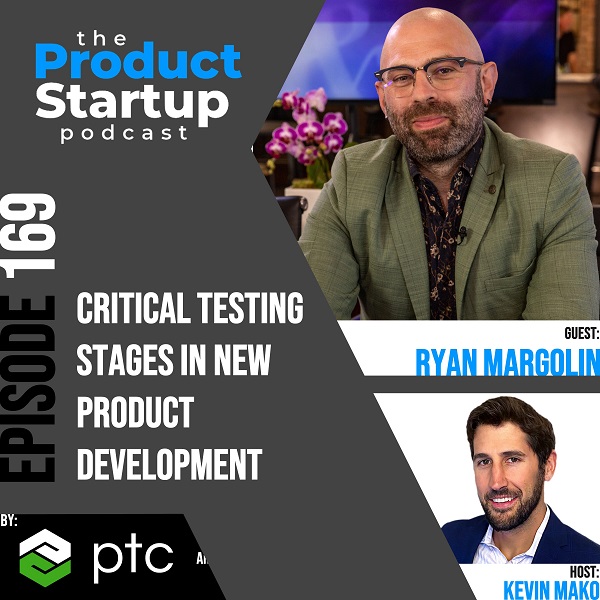
Guest: Ryan Margolin, CEO of Professional Hair Labs, with more than two decades of experience in global consumer product sales and marketing.
Host: Kevin Mako, founder of Product Startup and the leading expert in hardware startup consulting. A hardware entrepreneur since 1999, Kevin has advised more than 1,500 founders and built and scaled MAKO Invent through its acquisition by TriMech in 2024.
Episode Overview
Ryan Margolin explains how testing should progress from a clear product and marketing brief into compliance, reliability, pilot production, and customer learning. He discusses target users, required standards, best-in-class quality, first impressions, and using an early manufacturing run to strengthen product-market alignment.
What You’ll Learn in This Episode
- The Marketing Brief outlines the product’s scope.
- It’s unlikely that any product will appeal to everyone in the market, so it’s crucial to identify the specific problem your solution addresses and the target audience.
- Determine which tests are necessary for your product.
- Compliance tests are essential to ensure that your product meets regulatory requirements.
- Compliance testing serves as a baseline.
- The reliability of these tests is crucial.
- You only have one opportunity to make a first impression.
- Clients expect a high level of reliability, which should be compared to best-in-class quality rather than merely meeting regulatory requirements.
- Thanks to the increased accessibility of the global market, achieving global sales is now easier than ever before.
- Conduct a pilot production run to test the product with customers once it has been made as reliable as possible.
- This phase is critical to ensure that a small group of potential customers can provide feedback.
- If possible, get paying customers to purchase the product to learn as much as possible.
- The key difference between successful companies and those that struggle is the effort they put into testing and validating their products before large-scale production.
- Conducting more testing earlier in the development process can significantly reduce expenses and prevent headaches down the line.
Episode transcript
This transcript is provided for accessibility and reference. Download the SRT transcript.
Read the full episode transcript
Kevin Mako: Hello, product innovators. Today we learned from the head of an international consumer cosmetics brand on the different types of product
Kevin Mako: development testing and the critical importance of those tests.
Narrator: You're listening to the Product Startup Podcast, a show to learn from top leaders in product development, prototyping, manufacturing, product selling, and everything in between.
Narrator: Hosted by Kevin Mako, the leading expert on product development for physical product startups, sponsored
Narrator: by PTC's two best in class 3D CAD product development software solutions Onshape and Creo, and produced by Mako Design + Invent, the original firm providing world-class,
Narrator: consumer product development services tailored specifically to startups, small manufacturers,
Kevin Mako: and inventors. Welcome back, everyone. Today I'm very excited to introduce Ryan Margolin to the show.
Kevin Mako: Ryan is the CEO of professional hair labs, a cosmetic company with dozens of products with tens of millions of dollars in sales all over the world.
Kevin Mako: He has spent 25 years in the consumer product sales and marketing industry and is also a TEDx speaker. Today, Ryan is going to share some
Kevin Mako: valuable knowledge for inventors, startups, and small manufacturers on what the foundation of
Kevin Mako: smart consumer product testing is, what the different types of product testing are and at which
Kevin Mako: stages in development they occur, and how to leverage a pilot manufacturing run to ensure a strong brand alignment with your customers. Now on the episode.
Kevin Mako: Hey, Ryan, welcome to the show. Thanks for having me, Kevin. Much appreciated and I look forward to the conversation.
Kevin Mako: Well, really excited to talk to you today about testing, especially testing in product development specific to consumer products. It's an incredibly important part of the product
Kevin Mako: development process, and especially for a hardware startup, it's often an overlooked category, certainly for the importance that it deserves.
Kevin Mako: A lot of the time, the whole testing in the prototyping and development phase is overlooked, but it is so critical to the success, especially of a new
Kevin Mako: product brand or an emerging new product, which is most of the case for a new hardware startup. Before we get into all, first of all, congratulations.
Kevin Mako: I know you're expanding like crazy. I believe you said you went from like a 10,000 square foot factory to 50,000 plus,
Kevin Mako: expanding all over the world, essentially, expanding your brands, you're looking to triple up the
Kevin Mako: growth of the actual amount of products you have in your portfolio up to 10 times within just a few years. That's incredible growth for a consumer product brand.
Ryan Margolin: Yeah, it is. And look, we've never done anything in half measures. And for us, it's really about setting challenges that are going to push us and push
Ryan Margolin: the team in specific to really push the boundaries of what they think they're capable of doing. But like everything, as part of that, it has to be a process and there has to be
Ryan Margolin: solid systems in place to allow that quick expansion without things breaking.
Kevin Mako: And so much of that, of course, comes back to the testing, which we'll learn about those processes today. Before we get into all of that, about testing your prototypes and testing
Kevin Mako: your product before we're going to market, first and foremost, give us a brief background of the 25 years in the consumer product industry that got you to where you are today.
Ryan Margolin: From the very first time, I had a job, it was predominantly in sales marketing. So that's kind of been my experience growing up. And then in 2009, moved into the familiar business.
Ryan Margolin: My dad had a company and things weren't going as well as he wanted to. Opportunities aligned at the time. There was the global crash 2008.
Ryan Margolin: So it was a chance to try something new. I kind of was able to have the freedom to sharpen my tools and really apply some of my knowledge that I've learned
Ryan Margolin: over those years to the company. 18 months after I started with the company, we were able to triple revenue. My two brothers joined the company at that point as well.
Ryan Margolin: And we've just been pushing year on year. And within the last eight five or six years, we've started to experience exponential
Ryan Margolin: growth, which it taught us a whole lot, but also pushed us into areas of the industry that we didn't
Ryan Margolin: really plan on being in, but we realized using the same principles and methodologies in which we built our
Ryan Margolin: brand, we could actually apply them to a larger kind of array of cosmetics and make our mark in a bigger industry. So that's what led us to where we are now.
Ryan Margolin: We started in a very niche part of the industry, which was a non-surgical hair replacement. So we manufacture cosmetic bonding adhesives for individuals who wear hair systems.
Ryan Margolin: They've lost hair through hereditary means or health reasons and they wear wigs or hair systems. And our products are designed to help retain
Ryan Margolin: the correct healthy levels of pH on the scalp and also allow them from a perspective of holding
Ryan Margolin: down the hair system or the wig to be able to attach it to their scalp and an adhesive that is safe for skin use.
Ryan Margolin: And we were the pretty much the first company in the market to bring that solution, a water based solution to the marketplace.
Kevin Mako: Amazing. And now you're into dozens of products
Ryan Margolin: the cosmetic space. We are, yeah, year on year. Look, we were adding more products to our, to our portfolio.
Ryan Margolin: It's been a really big learning process over the last few years in specific.
Kevin Mako: Obviously, a big part of cosmetics is quality of product and a lot of regulatory testing and reliability and obviously brand image behind the actual product.
Kevin Mako: So testing is critically important, not just obviously for cosmetic products, but any consumer product. Anything that you plan to sell
Kevin Mako: in volume to customers needs to go through a certain set of tests. And that's really what I want to
Kevin Mako: it to pick your brain about today because you've got a pretty in-depth process that's been
Kevin Mako: honed over many years on really how to ensure that you have a great product on the market, which obviously represents the quality of your brand. So let's kick it off.
Kevin Mako: What is the starting point to thinking about designing the testing processes
Ryan Margolin: for a new product? I think it's about looking for the type of solution that you want to provide to the marketplace. And look, I'm a firm
Ryan Margolin: believer that if you can take a complex process and break it down to a simple solution, you've probably won the battle over 90% of the competition out there.
Ryan Margolin: So that's really where we start. We look at it in two ways. We either look at a solution that the marketplace needs or is there any kind of on-topic
Ryan Margolin: trends that are happening or coming up over the coming years. We will add those types of products into our own portfolio.
Ryan Margolin: If we have a customer that comes to us looking for certain solutions, typically what we do is we automatically just go to what we refer to as a marketing brief.
Ryan Margolin: And that's really the whole scope of the project. Do they know who they're trying to target, what they want their brand to be,
Ryan Margolin: what they want the product to be, the features that they might want? It's really an in-depth look
Ryan Margolin: into who they're trying to be as a brand or who they're trying to target with the product. So that for us is always the starting point.
Ryan Margolin: If it's our own product, we eventually get to that marketing brief, but we have certain sets of processes we follow before we get to that point. I think the
Kevin Mako: biggest takeaway for a startup is know that you're essentially marketing brief is what you're planning to sell to the world. Like, what is your brand promise via your product?
Kevin Mako: What is your product going to do? What is it going to do to help the world? And that's the basis of testing, because testing
Kevin Mako: has to come back to a theory or a hypothesis or in bigger terms, a purpose. What is the purpose of your product, right?
Kevin Mako: Otherwise, you're just testing blankly without understanding what the actual needs of the test should show and what you're actually testing for, right?
Kevin Mako: And it seems obvious. It's worth it, especially for a hardware startup, as you're developing, physically developing the product, whether it's
Kevin Mako: a consumer product without electronics or whether it's packed full of electronics or whether it's got consumer packaged goods elements to it, chemical formulations, whatever the
Kevin Mako: case is, write down what these core promises are because that's a foundation to your test.
Kevin Mako: You'll have your CAD and your Gerber files and your prototypes and all these other sorts of great things, but that's the design and engineering.
Kevin Mako: That's not necessarily what you're promising to the world. And that is really the foundation. And this is what I guess you guys, Ryan, call it your marketing brief.
Kevin Mako: Once you've figured it out, you've flushed out. You've got the idea. you've got the product development, you've got now the marketing brief, so you can start benchmarking
Ryan Margolin: your test against that marketing brief. Absolutely. And look, I think the whole statement that you make
Ryan Margolin: there, just having a collective vision of what your product or your promise stands for is really the starting point for everything because most products that provide a really solid
Ryan Margolin: solution to a marketplace are not going to speak to everybody. So if you go in, say, I'm going to create, you know, look, in our case, a moisturizer for everyone.
Ryan Margolin: What you're going to be doing is you're going to be going up against the two and three dollar moisturizers that you can pick off the shelf. And you know what?
Ryan Margolin: There's no real competitive space for that because you're just in a race to the bottom. But if you look to provide a solution that can literally benefit somebody's
Ryan Margolin: life or somebody's professional performance, that to me is really where the most impact is to be made.
Kevin Mako: I like that. You're looking at a very specific niche. And we always talk about it in the hardware
Kevin Mako: development industry is starting very focused with your core offering, not trying to be everything to everybody, not with your first launch. Right. That could be the evolution.
Kevin Mako: of the product brand and part of the vision that you have for how the product might look in five or
Kevin Mako: 10 years. But your first job is to get your core offering, your core innovation, invention, your benefit or your solution to a problem solve so that you can create
Kevin Mako: your first version of product. And that's why when you look at your promise of this first product, as you call the
Kevin Mako: marketing brief, make sure it is very specific to your product and who specifically you're
Ryan Margolin: planning to start selling to with their core version, your MVP of that product. Yeah, absolutely. And
Ryan Margolin: you know, naturally is you have that put together, then it brings you into the whole next phase of, okay, well, now that we know all this, where do we start?
Ryan Margolin: That's really where the phone begins, because that's where the development side comes in and you start to test, for us, I can speak to, in relation to, say, ingredients.
Ryan Margolin: You start to test different ingredients. You know core base functions of a whole range of different ingredients, but then there's new innovative technologies that come on the
Ryan Margolin: market. You can start to experiment with them. And you can start to put together a really refined, fresh new formula for either yourself or a customer that can
Ryan Margolin: give them, I suppose, their own unique selling points that even they might not have thought of at the beginning, but through
Ryan Margolin: your testing, these have come evident and you start to share those. And if you actually see
Kevin Mako: a product come to life right before your eyes, it's quite an enjoyable process. Well, this brings us to
Kevin Mako: a really good point is once you've figured out what your marketing brief is and you're in
Kevin Mako: development of your product, you need to figure out what types of testing are relevant. And let's talk about those. I actually want to go over the three core types of tests.
Kevin Mako: Now, there's lots of different tests that you can do, especially in every different industry and every different type of product. There's very niche and specialized tests.
Kevin Mako: But there's really kind of three main tests that I want to go through today, primarily being compliance, reliability, and customer. Let's start with the
Kevin Mako: first because they're kind of an order in that direction. Not always, but it's good to understand
Kevin Mako: those three and be thinking about them as you're getting through your product development into testing going into production.
Ryan Margolin: So let's start with compliance testing. Yeah. So from a compliance perspective,
Ryan Margolin: naturally as a cosmetic manufacturer like we are, it would really start with looking at the key ingredients
Ryan Margolin: that you can actually use to build your base formula that are compliant with the regulations.
Ryan Margolin: Now, typically, we adhere to EU regulations because they have the highest amount of banned ingredients in the world.
Ryan Margolin: So we know if we're adhering to their regulations, we're pretty much covered. So that's kind of where it starts. And when we put the base formula together,
Ryan Margolin: depending on the type of product, whether it's say a shampoo, a moisturizer, a conditioner,
Ryan Margolin: there's certain pH levels and certain viscosity that we need to kind of adhere to, which is pretty standard across the industry. So that's the key point.
Ryan Margolin: You build your base formula and once you get all of those right, that kind of moves into the next phase. At the end of the day, that's the simple part of the process to
Ryan Margolin: start with. You kind of move into the stability and challenge testing then, which is a little bit more
Kevin Mako: in depth and also harder to overcome. Absolutely. So as a hardware startup, look at your industry and look at the different types of compliance testing that's required.
Kevin Mako: But know that compliance testing is really a baseline. And I like that you highlighted that, Ryan. There's a certain amount of compliance that you just have to
Kevin Mako: hit. But beyond that, there's a certain about of reliability or parts of your brand promise that you want to achieve.
Kevin Mako: Keep in mind that for the vast majority of cases, no matter what your consumer product is, the compliance is not generally considered best in class.
Kevin Mako: Compliance is really a baseline. It's kind of a minimum quality that you have to hit in order to adhere to the regulatory bodies.
Kevin Mako: But beyond that, whatever your brand promise might be, and I'm sure everybody has certain elements, especially in hardware, you never really want to sacrifice quality. You can
Kevin Mako: sacrifice the number of features, but you really don't want to be sacrificing the quality of those features. And that's not from a compliance perspective.
Kevin Mako: That's from a user perspective.
Kevin Mako: Users have a lot stricter, basically analysis than do potentially compliance bodies, because again, compliance is just a baseline.
Kevin Mako: So I like how you mentioned it in your industry, Ryan. You start with kind of making sure that the base compliance is fulfilled.
Kevin Mako: And then you start looking to make sure that actually hits brand promises or longevity that matches, essentially, you're offering or your promise to your customers?
Ryan Margolin: 100%. And, you know, look, I'm a firm believer is that you never get a second chance to make a first impression.
Ryan Margolin: The compliance being the baseline, it's really the next phase of that process that really is going to be what separates you from the competition. For us as a cosmetic manufacturer,
Ryan Margolin: you know, it's challenge and stability. So we basically need to know, okay, when we put these products
Ryan Margolin: in different climate chambers at different temperatures over a period of time. Are these going to hold up? Are they going to separate? You know, are they emulsified correctly?
Ryan Margolin: Are the oils separating from the waters? Is there mold developing in the formulas? And this is really the hardest part in my eyes of developing a product because getting
Ryan Margolin: that balance right, the smallest of percentage of adjustments could mean the difference between a product holding stable and a product not holding stable.
Ryan Margolin: And once you get that part right, you're quite far along the way of making a very good product. Because you have to remember, majority
Ryan Margolin: of brands in the world, they actually don't move out of their own country. They manufacture and they
Ryan Margolin: sell in their own country, which means, you know, the manufacturers that they use in the countries are very used to making products that are very specific.
Ryan Margolin: But when you're talking about building a global brand, you're dealing with the whole world. So it's a much bigger challenge to
Kevin Mako: manufacture products with that type of reliability. Yeah, that's amazing, Ryan. Especially if you're
Kevin Mako: putting yourself as a startup to that type of a benchmark and thinking about the fact that you may sell globally.
Kevin Mako: Most of the time, hardware startups are primarily focused at their own country or a very specific target country if it's a regionally based product. However, know that the global
Kevin Mako: marketplace is huge and the global marketplace is constantly shrinking. It's easier to access other
Kevin Mako: markets. The more that you can actually think about global, the easier it'll be to get to,
Kevin Mako: let's say, either your highest paying customers or your quickest adoption customers or maybe just your easiest going or your most resilient customers.
Kevin Mako: Who knows what it might be? But there's lots of reasons why looking global might be a value. So if you put yourself to a global standard out of the
Kevin Mako: gate, especially on quality, that can really lead you to some interesting
Ryan Margolin: opportunities on the sales side down the road. It does. And it forces you to think differently. And it allows you to
Ryan Margolin: realize that for what is quite not a lot more effort, you can actually position yourself as a potential global competitor in the marketplace.
Ryan Margolin: This is why I always say to people when they're looking at the brand, it's like, you know, look, you know, I have a company in the state of Florida.
Ryan Margolin: I have a company in New York and I want to sell to some local beauty supply stores. And I'm like, the global marketplace is more accessible now than it's ever been.
Ryan Margolin: So you don't need to think so small. It's like, yeah, listen, start with that focus in mind. But keep in mind that for a little more effort at the very beginning, you can position
Kevin Mako: your product as a global product with potential for a global product and don't sell yourself short. I love it. So let's assume that you've done the marketing brief.
Kevin Mako: Now you've built a great product. You've done your compliance testing to make sure that you're legally allowed to sell your
Kevin Mako: product, you've then gone above and beyond to do all of the testing to ensure the reliability that matches, let's say your global brand promise.
Kevin Mako: The final step here is the actual customer testing and how that kind of ties into either a short production run, pilot production run.
Kevin Mako: Ryan, talk a bit about that customer testing and why that's the very critical final
Ryan Margolin: testing phase to the emergence of a successful product brand. I think it's vital because when you're excited when you're building a brand, right, or when you're building a product.
Ryan Margolin: First thing you want to do is I want to show people what we're doing and I want to get it into their hands and I want them to test it and this is going to be amazing.
Ryan Margolin: But our answer to that is always absolutely not. You're going to hold on. We're recommending you hold on. It's vitally important that when you get the product as reliable
Ryan Margolin: as they can be, it's too much of a risk to go into mass production at that point because the first thing you want
Ryan Margolin: to do when you know what works is you want to get it out there as quickly as possible. But I think
Ryan Margolin: there's more merit in doing a pilot run where you do you manufacture a low amounts of products And you have your testing demographic of customers that you know or that you have or
Ryan Margolin: that are interested in your product. Try to get as many of them to pay for it as possible because I'm a believer is that when you pay, you pay attention.
Ryan Margolin: So if you get something free as a sample, it's highly likely that that product is going to end
Ryan Margolin: up in a drawer on a counter somewhere and you're not going to be able to get the really, you know, nitty gritty feedback that you need to either realize that your product is
Ryan Margolin: ready or whether you need to make changes. So I think that pilot production run is vitally important.
Kevin Mako: And I don't think it's a process anyone should really skip. I really appreciate that advice because we're a huge proponent of short run production.
Kevin Mako: And that's essentially a pilot run where you're doing maybe just 50 or 100 or 200 units of whatever
Kevin Mako: your thing is, whether it's houseware tools, electronics, cosmetics, you name it. It's getting a small amount of product out to the market. Even better getting folks to buy it.
Kevin Mako: Now, this can be in the form of pre-sales or a crowdfunding or an Indiegogo campaign on a
Kevin Mako: trache show floor or even just in your local neighborhood, whatever it takes to sell your first 100 units.
Kevin Mako: I love how you mention getting customers to pay for it so that they're truly invested,
Kevin Mako: not just on the fact that it really gets them more emotionally involved in the product and gives you better and more honest feedback.
Kevin Mako: But that also gives you a tremendous amount of ammunition to the sales of your product or investment raising for your product as well. If you can prove that you've
Kevin Mako: done a small amount of sales efforts, let's say you went to one trade show, you sold out all 200 units that you made in short production run to paying customers.
Kevin Mako: Then what we're talking about here today is the testing phase. And that's really where you take it from doing a good job to best in class.
Kevin Mako: So you're going to take those 200 customers. And I've always said, especially for a new hardware
Kevin Mako: brand or new hardware product, do as much as you can to get as close of information as you can from that customer.
Kevin Mako: Call them, email them, do whatever it takes to try and get feedback on the product. You'll probably get at least half of them giving you some amount of response, whether it's just
Kevin Mako: an email form, an actual email itself, or a phone call, whatever else, they will respond, use those folks to do essentially your final round of testing.
Kevin Mako: This is your customer testing, and this is your most critical testing before you're cutting the hard tools and really paying
Ryan Margolin: the big bucks to scale up into a 1,000 or 10,000 unit plus real production run. Absolutely. Absolutely. And I think that's the key separator between the companies that
Ryan Margolin: will have longevity in the industry and companies who will continue to struggle because they will make costly mistakes that will not allow them to continually to reinvest.
Kevin Mako: They'll actually be paying to fix their mistakes from just not doing enough testing and getting enough information.
Kevin Mako: That's amazing. I like how you mentioned the paying for the mistakes too, because it's been mentioned
Kevin Mako: on the show a few times that as you go further into development and then into sales and then into bigger sales, your mistakes grow.
Kevin Mako: So the earlier that you can fix those mistakes, the exponentially less expensive they will be. So even if you come all the way back to just even prototyping, even
Kevin Mako: pre-testing before compliance, like just testing your design, testing your prototypes, then testing
Kevin Mako: for compliance, and then testing for your brand promises, being best in class, and then eventually testing with the customer. Look at that as a ballooning formula.
Kevin Mako: The further you go down those testing algorithms, the worse it gets. Now, as you get into full production to big business buyers,
Kevin Mako: etc., those are your biggest mistake. So if you've cut corners throughout the process getting there,
Kevin Mako: just know that you're making it exponentially more costly, not just on a dollar for dollar basis,
Ryan Margolin: but the indirect cost of that could be astronomical or detrimental. And you ruin your relationships, a brand reputation as well.
Ryan Margolin: To me, if you don't have those intact, then your company doesn't have a lifespan.
Ryan Margolin: It just won't because people will try the product and then they will never buy from you again. Right. Powerful words.
Ryan Margolin: Much appreciated for you being on the show today and giving your words of wisdom. Thanks very much, Kevin. Appreciate it. Thanks, Ryan. And take care.
Narrator: Thanks for tuning in to this episode of the Product Startup Podcast. If you found some value in the show, please do us a huge. favor and leave us a quick five-star review.
Narrator: If you have any questions, guest suggestions, or anything else, feel free to reach out to us anytime at our email, podcast at MakoDesign.com. That's podcast at MakoDesign.com.
Narrator: This show is hosted by Kevin Mako. North America's leading expert on product development for physical product startups.
Narrator: Huge thanks to our sponsors, PTC, and their two best-in-class 3D CAD product development software solutions, Onshape in Creo, and Mako Design and Event.
Narrator: The original firm providing world-class consumer product development services tailored specifically to startups, small manufacturers, and inventors.
Narrator: Thanks for joining and see you next time.
Product Testing Strategy for Founders
Build a Testing Plan Before Problems Reach Customers
Work directly with Kevin Mako to map what must be tested, when it should be tested, what evidence is sufficient, and how compliance, reliability, usability, pilot production, and customer feedback fit together.
Kevin can help you prioritize risk, prepare for testing partners, connect results to design and manufacturing decisions, and avoid treating a passed minimum standard as proof of a great product.
Request a Product Testing Strategy Call
Tell Kevin what has been tested, what remains uncertain, and the failure you most need to prevent before launch.