
Listen Now
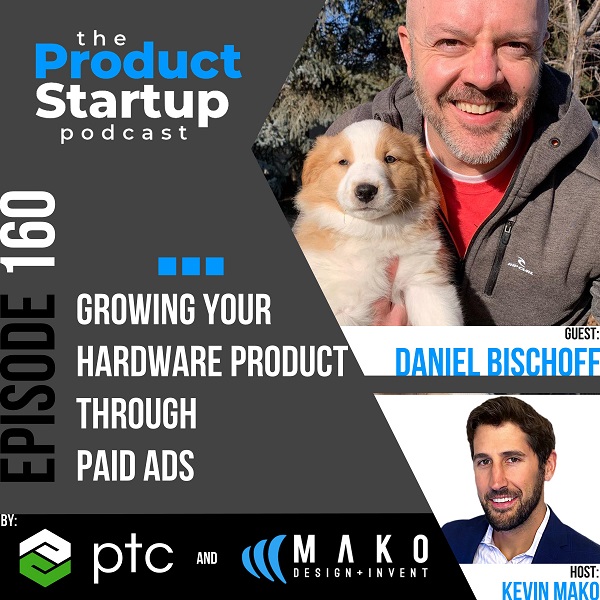
Guest: Daniel Bischoff, former Head of Growth at Purple Mattress and Founder of StoicYeti, a direct-to-consumer marketing agency.
Host: Kevin Mako, founder of Product Startup and the leading expert in hardware startup consulting. A hardware entrepreneur since 1999, Kevin has advised more than 1,500 founders and built and scaled MAKO Invent through its acquisition by TriMech in 2024.
Episode Overview
Daniel Bischoff shares lessons from helping Purple Mattress grow past $200 million in sales during its first two years. He explains product storytelling, visual demonstration, fast video hooks, creative testing, Kickstarter validation, direct-to-consumer economics, and finding the message that earns attention without wasting ad spend.
What You’ll Learn in This Episode
- Selling a new hardware product directly to consumers requires paid advertising to succeed.
- Crafting a compelling story is an essential aspect of digital marketing.
- The Purple Mattress story exemplifies how inventors sought to improve a mattress by utilizing a model from another company.
- Sometimes, uniqueness can be enough to sell a product, even if it is not necessarily superior.
- Effectively demonstrating a product’s value through video is critical for successful online sales.
- Kickstarter was employed by Purple Mattress to confirm sales and test their marketing strategy.
- To grab people’s attention quickly, strive to hook them within the first 3 seconds of the video.
- Experimenting with various hooks can help determine which resonates best with your target audience.
- Make potential customers aware of their problems and then present your solution.
- Positive reviews on Google were acquired by Purple Mattress to reinforce their ads.
- To increase conversions, it’s crucial to gain as many users as possible initially and then reach out to all customers to identify raving fans.
- Encouraging customers to submit reviews via their cell phones while utilizing the product can be advantageous.
- Preparing responses on your website to address objections to buying your product can aid in anticipating and addressing concerns.
- Having a clear problem, solution, reasons to believe in your product, and an answer to objections are necessary for success.
- Employing inexpensive videos to test your messaging can be a cost-effective approach.
- User-generated content is among the most effective advertising strategies currently available.
- Despite popular belief, advertising a new product is cheaper today than ever before.
Episode transcript
This transcript is provided for accessibility and reference. Download the SRT transcript.
Read the full episode transcript
Kevin Mako: Hello, product innovators. Today we learn from the head of growth marketing for a hardware startup that accomplished hundreds of millions of
Kevin Mako: dollars in sales on how to launch your product by a paid direct-to-consumer advertising.
Narrator: You're listening to the Product Startup Podcast, a show to learn from top leaders in product development,
Narrator: product development, prototyping, manufacturing, product selling, and everything in between.
Narrator: hosted by Kevin Mako, the leading expert on product development for physical product startups,
Narrator: sponsored by PTC's two best in class 3D CAD product development software solutions Onshape and Creo,
Narrator: and produced by Mako Design + Invent, the original firm providing world-class consumer product
Narrator: development services tailored specifically to startups, small manufacturers, and inventors.
Kevin Mako: Welcome back, everyone. Today I'm very excited to introduce Daniel Bischoff to the show. Daniel is the former head of growth at Purple Mattress.
Kevin Mako: He took Purple from startup to over $200 million in sales in just a first two years on the market. He then spun out as co-founder of his own direct-to-consumer
Kevin Mako: marketing agency called StoicYeti, which works with both hardware startups and Fortune 500 product
Kevin Mako: brands. Today, Daniel's going to share some valuable knowledge for inventors, startups, and
Kevin Mako: small manufacturers on what direct-to-consumer advertising is, what you can learn from the
Kevin Mako: purple mattress story about scaling a hardware brand, and how to create an inexpensive yet powerful video to sell your new hardware invention. Now on to the episode.
Kevin Mako: Hey, Daniel, welcome to the show. Hey, Kevin. It's good to be here. We're excited to take. to talk to you about scaling up a hardware brand.
Kevin Mako: Now, you've worked with both large corporations and small corporations. Very notably, you worked with Purple Mattress at the early days, getting them
Kevin Mako: to literally hundreds of millions of dollars in sales from zero. So a phenomenal gross story there at
Kevin Mako: purple. But you also founded a company called StoicYeti with another partner that works with hardware startups and big Fortune 500 companies alike, getting them to grow their
Kevin Mako: sales online, specifically direct to consumer, using advertising to sell product. Before we get into all the details of the episode. Give us a bit of your background.
Kevin Mako: How did you get to the point where you're at? Purple and then for Purple onto StoicYeti.
Daniel Bischoff: Yeah, I started years ago as a sports journalist. That's what I want to do is to cover sports and write about sports and go to games.
Daniel Bischoff: Soon learned that that was a dead end job for me, working weekends, not getting any money. Pretty soon I started doing some freelance work for marketing companies.
Daniel Bischoff: I joined an internet marketing company called SEO.com, where I learned a lot more about internet marketing and be able to apply
Daniel Bischoff: the storytelling skills that I learned as a journalist to marketing products and do the digital
Daniel Bischoff: marketing thing. I was in and out of different companies and started my own thing, a content marketing company in the summer of 2015.
Daniel Bischoff: I came on to consult with, it wasn't a mattress brand yet, but it was a cushion brand that was licensing cushioning products. There was a couple founders that
Daniel Bischoff: They were in their 70s, and they wanted to have one last entrepreneurship, hurrah, before they ride up in the sunset.
Daniel Bischoff: They had licensed this cushion technology to Dr. Shoals, some of their mattress brands, too,
Daniel Bischoff: and they had seen Casper and some of those companies kind of break away or carve a niche in
Daniel Bischoff: delivering a mattress to someone's door to sell, and they wanted to get in that game and use their technology to do that.
Daniel Bischoff: So in 2015, before the name purple was a name, I started working with them and helping then launch that brand.
Daniel Bischoff: Long story short, the first year we did it. We launched it.
Kevin Mako: We did over 60 million in sales. A couple of years, it went to public. And yeah, that's the nutshell story. That's amazing.
Kevin Mako: So two years going from no sales to 200 million in sales and
Daniel Bischoff: then taking the company public. And you're with them for the first few years of that journey. I was there for the first four, four and a half years, started getting a lot of other
Daniel Bischoff: companies asking me how we did it and then launched my own thing with Chris, my partner, Chris, who was the actual CMO at Purple at the same time.
Daniel Bischoff: I directed all the ad side, all the ad spend side, putting money where you can make more money and grow. So there's a lot of growing pains
Daniel Bischoff: when you grow that fast too, you know, good and bad from learning that experience is great to have. So you got to be kind of lucky.
Kevin Mako: You got to have a right product to the right time. And then you got to have the right creative and the right data around it and know where to spend your money.
Daniel Bischoff: That's amazing, Daniel. What a story. And let's dig into the details of the purple mattress story. They saw Casper, if you were a Casper mattress. This is about 2015.
Daniel Bischoff: Summer of 2015, I was pulled in. And they wanted to basically copy what they were doing. Casper kind of opened the door for mattresses to be shipped straight to your
Daniel Bischoff: door. To be able to buy a mattress online. Before that, nobody would buy online. They'd go to a mattress store and nobody thought that you could buy a mattress online.
Daniel Bischoff: People had to try it first is what you thought. But they kind of opened that door and stop there.
Daniel Bischoff: for a minute. If you're developing a product, this is a good example of sometimes it takes
Kevin Mako: someone else being a snowplow, like a Casper was. They pay a lot of money to create awareness that you could do something different.
Kevin Mako: Yeah, that's actually a pretty important thing there, just as a side note, that a lot of entrepreneurs and startups are afraid of competition. And they look
Kevin Mako: at a particular industry or whatever else and they say, oh, you know what, they've kind of made my thing or is my thing really that much better or whatever else?
Kevin Mako: And they're afraid of it. But pioneering in industry is, of course, it's a great way to open up sales channels, but it has its own cons as well.
Kevin Mako: So don't be afraid of also competing in an industry for somebody who's paved
Daniel Bischoff: the way and possibly already spent, like you said, all the money on opening that door,
Daniel Bischoff: opening up that awareness in the customer's mind that this industry is important that they should be looking at it.
Daniel Bischoff: When they first heard about this, I thought it was a dumb idea, you know, itself until I started looking at like Casper and how well they did. Because the mattress industry
Daniel Bischoff: is boring at the time. The mattress industry has boring ads. There's memory foam of temperapeutic and some other brands, and it hasn't really changed much.
Daniel Bischoff: And the thing that Casper did, they didn't create a new product. They created a new way of being able to buy it and ship it to your door and really create that awareness.
Daniel Bischoff: What what Purple did is they had that cushion technology, like Dr. Shoals. If you ever seen those ads, it's a grid type system, which if you lay
Daniel Bischoff: on it, it gives where the pressure points are and supports where it's not. So if you lay on your shoulder, it cushions your shoulder, then supports your back in a different
Daniel Bischoff: way than any of the technology does. they wanted to put that in the mattress, and they had license it's just a couple of their brands, too, in the past.
Daniel Bischoff: So what they did is they basically were doing the Casper model with an upgraded product, right?
Daniel Bischoff: And the Casper product still today is like no different than any other product out there. It's memory foam or it's latex or, you know, because of them kind of foams, but
Daniel Bischoff: it's rolled up into a box and shipped to your door. And what this does is, it's created a better mousetrap. So at first it was, this is kind of a dumb idea. Mattrises are boring.
Daniel Bischoff: Cats were paid the way. They're kind of a big gorilla. I'm already going to beat them. But then as you start seeing it, I start seeing the marketing and these brands are boring.
Daniel Bischoff: It's like big branding. There's nothing innovative in the story. Nobody was selling it with video. So we developed this. Then the founders wanted to name it purple.
Daniel Bischoff: And at the time, they had a brand called My Comfort. But it was a color of the gel sort of material on top of the mattress.
Daniel Bischoff: And in the development of it, my partner who's not here, his name is Chris. My partner was there as well. They wanted to slide that material underneath foam.
Daniel Bischoff: And so Chris's idea was, let's put that material on top. Because if it's on top of the mattress, we can visually really show the difference of the mattress. Visually.
Daniel Bischoff: If it's underneath, it's hidden and you can't show the video. You can't show the technology. It's a very innovative, different thing. If you're launching a product,
Daniel Bischoff: sometimes all you need to be is different when you're doing advertising. You're different than someone
Daniel Bischoff: else. If you're different than someone else, you have a way to say that you could be better fit for
Daniel Bischoff: them if that makes sense with mattresses almost everybody in some ways does not like their
Daniel Bischoff: mattress you wake up and if your shoulder hurts you hate your mattress you know you wake up your
Daniel Bischoff: back hurts and this is a problem it's like do you sleep this is this is you're not going to be in
Daniel Bischoff: pain anymore because we have this technology you can see it okay and the founders they used to do
Daniel Bischoff: something these really bad home videos where they'd get an egg and they'd sit on the egg or
Daniel Bischoff: they'd lay on the egg on top of the mattress and it wouldn't break and they were terrible made
Daniel Bischoff: videos. So we took that idea because what you want to do if you have a product like this where
Daniel Bischoff: you know, if there's inventors or whoever, if you have a product, you really want to be able to demonstrate a strong demonstration in video form for online.
Daniel Bischoff: And that's going to be like the most powerful thing you can do. We took this A break on the match's idea and we hired a big video agency
Daniel Bischoff: that did these big long form videos and they've already had success in viral videos, Squatty Potty and some others with the Hummer brothers. We decided to do a Kickstarter launch.
Daniel Bischoff: We want to do with Kickstarter, we wanted to validate a couple things. Can you sell a mattress with video? That's
Daniel Bischoff: kind of funny. That's a little bit, you know, not taking ourselves too serious. Because every
Daniel Bischoff: mattress out there took themselves very seriously, very serious, very pretty, you know,
Daniel Bischoff: just talking about how great their mattress is and very commercial and boring, frankly. The whole industry was really boring.
Daniel Bischoff: So we want to take this and change it quite a bit. We did a Kickstarter video showing it, made a funny video. It was low quality, funny video. And the Kickstarter sold,
Daniel Bischoff: And the guy that was funding it, only fund it if we had about 200 sales on the mattress on Kickstarter. And we did that. We did that in the first month. We sold that many.
Daniel Bischoff: And we validated that a funny video, a video showing the mattress is going to sell.
Daniel Bischoff: And then we went to this bigger agency to create a bigger viral video for the launch of the brand. Little did we know, though, that $200,000 about what we did in a Kickstarter, we
Daniel Bischoff: started doing that in a day a couple months later. We did the Kickstarter in October. It was October of 2015, launched the brand in January. And we went to the Haram Brothers.
Daniel Bischoff: We hired a local comedian celebrity. So she had a little bit of a following. It's really good. It kind of ad-libbing in the script. And this was a purple Goldilocks video.
Daniel Bischoff: If you haven't seen that, go look it up. It got about 500 million views in that first year. Wow. A couple years. So on YouTube and Facebook. This video starts off.
Daniel Bischoff: This is going to be applicable to everything you sell online. You want to be able to sell in the first three seconds of a video, the hook.
Daniel Bischoff: And so we wrote about 25 different intros to this video. And so we had the comedian name, his name is Mallory.
Daniel Bischoff: We had Mallory act to all these and say all these different hooks. And then we tested them in YouTube just to see, put a few thousand
Daniel Bischoff: dollars towards each one to really nail down what is the line that's going to keep people watching it and to have them buy, right?
Daniel Bischoff: The line that won was, if you watch it, she's up, she's dressed with goal locks. And she says, what's a super easy way to know if your mattress is awful?
Daniel Bischoff: And then it goes at the raw egg test. And then we have this big piece of glass with eggs smashing on these mattresses. And they're breaking on every mattress, right?
Daniel Bischoff: And it goes to the purple mattress, they don't break. This is like a thousand pounds pushing down on these mattresses, right? So it's a clear, like really good demonstration.
Daniel Bischoff: And it's really quick. It's this hook of like, how do you know if your mattress is awful? And that makes your brain think, oh, is my mattress awful?
Daniel Bischoff: People don't buy a mattress every year. They buy a mattress maybe seven to ten years. Like they'll switch other mattress.
Daniel Bischoff: But what this did was it made people aware that their mattress doesn't have to hurt your back.
Daniel Bischoff: What you need to do in marketing is you need to make people a solution aware, problem aware.
Daniel Bischoff: Like, some of you might not know that having a sore shoulder or a sore back is actually a problem on your mattress. It might just think that's normal.
Daniel Bischoff: So you're making a problem aware. How you know if your mattress is awful is like making you aware of a problem.
Kevin Mako: And then it's like, here's a solution, the right test. And you show all these eggs smashing it. And then you show the egg not breaking on a mattress.
Kevin Mako: mattress. And then it goes into how that's going to protect your joints or your shoulder or your back, you know, your back pain.
Kevin Mako: Anyway, so we went through that process. Yeah, that's pretty amazing. So basically, if I'm to put this into summary, the first thing you did is you looked at
Kevin Mako: an established company that had broken through the market vertical. They've created essentially a new market and you realized it was successful.
Kevin Mako: You had better technology or a better way of building that product. So step one was slightly better product of an already established, already
Kevin Mako: proven model that had been done before.
Daniel Bischoff: Then what you wanted to do is elevate that by figuring out not just how to be better than the competitor, but then testing ads via crowdfunding you did
Kevin Mako: it in the early phases, just low budget, simple stuff, tested some ads to see if your theory would work. You've got a better product and you've got a new way of selling.
Kevin Mako: Tested price and messaging, you know, the type of video. So you want to make a better product. You also want to make
Kevin Mako: a better ad. You know, you want to be able to communicate that value better than anybody else is doing.
Kevin Mako: Well, that's what I find amazing, too, is that once you validated in a small way in crowdfunding,
Kevin Mako: you then did basically another round of validation where you said, okay, let's try a number of different hooks for this video.
Kevin Mako: First of all, that three second rule, I love it, right? Within three seconds, you have to captivate the audience.
Kevin Mako: You've got the audience hook now, show them the problem, and then identify the solution, which is your product. That's right.
Kevin Mako: You try different versions of that in a very small way in each of those to really hone down. What was the marketing message that worked both to hook them and to sell them?
Kevin Mako: And that creates really great scale. So you're not just looking at testing by a small group in the beginning or friends and families saying, hey, how do you think this will work?
Kevin Mako: You're doing that, A, with the market via crowdfunding, then B, you're doing it with a larger segment to the market based on something
Daniel Bischoff: that you've proven. It's almost like in product development when you're trying to really perfect a key new innovation or technology, you're looking to theorize what will
Daniel Bischoff: work, test it, tweaking and refine it until you really nail it. And that's what you did both on the product side,
Daniel Bischoff: but then subsequently on the marketing and advertising side to really find scale. And the market advertising side, you have to keep tweaking it forever, honestly.
Daniel Bischoff: What you want to do, and this could be a conversation, but you never want to stop doing that. Like you're always wanted to try to beat what is performing.
Daniel Bischoff: You always want to knock that king off the hill constantly. One thing that really helped this business, though,
Daniel Bischoff: People that know the brand know Goldilocks pretty well, and they think that's the Goldilocks video is really what catapulted this brand and in many ways it did.
Daniel Bischoff: But after the Kickstarter video, there was a couple foundational things that had to happen to make this work.
Daniel Bischoff: When people see a video, and I'll ask you, Kevin too, that's a question for you. If you see an ad for product, what is your next step? You're going to Google it.
Daniel Bischoff: You're going to Google it every time. So what we did is those Kickstarter customers, we gave them gift cards. You can't do some of this stuff anymore, but we gave them gift cards.
Daniel Bischoff: cards to go and leave Amazon reviews. We established the Amazon review. We also went to some blogs,
Daniel Bischoff: some affiliates. There was a site called Sleepopolis at the time that did a lot of mattress reviews, some review sites.
Daniel Bischoff: We gave them affiliate number, affiliate code, and asked them to write a Casper versus Purple Review. We sent them a mattress. We asked them write a review. And that one
Kevin Mako: review was accountable for like 20% of sales right off the bat. That's the first thing people clicked on.
Kevin Mako: They go Purple Matchers Review, they do Purple versus Casper, you know, they look at competitors, and that thing comes up in search.
Kevin Mako: So you have to have those type of foundational things to make a, quote, viral video work.
Kevin Mako: Because if you're not there on the Google side, if you don't have reviews, it's going to be a lot harder to make it work.
Kevin Mako: Well, the nice thing about a hardware startup, too, is you can personally reach out to each of your first customers.
Kevin Mako: If you sell 200 units, there's no reason as a founder that you can't reach out to all 200 of those customers.
Kevin Mako: find out who's a raving fan and ask them to help support your product. The reason that they've bought into your product, or at least a big part of the reason in
Kevin Mako: the early days, isn't just the product itself. It's because they believe in you as an inventor.
Kevin Mako: Most of the time, especially if it's Kickstarter, they're buying this with the risk that they know it may not work out. It may not be what they think it is.
Kevin Mako: So just imagine how excited they are when they take a shot on you. They take a gamble on you and say, okay, I'm going to buy this new company's product. I like the product.
Kevin Mako: I like the inventor. I like the story. whatever else. It's a whole mix of things usually.
Daniel Bischoff: They place the purchase.
Daniel Bischoff: They get the product and they like it. That's a raving fan. Even those who aren't raving fans, I mean, that's great opportunity for feedback as well.
Daniel Bischoff: So listen to those people who are upset, figure out why they're upset. And that'll help you forge the product or the sales or whatever else going forward.
Daniel Bischoff: But really, it's easy as a hardware startup to get in front of a lot of people quickly in your early sales because the number's just so small. Totally.
Daniel Bischoff: And what I do a little bit differently today is I would also, ask them to send in some of their own video from their cell phone. Today, one thing that
Daniel Bischoff: I would do differently today in the launch is I would want this user-generated content, a lot of it to make for ads. So I'd redo it today, that's what I'd do as well.
Daniel Bischoff: They do not pay attention to the brands telling their own story today. It's way more powerful to have customers tell the brand
Daniel Bischoff: story. And so right now, what I would do is I would get as many of the user-generated content from these customers as possible. That's what I'd do today.
Daniel Bischoff: And there are about a hundred and 30 touch points before someone buys a product, meaning they see an ad, they Google it,
Daniel Bischoff: they look at a review site, they go to Amazon, they go to somewhere else, they look at reviews, they ask their friends on social media.
Daniel Bischoff: That ad for awareness is key to make them aware, but you have to have all those other things in place. I'm not going to buy.
Daniel Bischoff: Another thing to think about is especially a product that's a little more expensive, like a mattress, maybe it's furniture, maybe it's like an e-bike.
Daniel Bischoff: If you're in the $1,000 plus range, there's a lot of people that need to talk to someone to answer a question. And one thing
Daniel Bischoff: you need to do is list down, what are all the objections to buying this product? What are all the objections people have to buy in a product?
Daniel Bischoff: Make sure you are listing those, all of your website, that you're in your ad. We're working with the company right now. Companies were asking
Daniel Bischoff: for help on having the same kind of experience. So now you work with different brands now. We have a brand that sells trampolines.
Daniel Bischoff: They do in-ground trampolines where you dig a hole and you put the trampoline in the ground. And so people are worried about it filling up with water or getting
Kevin Mako: snakes in their hole. And so we're making that out right now about like, you know, myths, common myths, like, and we're answering those questions in the ad.
Kevin Mako: If you think about a late night infomercial, just the structure of that ad, it's the same thing. It's problem, it's solution,
Kevin Mako: and it's given more reasons to believe in the product, it's answerless questions throughout it. But you got to make that long form infomercial into a short TikTok ad today, into a
Kevin Mako: short Instagram data today in like 10 seconds sometimes, right? I really appreciate how you mentioned a problem, solution, reasons to buy in, but also objections.
Kevin Mako: If you look at that format, I mean, that format's been around for a hundred years, it's already forever, right? So that's something that you
Kevin Mako: just have to distill into today's modern methods. And one of the best ways is, A, to make sure that you're structuring it correctly.
Kevin Mako: And B, make sure that you're doing the testing. Like you say, you should forever be tweaking and refining the biggest ad companies in the world. Do you look at Pepsi
Kevin Mako: ads and they're constantly tweaking and refining their messaging, trying to find whatever is the latest and most effective way to engage new customers, right?
Daniel Bischoff: So as a hardware startup, the nice thing is you can do it cheaper and easier and more nimbly than a big corporation can, especially
Daniel Bischoff: in the beginning. When you're only spending a little bit, you could try small things and people are more lenient as well, right?
Daniel Bischoff: You can try more basic videos as you did with purple. You started with a more basic video and then you continue to increase the actual cost of production of those videos
Daniel Bischoff: as it evolved as you got more and more knowledge as to really what was working and what was not
Daniel Bischoff: working. So you're spending more money but more efficiently over time. And most people are not to be able to afford that big video we did with Homer Brothers.
Daniel Bischoff: I mean, that was a $500,000 video video. But we also at the same time, we hired a video guy who was really talented, but he was
Daniel Bischoff: much cheaper. And we did $10,000 for 10 videos. And And these videos were very cheap and some of them looked lower quality.
Daniel Bischoff: He had like a toy Hulk bouncing on. It was very childish in some ways. But one of those videos outperformed the big Goldilocks video as far as a
Daniel Bischoff: return on ad spend and a cost to acquire a customer on YouTube and it had 40 million views and it cost $1,000 to make it.
Daniel Bischoff: Sometimes it helps to do a big budget video, but especially today, you don't need to today. If I had to do this again, I would just start off with user generated content.
Daniel Bischoff: I would get employees. I would get founders. I would get them talking in the cell phone. You know, I'd be pushing those and testing all those different messaging points with user
Daniel Bischoff: generate content first because that's what I found most successful today. Like you can be cheaper today. And brand people hate it.
Daniel Bischoff: A lot of what we do right now is we generate a lot of UGC. We have a big network now of hundreds of people that they're creators online. So they know how
Daniel Bischoff: to create content for Instagram, you know, to create content for reels and for TikTok. And it's way
Daniel Bischoff: cheaper than going and hired a big production company to make an ad brand people don't like it though
Kevin Mako: because it doesn't look as pretty it's grainy and it doesn't someone's face is too close to the camera
Kevin Mako: or they don't have the right colors or whatever to us though it's like we don't care about the branding to us if it sells if it sells product move product and make money that's
Kevin Mako: a good brand to us but that's how i do it today that's actually good news for people that are creating their own product is you can make
Kevin Mako: a video of yourself you can get videos of your employees you can get video of your of your significant other We have one client, that's what they do.
Kevin Mako: They go with their employees and they go with their bouses and they make videos themselves. And some of those crush.
Kevin Mako: Some of them don't do well, but you need a lot of them. That's amazing. Something that any hardware founder can do. Anybody can do this. That's the beauty.
Kevin Mako: It's authentic and the threshold for quality isn't nearly as high as advertising used to be.
Daniel Bischoff: And the customers want this because it comes back to that authentic being that somebody is buying, not just your product, but buying into the brand vision that you are portraying.
Daniel Bischoff: as the founder, and your job isn't to appeal to everybody like maybe a Pepsi or Coke is going to try and do. Your job is to appeal to that small piece of the market that
Daniel Bischoff: your invention attracts, that branding that you portray, the way that you see it, the way that you envision it in the
Daniel Bischoff: world, finding the same tribe of people who are looking for that very same thing. And what better way to do it than to be authentic with your messaging?
Daniel Bischoff: Totally. And there's a client worked with called Your Super. They're a supplement company. They sell,
Daniel Bischoff: superfoods in powder form. And they have a really compelling story.
Daniel Bischoff: And most of their content that worked was actually just the founders talking about the story. We ran those ads and we tried
Daniel Bischoff: their ads and never beat the founders telling their story. It had an interesting story about why they started it. Crystal, her boyfriend Michael, had cancer.
Daniel Bischoff: And they overcame cancer. She started giving like getting greens and whatever, giving her him kind of a diet of these
Kevin Mako: superfoods. And they're not claiming that cured his cancer. He overcame his cancer. But then
Kevin Mako: She developed those same mixtures into some powder forms and started selling it out of her garage. And they started telling the story of like, this is our story.
Kevin Mako: This is why you made it. You're healthy superfoods that are for you in powder form easy to take.
Daniel Bischoff: And they're so engaging just those two people, you know, in their video. And I just kept saying, let's go back and make, you need make more videos.
Daniel Bischoff: You need to go in the kitchen and cook and talk about why you're putting these together and talk about your blends you make. And it was all them.
Daniel Bischoff: Like it was all cheap video they made that were really worked for them. Their best year was probably $80 million. They crushed it. So it's just them. That's amazing.
Daniel Bischoff: Daniel, if folks want to learn more about your agency, StoicYeti, and what you guys do to work
Daniel Bischoff: with hardware startups and emerging brands, what's the website and how can they reach out?
Daniel Bischoff: And of course, as always, I will put all the links below in the show notes for anyone to click through. Yeah, we work with startups. We work a lot of startups.
Daniel Bischoff: We also work with Fortune 500 companies. It's a very different approach for both kind of companies.
Daniel Bischoff: But we kind of come in the startup world, so it's very exciting for us to do that too. but we also scale brands, you know, over 500 million at the same time.
Daniel Bischoff: So our website is Stoic, StoI-C, Yeti.
Kevin Mako: We like Stoicism and we like Bigfoot. So we went to StoicYeti. So it's not cool. That's why we're named. StoicYeti can reach me at Dan at StoicYeti.
Daniel Bischoff: Happy to answer any questions. We do ads. We do a lot of user-generated content. We do ads spend across all platforms.
Daniel Bischoff: And we do a big data analysis around it. You have to know what is working, what's not working.
Daniel Bischoff: matter how good your creative is and your messaging is, you've got to know the data around to make
Daniel Bischoff: it work. We do a lot of data analysis with the power BI with our clients, so we know we're spending
Kevin Mako: we should be spending money and we want to make great creative and make sales. Yeah, much appreciated for all your words of wisdom today.
Kevin Mako: Thanks for helping out emerging startup brands get off the ground
Narrator: through digital advertising. Looking forward to talking to you soon. Thanks, Kevin. Thanks for tuning in to this episode of the product startup podcast.
Narrator: If you found some value in the show, please do us a huge favor and leave us a quick five-star review. If you have any questions, guest suggestions, or anything else,
Narrator: feel free to reach out to us anytime at our email, podcast at MakoDesign.com. That's podcast at MakoDesign.com. This show is hosted by Kevin Mako.
Narrator: North America's leading expert on product development for physical product startups. Huge thanks to our sponsors, PTC, and their two best-in-class
Narrator: 3D CAD product development software solutions, Onshape, and Creo, and Mako Design + Invent.
Narrator: The original firm providing world-class consumer product development services tailored specifically to startups, small manufacturers, and inventors.
Narrator: Thanks for joining and see you next time.
Paid Growth Strategy for Product Founders
Find the Creative That Proves the Product Fast
Work directly with Kevin Mako to sharpen your offer, demonstration, story, audience, video hooks, creative test plan, landing experience, metrics, unit economics, and the conditions required before scaling paid media.
Kevin can help you connect advertising to product readiness, customer evidence, inventory, cash flow, crowdfunding, direct sales, and the wider growth strategy.
Request a Paid Growth Strategy Call
Tell Kevin what you are selling, the creative you have tested, and where attention or conversion is breaking down.