
Listen Now
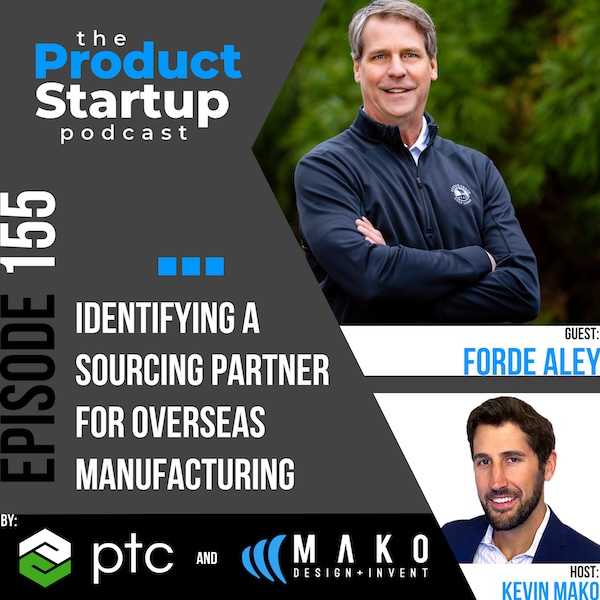
Guest: Forde Aley, Co-Founder of Shining Way Sourcing, with more than 25 years of experience and sourcing work across over 1,000 products.
Host: Kevin Mako, founder of Product Startup and the leading expert in hardware startup consulting. A hardware entrepreneur since 1999, Kevin has advised more than 1,500 founders and built and scaled MAKO Invent through its acquisition by TriMech in 2024.
Episode Overview
Forde Aley explains how founders can look beyond a factory quote to evaluate the people and systems that will actually support production. He covers factory management, site visits, quality controls, operating procedures, sourcing teams, retail logistics, capacity, and selecting a partner that can grow with demand.
What You’ll Learn in This Episode
- Selecting a Factory: A Guide to Finding the Right One.
- The Three Vital Components of Sourcing: Choosing a Factory, Maintaining Quality Control, and Preparing for Retail Scalability.
- Investigate the Factory’s Management Structure: It’s crucial to know who’s in charge, how the team operates, and how it functions as a management unit. This aspect is often overlooked but crucial to consider.
- Visit the Factory and Meet with Its Management Team: Ensure that you or your sourcing agent have visited the facility and met with the management team.
- Quality Control Measures: Ensure that the final product meets all necessary specifications and standards through established quality control processes.
- Factory Standard Operating Procedures: A manual outlining the procedures and processes used by the factory.
- Retail Logistics: Covering aspects such as packaging, UPC codes, pallets, import/export, and factory selection.
- In-House Sourcing Teams: Both local and overseas teams within the sourcing company.
- Years of Experience: Opt for a team with at least 10 years of experience as it indicates a wealth of knowledge and experience working with numerous factories.
- The Importance of Sourcing Agents/Sourcing Companies for New Consumer Product Startups and Inventors.
Episode transcript
This transcript is provided for accessibility and reference. Download the SRT transcript.
Read the full episode transcript
Kevin Mako: Product Innovators, today we learn from a 25-year sourcing leader with over 1 ,000 products sourced on how to identify and succeed with an overseas manufacturer for your
Narrator: hardware invention idea. You're listening to the Product Startup Podcast, a show to learn from top leaders in product development,
Narrator: prototyping, manufacturing, product selling, and everything in between. Hosted by Kevin Mako, the leading expert on product development for physical product startups, sponsored
Narrator: by PTC's two best-in-class 3D CAD product development software solutions, Onshape, and Creo, and produced by Mako Design + Invent, the original.
Narrator: firm providing world-class consumer product development services tailored specifically to startups, small manufacturers, and inventors.
Kevin Mako: Welcome back, everyone. Today I'm very excited to introduce Forde Aley to the show. Ford is the co-founder of Shining Way Sourcing, an agency that is sourced manufacturing for over
Kevin Mako: 1,000 products, with both founders having over 25 years of experience in the space.
Kevin Mako: Today, Ford is going to share some valuable knowledge on how inventor, startups and small manufacturers
Kevin Mako: can source their first manufacturer for their new hardware invention idea overseas, how to
Kevin Mako: ensure quality control for that production and why it is important to consider how the factory can scale as you go into larger sales over time. Now on to the episode.
Kevin Mako: Hi, Ford. Welcome to the show.
Kevin Mako: Thanks, Kevin. Appreciate it. Thanks for having me today. Well, we're really excited to have you on today to talk about sourcing your first physical consumer product,
Kevin Mako: especially overseas. You've been in the product sourcing game for over 25 years, over 1,000 products that you've worked on sourcing for companies all over the world.
Kevin Mako: So what better person to talk about that than you. And we're really excited today to get into the nitty gritty on really how it works, how to do it well, because
Kevin Mako: sourcing your first product is difficult, especially if you've never done it before, which it is to most hardware startups.
Kevin Mako: So you're there to paint the path on how to make that process smoother and how to do it right from years and years of experience. First and foremost, just give us a bit
Forde Aley: of a history of how you got to where you are today. Yeah, I appreciate that. I had a friend of
Forde Aley: mine that was in NASCAR asked me to come up and help them build a sales organization, which ended up turning into a sourcing organization.
Forde Aley: And that just blossomed over time, doing licensing, doing sourcing overseas. My current partner has had an office over in China for over 25 years.
Forde Aley: And we basically became partners. He became my sourcing agent. And I learned a lot from him over the
Kevin Mako: years. But that's how I started actually in the business, was through licensed goods. Right on.
Kevin Mako: So let's talk today about, we'll go through the whole order of things. But let's start
Forde Aley: with sourcing a factory. Yes, the sourcing a factory is super critical. You want to make sure you
Forde Aley: find the right factory, one that not only has all the social audits and the things that you're going to need to make a great product, a factory that's going to need proper
Forde Aley: QC, which is quality control. And then you're going to also want to be thinking about your product hopefully gets to a retail shelf.
Forde Aley: You're going to want a factory that knows how to do the right things when it comes
Kevin Mako: to retail, whether it's packaging, UPCs, and the proper quality control that goes along with that. Let's break those things down because those are three big picture items.
Kevin Mako: One is the actual audit of the factory to make sure can they actually build a quality product?
Kevin Mako: Then it moves on to elements of how are you going to ensure the success of that, and that's through quality control.
Kevin Mako: And then finally, I love how you mentioned this, especially in the sourcing side, considering the actual sales element, as the company scales, are you sure that that factory is
Kevin Mako: equipped to handle what the bigger buyers, which are the big retail stores, big wholesalers, big
Kevin Mako: distributors, et cetera, the many different requirements that go along with all of that too.
Kevin Mako: So let's break each of those down, starting first with making sure the factory can actually
Forde Aley: do what you want it to do in creating that great product. Well, the way you should look at it and approach it is to find out about their management.
Forde Aley: Their management is a very key part of that because if they're structured properly, they're going to be able to do that.
Forde Aley: You should also be able to have someone visit or use a customer. company that can visit with these factories. There's a lot of factories that have nice pictures
Forde Aley: on websites, but if you're not actually physically there to see what's going on inside of that factory, whether they're vertical in the way they build product, do
Forde Aley: they have all the supplies, do they outsource some of the components?
Forde Aley: So that's a big key. Then from a retail standpoint, you're going to have to have all the proper things, whether it's social compliance and the ability
Forde Aley: to scale and make larger volumes.
Kevin Mako: So that's really the key at the beginning is management, making sure that they can scale and that they have proper quality control in place.
Kevin Mako: Well, let's talk about that element of quality control as well, because that's so important and that's something that really isn't just a matter of seeing the production sample,
Kevin Mako: which is what first people think about when they're developing a product.
Forde Aley: Okay, I'm going to get one sample. If I like it, great. We're going to produce a thousand more units. But it's not that easy. Yeah, so from the quality control piece,
Forde Aley: when you're dealing with these factors, they will send you SOPs or standard operating procedures.
Forde Aley: If they don't have the ability to send that to you, which basically lays out, here's how we bring in our raw goods.
Forde Aley: Here's how we source or deal with components. Here's the actual machinery that we use. And inside of this machinery, you can make X amount of units.
Forde Aley: Here's how we do our molding if you're into a mold situation. Most of these factors that you can identify, if you really take the time,
Forde Aley: to ask the right questions in regards to their standard operating procedures on whatever
Forde Aley: items they're doing, you can learn a lot whether they're a good factory or not. Because if they
Kevin Mako: can't provide that kind of information, it probably means that they don't have good management
Kevin Mako: in place and they don't have procedures that are going to help you win long term. That's so important. And it's something that's often misunderstood as well.
Kevin Mako: A lot of people think you can just jump on the internet, find a factory, look at their website. It says they do all the right things, I really understanding what's behind the hood.
Kevin Mako: What's in there that actually makes that factory tick. Two things that you highlighted there is management
Forde Aley: and actually having boots on the ground to see yourself exactly how the factory is running, as opposed to just relying on essentially a brochure. Correct.
Forde Aley: Yeah, there's a lot of people, obviously Alibabaabin, opened up a big opportunity for inventors to be able to go over and try to do that on their own. But doing this for 25 years,
Forde Aley: It is definitely important that you have people that have knowledge that have sourced product before because there are a lot of stories of people not maybe going in the
Forde Aley: right direction when they're basically just doing this through the internet.
Kevin Mako: Sometimes you win, sometimes you lose, but it's better to be prepared and have a team around you that really understands what makes a good factory, how to identify that,
Kevin Mako: how can I scale, et cetera. Well, and that comes down to experience. And this is one of the things I think a lot of listeners, especially inventors.
Kevin Mako: You've, let's say, built a great product. You've worked with your design host. or you've built your own product yourself, whatever it might be, you've gone through all the design
Kevin Mako: and engineering rounds and rounds of prototyping. The product is perfect now. It's ready to go to
Kevin Mako: production. You don't just necessarily jump into bed with the manufacturer overnight. In fact,
Kevin Mako: I would say the vast majority of startups are going to work with people with a great deal of experience.
Kevin Mako: And traditionally, that is called a sourcing agent or sourcing expert, international manufacturing expert, whatever you might want to call it.
Forde Aley: That's an individual like Ford and your company, obviously, that helps essentially be the glue between the manufacturers and the inventor. It's really important.
Forde Aley: I think as an inventor, the first thing that you should do is find out about their team. How long have they been in business? Is it two years? Is it five years or is it 20 years?
Forde Aley: You're referring to a sourcing team. Yeah, just a sourcing team that can help you kind of navigate the waters rather than going maybe to an Alibaba.
Forde Aley: And there's a few reasons for sourcing teams to help you. One is, again, going through the beginning part of this process, is finding a proper factory.
Forde Aley: Most long-term people that have experienced have made a lot of product over a 20 to 25-year period. So they're going to know factories that are capable and competent
Forde Aley: in the area that you want to try to get something made. Number two is to have a team, if you can, both domestically and overseas.
Forde Aley: So a lot of people that are dealing with maybe a sourcing company that's based overseas, they're still having to take calls at 10 o'clock at night. And it's not the
Forde Aley: most efficient play. I feel like inventors and the people that go into this market, they're usually really good at their product and they may be really good at their sales.
Forde Aley: And they should focus their time on that performing.
Kevin Mako: So the way to do that is to hire someone experience that can identify factories that understands how retail works so that you can get product on the shelf eventually.
Kevin Mako: Those are just some things on the experience. I want to touch on that retail a bit more because
Kevin Mako: the interesting thing is you're actually thinking about the sales while you're doing the sourcing.
Kevin Mako: There's a lot of different logistical elements that people don't necessarily think about
Forde Aley: when they're first considering their manufacturing, like packaging, UPCs, pallets, import, export, all these sorts of things.
Forde Aley: Just describe why that stuff is so important, even to consider just in the early sourcing phases of your manufacturer. Yeah, it's a great question.
Forde Aley: I look at inventors when they first come in, they're thinking, okay, well, I'd like to get this into X amount of retails or some type of play.
Forde Aley: But they're not thinking about the long term. what happens if I get to a Target or Walmart, a Sam's Club, a Costco, and the amount of scale
Forde Aley: that it takes to not only make the product and engineer it, but all the factors that go into executing for retail.
Forde Aley: So typically, retailers are going to want things palletize the right way. They're going to want UPCs in certain places. You're going to want to deal with a team that
Forde Aley: understands logistically how to get the product into the states if you're not already working with a freight forwarder. So the key on the front end is,
Forde Aley: is I go back to the management, I go back to quality control and all the things that are going to need to be done.
Forde Aley: You've got to have the whole process figured out on the front end so that you can
Forde Aley: scale. So if your item really takes off, and I've seen a lot of products do this where you put it out and maybe in some Hallmark stores or whatever it may be, and
Forde Aley: then the buzz starts to happen. And then we deal with these companies that obviously are in a major scale position because now they're going to Walmart and Walgreens and Sam's.
Kevin Mako: And so there's a lot of logistics that have to go And so thinking about that on the front end, getting the team that has this experience,
Kevin Mako: not only the factory that has the experience, but also a team that understands how to do that logistically is going to be really important for inventors. Yeah, absolutely.
Kevin Mako: It's really not something that really any hardware startup should be taking on themselves in very rare circumstances that they might have a very close personal connection
Kevin Mako: with the owner or senior manager of a particular factory of a particular part, maybe just for that one element.
Kevin Mako: but most mass manufactured physical consumer products have a number of different parts, number of different materials, and a whole bunch of other certifications and standards and
Kevin Mako: everything else that goes into ensuring the product is of a global standard that will be required to sell the product once you get it overseas.
Kevin Mako: And that's where it's much more complicated, usually even than just identifying one factory
Kevin Mako: because there's usually multiple different factories or multiple different elements within the factory or the sourcing arms of those factories that are going to be required to put
Kevin Mako: all the different elements of your product together, especially if it's a consumer electronic product. Now you've got all kinds of different things that you have to deal with.
Kevin Mako: So the key is really to have that it's called middleman expert in there that knows how to navigate all these waters and
Kevin Mako: really put it all together in a complete package so that at the end of the day, you've got great
Kevin Mako: quality product that shipped to the right standards so that you can sell and scale. And that's something interesting about hardware as well.
Kevin Mako: Most inventors, like how you identify it, they don't see it coming. Hardware can scale incredibly fast, right? There's a spark that can happen with
Kevin Mako: where you go from an order of 1,000 units, it does well.
Forde Aley: And all of a sudden, sometimes even that very same buyer, wholesaler, retailer, et cetera, says, excellent, it worked well. That was a pilot. Now we want to do 35,000 units.
Forde Aley: And all of a sudden, you're stuck having to re-engineer the entire sourcing supply chain because you didn't think about that scale from the early days. Yeah, that's true, too.
Forde Aley: One other thing to think about is if you're dealing with an expert in this, there's usually abilities to have what I call a B factory and a C factory,
Forde Aley: and not because it's a B factory. It's just a second. We'll call it a second factory or a third factory behind it.
Forde Aley: Because if you get into a scaling possibility and if something doesn't work quite right with factory one, then you've got factory two already teed up and ready to go.
Forde Aley: It's good to have the ability to move if you, one, start getting into a demand situation, but also if something were to happen to that factory for some reason.
Forde Aley: They'd lose power. I mean, there's a lot of things that happened overseas where you may be in one region
Kevin Mako: and COVID was a perfect example. of that. There was a lot of factory closures. If you have no backup factory, then you can find
Kevin Mako: yourself in trouble, especially if you're trying to scale for retail. So it's important to have a group that understands that. It can stand behind that.
Kevin Mako: Absolutely. You're trying to make this full circle, right, all the way from the ending phases of product development, you're trying to get into
Kevin Mako: production and then all the way to the scaling phases. And I can tell you, especially from the product design perspective, at macro design, we are almost always working
Kevin Mako: with a sourcing agent, especially as we get closer to that finalized prototyping, ready to transition into manufacturing and
Kevin Mako: production, our manufacturing and electrical and mechanical engineers are generally coordinating
Kevin Mako: with the sourcing agents, mechanical electrical engineers in combination with the factories engineers so that everybody is ensuring that the process from your final
Kevin Mako: output in product development is going to be a rinse and repeat model to be able to make thousands of units.
Kevin Mako: That's what's really important to having that kind of expertise in the middle because changes can happen. Shortages can happen.
Kevin Mako: All kinds of things can happen at the end of prototyping all the way through to the beginning of production that has these little tactical changes that will
Kevin Mako: occur. They all need to be managed. So it doesn't just rely on your design engineers. It doesn't
Forde Aley: just rely on your sourcing partner. It doesn't just rely on the factory. It relies on all three of
Forde Aley: those coordinating in conjunction with the inventor to make sure the vision is there to ensure that as
Forde Aley: these changes or modifications happen, everything is working for the best output of that final product to production and then obviously into the market.
Forde Aley: Yeah, it's absolutely true. I mean,
Kevin Mako: I think being on the design side like you are, it's important to have that setup. And like you said, you have to have someone in coordination to be able to execute it.
Kevin Mako: So everyone's talking,
Forde Aley: the vendor of the design house, the sourcing group, whether it's domestic or overseas. So it's a really
Kevin Mako: Good point. Forde, talk a bit about what you do specifically at Shining Way Sourcing, being this middle entity between all these players to
Forde Aley: basically create manufacturability of new products. We love working with inventors that have a great concept because we feel like our
Forde Aley: house is a good place to be able to scale just a lot of that we talked about today. We've been doing this for 25 years. I have a team domestically.
Forde Aley: Everyone on that team has 20 plus years in logistics. QC identifying factories.
Forde Aley: My partner usually spends when it's not COVID, about six months a year in our office. and then we have our own employees overseas in Ningbo, China.
Forde Aley: And so it's really a good fit for inventors that come to us because we can help them on the front end identify factories. We can logistically help you on the retail side.
Forde Aley: And our company also has a group of salespeople that are in the market
Kevin Mako: that have been selling mass retail for 20 plus years. So we're kind of a full service from concept outside of a design house like yourself. Once it gets to a good concept place,
Kevin Mako: we can help them get from basically the factory identifying this factory, and then executing as large as any programs for Sam's, Walmart, Target, et cetera.
Kevin Mako: Amazing stuff for it. That's incredibly valuable service, especially bridging that gap between
Kevin Mako: the end of essentially our work at macro design, the beginning of the manufacturer's work. You need somebody in there.
Kevin Mako: And then as well, all the QC along the way. And I like that you also add that element of sales at the end, too. So that's a really important consideration.
Forde Aley: You've got a strong ability to understand how to source and make the product great and ensure it's scalable for these retailers. But you've also…
Forde Aley: evolved into the ability to push these products to the retailer. So not only are you figuring out
Forde Aley: the manufacturer for these inventor clients, but you're also figuring out on the tail end how to actually
Kevin Mako: sell more units, which is really what we all want as inventors and startups. For sure, there's another component of our business to let people know.
Kevin Mako: We build probably 30 items a year for some of the top NFL and college licensees. So if your product actually had the ability to be licensed, I think it's
Kevin Mako: something that we could also assist with as a company. Well, thanks a lot for your words of wisdom today.
Kevin Mako: Ford. As always, I will put the links in the show notes, too. So if anyone's interested, just click the links below or just head over to Ford's website to learn more.
Kevin Mako: Again, thanks for joining us on the show, Ford. We'll talk again soon. I appreciate it. Thanks so much.
Narrator: Thanks. Take care.
Narrator: Thanks for tuning in to this episode of the product startup podcast. If you found some value in the show, please do us a huge favor and leave us a quick five-star review.
Narrator: If you have any questions, guest suggestions, or anything else, feel free to reach out to us anytime at our email, podcast at MakoDesign.com. That's podcast at Mako.com.
Narrator: Design.com. This show is hosted by Kevin Mako. North America is a leading expert on product development for physical product startups.
Narrator: Huge thanks to our sponsors, PTC, and their two best-in-class 3D CAD product development software solutions Onshape and Creo, and Mako Design + Invent.
Narrator: The original firm providing world-class consumer product development services tailored specifically to startups, small manufacturers, and inventors.
Narrator: Thanks for joining and see you next time.
Overseas Sourcing Strategy for Product Founders
Choose the Factory Relationship, Not Just the Quote
Work directly with Kevin Mako to prepare your sourcing criteria, supplier questions, quality expectations, documentation, capacity assumptions, logistics needs, cost model, and risk controls before selecting an overseas partner.
Kevin can help you compare direct and agency-supported sourcing paths, review the business tradeoffs, and connect manufacturing choices to product readiness, cash flow, retail, and scale.
Request a Sourcing Strategy Call
Tell Kevin what you need manufactured, the volume you expect, and the supplier decision or concern you are facing.