
Listen Now
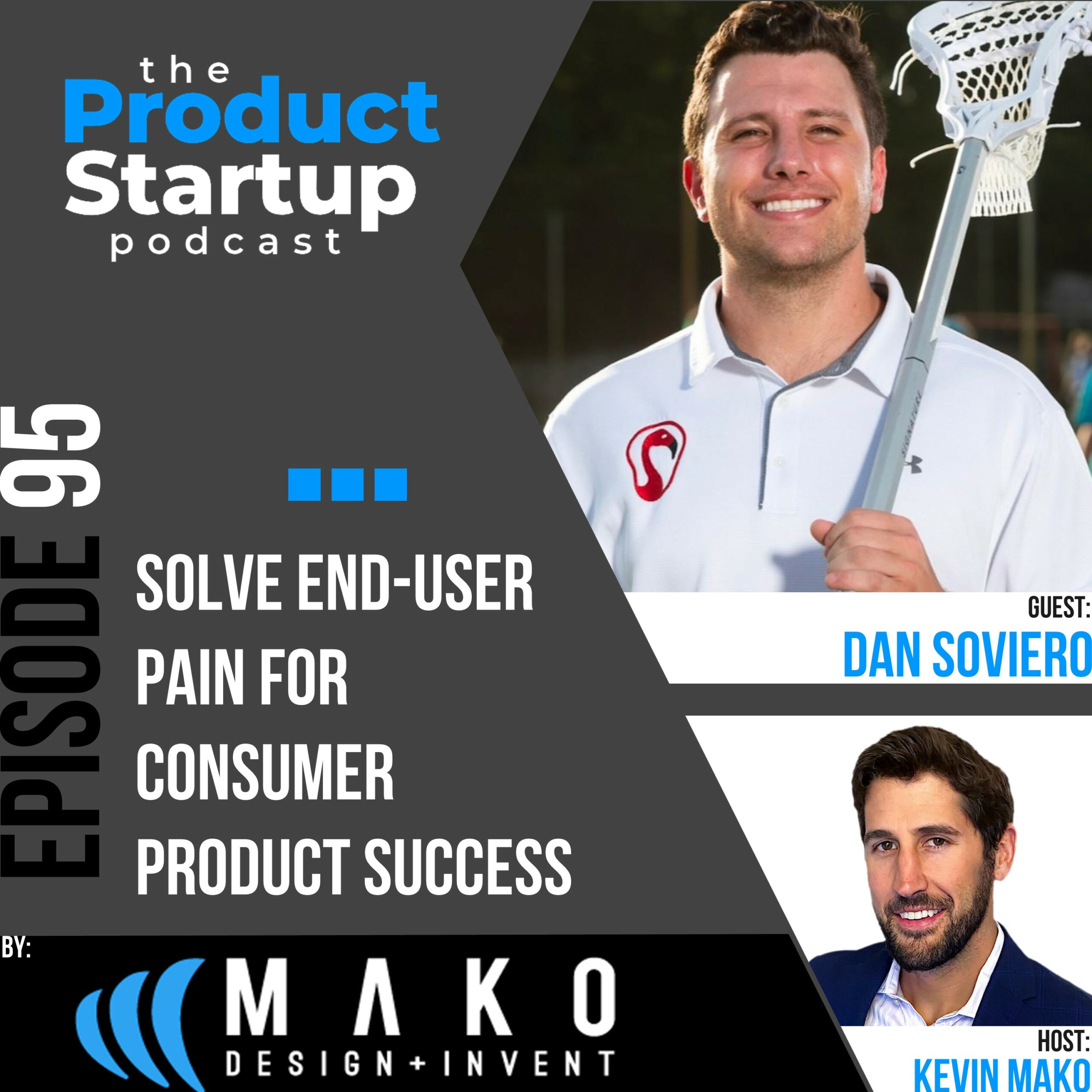
Guest: Dan Soviero, Founder of Signature Athletics.
Host: Kevin Mako, founder of Product Startup and the leading expert in hardware startup consulting. A hardware entrepreneur since 1999, Kevin has advised more than 1,500 founders and built and scaled MAKO Invent through its acquisition by TriMech in 2024.
Why Customer Pain Is the Core of Product Success
Dan Soviero explains how deep customer understanding turns a product idea into a purposeful solution with clearer value and stronger market demand. You will also hear practical guidance on customer discovery, product-market fit, MVP priorities, validation, positioning, and commercialization.
What You’ll Learn in This Episode
- A popular concept vs a problem-solving concept.
- A product with purpose has a far better chance of succeeding in the market.
- Used the process of creating value to create more products
- Dan tried white-labelling to other brands but found it wasn’t the best way to solve the end client’s pain points.
- He used innovation provided by the end client.
- Use one sentence to solve a pain point for your end-customer.
- You can come up with an invention idea by focusing on a problem and thinking hard about how to solve it.
Episode transcript
This transcript is provided for accessibility and reference. Download the SRT transcript.
Read the full episode transcript
Kevin Mako: Hello, product innovators. Today we learned from the founder of a $10 million athletic gear startup on the power of focusing on solving customers' pain point with your product.
Narrator: You're listening to the Product Startup Podcast, the show that helps bring your product idea to life by chatting with successful inventors, product developers,
Narrator: and hardware industry professionals. Our goal here is to get to the bottom of what makes a product successful, from initial idea to getting your product on store shale.
Narrator: We're taking you step by step to build a functional product and scale your product business. Hosted by Kevin Mako, one of North America's leading experts on hardware development for small product businesses.
Dan Soviero: Now, on to the show.
Dan Soviero: Welcome back, everyone.
Kevin Mako: Today I'm very excited to introduce Dan Soviero to the show. Dan is the founder of Signature Athletics, a highly successful sports gear company selling product all over the world. Dan is also a Forbes 30 under 30 recipient. Like me, he's a founder.
Kevin Mako: started his business while back in school. Today, Dan is going to share some valuable knowledge in how inventors, startups, small manufacturers can use the power of truly understanding a customer's pain point and using that understanding to create and sell highly successful products.
Kevin Mako: Now on the episode.
Kevin Mako: Hey, Dan, welcome to the show. Kevin, thanks for having me. Really excited to be here. I appreciate you taking the time. I know you're busy doing a series A raise at a $10 million valuation. I know how busy that is. So thanks for taking the time to help with all your words of wisdom to the show today.
Kevin Mako: Thanks for having me. Happy to make the time. We're excited today to talk about the value of solving a pain point and how important that is both in the product development side of things, but also as you're going to market and the value of problem solving in the marketplace with products.
Dan Soviero: First and foremost, before we dive into all that, how did this business all start for you? Yeah, so I grew up in South Florida. I was always a three-sport athlete. I love just competing. I grew up with an older brother.
Dan Soviero: I think that really helped kind of push me in sports. and also in business. So when we were younger, we just, we always wanted to make our own money. My brother kind of led the way and then I followed in his footsteps. And we started with
Dan Soviero: a mango stand. We would knock mangoes off the tree, set up a stand, selling back to all the neighbors.
Dan Soviero: And then as he aged out and went to university, I started a private lessons business doing private lacrosse lessons for kids. And that was my first kind of exposure to
Dan Soviero: management. We went from me personally doing like five lessons a week to doing like 30 lessons a week and needing to contract some of my friends to come and do the lessons. And I just organized and
Dan Soviero: took some money off the top. And in the process, built a checklist, here's what you need to go out and give a great experience to the player. Some of these guys would forget balls. Like the most
Dan Soviero: basic thing. And so I realized I wanted to start a business. I knew that was what I wanted to do. I wanted to build a team. And I wanted to do it in a way that was more scalable with less people and not
Dan Soviero: not being as people intensive. And so when I got to university,
Dan Soviero: I went to St. John's Division I lacrosse scholarship. And as I was sitting at practice one day, ball ricocheted off the post, hit me in the back. I picked it up. And I was like,
Kevin Mako: light bulb moment. This is it. All these balls are the same. We could make a better ball. And that was it. Well, and you've made the Forbes 30 under 30
Dan Soviero: list. And obviously, the signature athletics has become great success startup story. Talk more about signature aesthetics and what they do. So at the end of 2020, we created signature athletics, which is the
Dan Soviero: parent company of Signature Lacrosse. And Signature Athletics is a tech-enabled sports apparel brand that's changing the way players get their gear and what they can expect out of their gear
Kevin Mako: by transforming the traditional bulk order process to an on-demand model. Talk about that more. How does that work? And I know you're into a number of different products in the space as well. So it's interesting. You've got the apparel side, but you've also worked on the balls and other things
Kevin Mako: in and around the sports, but all with this concept of, you know, focusing. on really solving a major pain point with your customer. How did that experience start as well?
Dan Soviero: Because I talked to you a bit before the show about how you tried something that was popular versus something that really solved the pain point and really found a clear winner there.
Dan Soviero: In 2016 or 2015, I was playing lacrosse at St. Johns, had this idea for the better ball, went ahead, got a sales job that summer, made enough commission to invest in our first container of balls to bring over to the states.
Dan Soviero: I thought, you know, I'm going to sell these balls over the course of 12 months. It's about $120,000 worth of sales. This will give me enough cash to pay for my living expenses.
Dan Soviero: And when the container, before the container even arrived, as it was on the water, I was able to pre-sell the entire container in 30 days. And I called up all the coaches that had recruited me, all the colleges,
Dan Soviero: and no, I'm not going to transfer, but you should buy these balls. and unfortunately the lacrosse community is incredibly supportive so that product market fit became really, really clear.
Dan Soviero: So we ordered the second container, started to bring it in. I started to think about my time and playing division one,
Dan Soviero: playing a division one sport and then taking a full class load is 10, 12 hour days and then you throw a company on top of that. and it's just an unrealistic workload.
Dan Soviero: So after my freshman year, I decided I'm going to transfer Division II. I can still get a full-ride scholarship, and I'll have less of a time commitment to the sport, to playing, and I can focus more on the business.
Dan Soviero: And so when I transferred from St. John's down to University of Tampa, that process was about six to nine months from the time I made the decision until actually making my way down to Tampa.
Dan Soviero: Over the course of that six to nine months, we were able to get up to like four or 500K in sales. We started to look at hiring. I started to look at hiring my first team member.
Dan Soviero: That quickly came to a second, a third, a fourth.
Dan Soviero: And then at the end of my sophomore year, we were just over a million in annual sales. We were up to four full-time employees,
Dan Soviero: and I was learning more in a 30-minute conversation with a mentor than I was in an entire course at university. So I made the decision to drop out, focus full-time on the business.
Dan Soviero: I started just inundating myself in business books, good to great, traction, all the classics.
Dan Soviero: And one thing I was reading at the time was about as you're building a team, you don't want to build in silos, you want to be really collaborative, especially in that early stage.
Dan Soviero: And so connecting the end client with product is super, super important. And so I'm thinking to myself, okay, well, we just hired her first sales guy, how can I keep him really pumped?
Dan Soviero: We have this awesome ball. We're going to, what's the next product in the pipeline that's going to really give us more to sell?
Dan Soviero: And at the time, I wasn't, I wasn't thinking like, who are we? And what's our identity? I was thinking,
Dan Soviero: what's another cool product we can sell? Right. And so our sales guys on the phone, he's, he's making all these calls. He's doing this fidget spinners. We're big at the time. And as
Dan Soviero: he's doing this, I'm sitting there looking at him and I'm like, huh, what if you put a fidget spinner on the, as the end cap for the lacrosstick? That would be a cool, like, knick-knack product. retailers could put it at the front of their store.
Dan Soviero: On the checkout counter, it's a nice upsell.
Dan Soviero: And so we embarked on that product.
Dan Soviero: About nine months later, we brought the product to market.
Dan Soviero: We did a big rollout. We launched on social media.
Dan Soviero: We had, I think, close to a thousand people share the video of the fidget spinner butt end when we first released it,
Dan Soviero: which is on social media to get 1,000 people to share in a direct message, one of your pieces of content is like ridiculous. It's awesome.
Dan Soviero: The caveat to that was the number of actual purchases was about 10. So even though we had this highly shareable piece of content about this new product,
Dan Soviero: we got a ton of awareness around it, it didn't fundamentally solve a problem. And at that point, everybody probably had a fidget spinner.
Dan Soviero: So what's the difference between a fidget spinner and then having one that can also go on the end of your lacrosse stick when you're not even going to end up using it in a game that doesn't solve a problem, doesn't make you perform better, there's no real benefit.
Dan Soviero: So that was a real eye opener for me personally to take a step back and say, okay, we just spent six months. We spent a chunk of change.
Dan Soviero: what's the lesson that we learned and how are we going to take that and apply it moving forward so that we don't make the same mistake twice which is something we talk about internally all the
Dan Soviero: time as part of our culture and so when we took a step back and we really compared what did our premium lacrosse ball solve what did the fidget spinner butt end solve what was the difference
Dan Soviero: And the lacrosse ball solves a very clear problem.
Dan Soviero: The traditional lacrosse balls in the market go bad in about two weeks.
Kevin Mako: Ours lasted twice as long. Now it lasted even longer, but it lasted twice as long. So players were able to get more reps out of every ball, which increased the ability for the coach to have a great practice,
Kevin Mako: for the players to have a great practice.
Kevin Mako: And then what did the fidget spinner solve? Nothing. And so that was when we made the decision, okay, at our core, any product we bring to market
Kevin Mako: has to solve a very clear problem that we can communicate in one sentence or less. And if we can't do that in our initial product report, our IPR, we call it,
Kevin Mako: then we're not even going to develop the product.
Kevin Mako: That's very powerful stuff. And I really, really like the fact that you did this through experience. You've tried both avenues, essentially, and that is a tough thought process as you're going through as an inventor or developer.
Kevin Mako: A lot of these features or ideas that you think of, it doesn't necessarily trickle down to true value for the customer. And hindsight's 2020, and everybody is sitting there thinking, yeah, well, that's obvious
Kevin Mako: or whatever else that the fidget spinner might not have been as successful as a performance ball. But I can tell you, I've seen it in working with hundreds and hundreds of startups in the product space where it's easy to get kind of consumed in the moment and be thinking about sales
Kevin Mako: or be thinking about uniqueness or especially in your situation, you guys must have been on cloud nine when you had all that success on social media because it seemed like market
Dan Soviero: validation. But the reality was that it just didn't solve the pain point to the point where somebody would actually whip out their credit card to purchase the thing. So this is an incredibly powerful story. And what I love about that is you use those lessons. You learn.
Dan Soviero: use that failure to reinforce your brand and to figure out the brand values that you would never go forward with another product unless it's solved a major problem for somebody. And what I really
Dan Soviero: like about it is that you can highlight that problem in one sentence. And I think that's something very powerful for anyone who's got an invention idea or a product idea, no matter what stage you are in development.
Dan Soviero: Think about it. Can you describe this accurately in one sentence? And does that one sentence really seemed like it hits home with solving a pain point. Yeah, and then go validate that that one
Dan Soviero: sentence solves a problem by going and talking with your clients and saying, hey, here's a problem that we're going to set out to solve. If we solved it this way,
Dan Soviero: would that be a solution you'd be willing to pay for? Would you be willing to pay more for it than what you're using right now?
Dan Soviero: it really the way we kind of thought about it was when you truly solve a problem it's timeless
Kevin Mako: when you follow a trend there's a lifespan and when you're bringing product to market
Dan Soviero: everyone can say and you run a great company that I'm sure has a timeline and a process for bringing products to market shit happens you know like the supply chain gets completely
Dan Soviero: disrupted because a container ship gets stuck in a in a canal like and all your product
Dan Soviero: bringing to market is on that container ship like so things happen timelines get delayed timelines get sped up and getting the timing right to launch a product that's trend based there's so much risk
Dan Soviero: versus if you really fundamentally solve a problem that's timeless you're going to have clients at the door at any point when you when you do launch absolutely tell
Dan Soviero: me a bit more about how you use this to actually scale your product business beyond the ball yeah so after we
Dan Soviero: went through the the fidget spinner butt end experience um we we took a step back and we started to think okay um at the time we community is something that's really important to me and my
Dan Soviero: wife, Maddie. And so when I did decide to drop out, I was working 12 to 15 hour days between
Dan Soviero: lacrosse, school, and the business. And I made a conscious choice. I didn't want to lose that work ethic. And so as soon as we launched, I said, okay, or as soon as I dropped out,
Dan Soviero: we launched another business. And that was a community-based youth sports management company. so my wife really runs that business and has done an incredible job. There's now like 500
Dan Soviero: kids in the programs that she works with. It's all here locally in Florida. And it's allowed me to continue doing something that I'm really passionate about, which is coaching the next
Dan Soviero: generation of athletes. So I've always coached since I was probably 16 years old.
Dan Soviero: I've coaching the younger age group, U-10, eight, and nine-year-olds. And when I go out at the beginning of the season, I was restringing 29 out of the 30 sticks on the team.
Dan Soviero: And the 30th kid, I was just like, here, take my stick, because I don't want to string another stick.
Dan Soviero: I played division on lacrosse. And these kids who are showing up with a stick that they bought from Dick's sporting goods or wherever, I can't even throw with that stick. So we knew this is a fundamental problem.
Dan Soviero: If we solve it, it's actually going to increase retention across the entire sport, which is going to grow this sport, which is going to grow our market. And that's really the biggest opportunity within the niche sports is how can you grow
Dan Soviero: participation? And so we took a step back and we said, can we make a pro-strung stick as if I strung it
Dan Soviero: that's game ready right off the shelf and super easy to think about and say and I thought six months
Dan Soviero: no problem three trips to China later I spent a month at a time over there it took about 18 months
Dan Soviero: we ended up figuring out that the factories that were making the sticks the factory workers thought that they were sandals they thought they went on your foot They didn't even know what it was used for.
Dan Soviero: And so having the coaching background, me and my wife, I took her over there on my second trip and I was like, we got to give these factory workers a clinic. We got to show them what the sticks are going to be used for. So we taught them how to pass, how to catch.
Dan Soviero: We showed them videos of games. We showed them. We went outside to a field and we actually played.
Dan Soviero: And by the end of it, they were like, you could see it kind of click. and they started to understand why we had this 250-page stringing manual and why we had this intense
Dan Soviero: quality control process and how important it was to the increasing the probability that a kid has a successful experience with the sport. And so we brought that product to market.
Dan Soviero: I had
Dan Soviero: growing up broken an insane amount of sticks because I was very physical as a player. And so when we went over to Asia for the first to build the shaft for the stick.
Dan Soviero: I brought over my favorite shaft, the one that I used all growing up. And I said, we want to make a shaft like this. It's scandium and titanium infused metal. I took it to a scandium factory. The guy whips out a knife,
Dan Soviero: the factory owner. He scrapes the metal with a knife. And he just starts cracking up. And I was like, what this guy laughing at. I'm sitting across. I don't understand what he's saying. And he's just laughing at me.
Dan Soviero: There isn't an ounce of scandium in this product.
Dan Soviero: And I was like, really? Huh.
Dan Soviero: And it turns out that one of the other brands in the sport, who I won't name,
Dan Soviero: just had a sticker on the shaft that said it was scandium, but there wasn't actually any scandium in it. And so there wasn't even titanium in it. It was alloy. And so that really pissed me off,
Dan Soviero: because I had broken so many sticks. And so part of our go-to-market for this pro-strung stick that comes game-ready right off the shelf was let's offer the first lifetime warranty.
Dan Soviero: And let's really push the whole market forward and make it so that everybody has to build products, not built with obsolescence, but built to actually perform. And so we were able to do that.
Dan Soviero: And then we looked at what are the other problems in the market that, that are close. clients have that we could solve and stringing a net to a goal frame takes about two hours.
Kevin Mako: So we created a Quick Connect goal that takes about five minutes. And so between our balls, our sticks, our goals, we had,
Kevin Mako: we've done about over 10 million in sales in the last four years just with signature lacrosse. And so through that process, about two years ago, we took a step back and we said,
Kevin Mako: what's a broader sport agnostic problem that we could solve that would really help make these sports more accessible, help get more kids involved,
Kevin Mako: and give more kids the same experiences that we were fortunate enough to have through sports growing up. And that was where we decided the
Kevin Mako: biggest problem in the market is ordering uniforms and fan gear and equipment custom with your team's branding on it is a nightmare. It sucks for the program.
Kevin Mako: It sucks for the parent. It sucks for the player. And most importantly, it sucks for the program director because it's plagued with time consuming inefficiencies. There's way too many cooks in the kitchen, and it's filled with errors.
Kevin Mako: So we solved that problem, and that was what prompted us to create signature athletics,
Kevin Mako: and we raised a seed round at the end of last year, and then now we're in the middle of our Series A.
Kevin Mako: We've proved the concept in lacrosse, and now we're getting ready to scale and all the other sports. what's so powerful both these stories is they all come back to solving a pain point.
Kevin Mako: What I find quite interesting is that a lot of inventors or want to be inventors, folks who say, you know what, I haven't come up with that aha moment. I think your story is very powerful to say, look around you and start with the pain point
Kevin Mako: because especially when you were working on the sticks, the fact that you really identified
Dan Soviero: the pain points and then you were able to just through will and time and effort figure out ways to solve that. It wasn't that the solution was there in front of you on day one. It wasn't that the invention idea popped into your head and you said, okay,
Dan Soviero: I'm going to solve, I figured this out. But what you did do, and it seems to be your brand promise and really what is at the core essence of your business is you search for the problems first. And then once you see the problem,
Dan Soviero: then you go, you know, as hard as you can to try and figure that out. If you can't find the solution, I'm assuming you move on. but most of the time, you know, human nature is if you have enough curiosity and if you
Dan Soviero: really care about what you're doing and if you are noticing that there's a major pain point out there, you will find the way like you did with all the things that you mentioned. That's so powerful,
Dan Soviero: not just for people who don't have an idea, but even if you're sitting on your product idea or you're in development or you're thinking of your next version of your product, it's very powerful to consider how all of that factors in, really focusing on the pain
Dan Soviero: points, which really is the core messaging here, and then working backwards to how technically you're going to solve them. And we do that all the time at the design firm, at Mako Design,
Dan Soviero: because it's continually a blend of, okay, I've got this solution mixed with, well, I partially have the solution, but I also have this problem with either a specific part of the product or a piece of the market or whatever else. And then we work collaboratively to actually find
Dan Soviero: the solution in there. But it all starts with that aha moment that isn't the invention itself. It's really identifying the problem, the pain point, and everybody, no matter what walk of life,
Kevin Mako: no matter where you live, no matter what you're doing, you can find those pain points in your own life and then just start thinking and theorizing, how am I going to solve those problems? Because, Dan, you're a perfect example of somebody who's done that over and over and over just based on this theory.
Kevin Mako: Yeah, yeah,
Kevin Mako: I'm flattered and I really appreciate it. But also, I think there's
Kevin Mako: value in that one sense. sentence. And the reason that there's so much value in that one sentence that communicates the
Kevin Mako: solution to the problem is it forces you to not get lost in the development process. Because a lot of times when you go through the development process, it's like, well, this feature would be nice
Dan Soviero: to add. This feature would be nice to add. This feature would be nice to add. Yeah, we call it feature creep. Yeah, feature creep. That's a great way of describing it. And at the end of the
Dan Soviero: of the day when when you're solving a problem you want to get an MVP out and in the market and you want to get that client feedback that feedback loop is so critical because what you think
Dan Soviero: is the right solution to the problem might not be what the clients think is the right solution of the problem or might not be it might be the same solution you might just need
Dan Soviero: to communicate it differently or you might need to add one feature or you might need a tweak one thing in your sales process there's when you're solving a fundamental problem you're
Dan Soviero: typically changing behavior within your client as well and that's hard a lot of people don't want to change and so when you're getting your MVP out to the market and you don't overload it with all these
Dan Soviero: features it's an easier adoption and it's an easier opportunity for your clients to give you quality feedback on what would make this more easily adopted by the masses and not just
Dan Soviero: that those early adopters. I love how you mentioned MVP. It's something we talk a lot about on the show of getting a really good quality product out there that solves one major pain point,
Dan Soviero: maybe one or two key features. Do those features at a high grade. Make it great.
Dan Soviero: And you can afford to do that if you're focused, as opposed to if you try and do everything, many things are going to collapse or you're just simply not going to have the resources. So first and foremost, get the
Dan Soviero: MVP version out there, but done at a high quality, then listen to your customers. And Dan, I want to segue that into your story about white labeling that we talked about before the show, how you started
Dan Soviero: white labeling to these major brands, which is an incredible leap of basically distribution exposure. However, it didn't really stick to the core model. Can you explain how all that worked and what the
Dan Soviero: kind of learning points were out of that yeah yeah so um when we first got started uh like i had said
Dan Soviero: i was in college and so um i was managing a full student athlete division one schedule um and as the
Dan Soviero: container was coming over i was able to get the complete container sold in in 30 days in the summer and so um i was able to allocate a lot of time to that i was working like 12 15 hour days in the summer.
Dan Soviero: But then when school started back up and athletics started back up, I realized time was going to be a huge bottleneck for me. And so I thought about, all right, well, what's our average order value right now?
Dan Soviero: And it was a couple,
Dan Soviero: like $1,000 or $2,000. It wasn't huge.
Dan Soviero: And so I thought, okay, well, who buys the most balls at one time in the market?
Dan Soviero: And then I thought, well,
Dan Soviero: Under Armour is a big player.
Dan Soviero: Maybe I should just go talk with that. And so I figured out how to get in touch with the licensing group that was responsible for all their lacrosse equipment.
Dan Soviero: I pitched him on the idea. They loved it. We signed a three-year agreement and we started working on it.
Dan Soviero: They put in their initial orders. And so that got us a ton of distribution.
Dan Soviero: a ton of sales.
Dan Soviero: It was relatively easy to manage.
Kevin Mako: And then what we realized was solving that one problem with the ball wasn't enough. We wanted to do, we wanted to solve,
Dan Soviero: we wanted to keep improving and iterating on that solution. And then we also wanted to solve other problems. And so as part of like the iteration to the ball, it was, okay, well,
Dan Soviero: if you look at the history of a lacrosse ball, It's gone from being a leather bound ball to a porcelain ball to at
Kevin Mako: one point it was like a fish's skull was used as the ball with the Native Americans. So there's been all these different iterations and it's natural that there would be a next evolution of the ball.
Dan Soviero: And we want to be the ones driving that. And so that's not going to happen when we're white labeling.
Dan Soviero: And we're not going to really be able to do that if we're not in touch with that end consumer. And so we made the decision that white labeling wasn't the path for us.
Dan Soviero: Even though we were doing a couple million in sales, it was we really need to go direct to consumer. It's going to give us a much healthier margin to reinvest into that innovation. And it's going to give us that feedback loop with the end consumer.
Dan Soviero: so we can really start to understand as we're developing this next generation of a ball,
Dan Soviero: what do the players want? What are the coaches want? What are the refs want? What do the fans want? And what we ended up nailing down through that process is there was really three key things.
Dan Soviero: The ball needs to improve the safety for the players.
Dan Soviero: The ball needs to be more digitally visible.
Dan Soviero: So everything's moving, everything's already on your phone. If you can't track the ball, the way you can track a hockey pocket, a hockey game, like it's going to be hard to watch.
Dan Soviero: And then the ball has to improve performance. So there's ways to engineer the ball.
Dan Soviero: If you think about the technology behind a golf ball, it's not a perfectly round ball. There's those divots in it. So there's ways to innovate the actual design of the ball to make it more aerodynamic.
Dan Soviero: And so all of that came from client feedback. It didn't come from us just sitting behind closed doors and thinking about a solution.
Dan Soviero: It was what would really solve, what's the next generation look like? How does it solve? What are the problems that it could solve?
Dan Soviero: Yeah, and tons of great lessons here for hardware startups. Really appreciate your time being on the show today. How can people find out more about signature athletics?
Dan Soviero: Yeah,
Dan Soviero: you can follow me on LinkedIn, Dan Soviero-Signature Athletics, or you can check out our website, Signature Lacrosse.com.
Dan Soviero: And we are raising our Series A round for anybody interested.
Dan Soviero: And yeah, I really appreciate being on the show. Thanks so much for having me, Kevin. Thanks, Dan. And as always, I'll put all those show links into the episode notes and what. So whether you're listening to it whether you're looking at it on YouTube or wherever else, you can just tune in and check out the links below.
Dan Soviero: Dan, thanks again for being on the show. Much appreciated. Thanks, Gary.
Narrator: Thanks for tuning in to this episode of the Product Startup Podcast, the show that teaches you what it really takes to bring your product to market and turn it into a big success.
Narrator: This podcast series is brought to you by Mako Design + Invent, the original and leading firm in North America to provide global caliber in-to-end physical consumer product development,
Narrator: to startups, inventors, and small product business clients. If you're looking for product development help on your invention, head over to Mako-design.com.
Narrator: That's m-a-k-o-design.com for a free consultation from one of Mako-designs for design studios from coast to coast. Thanks for listening and see you next time.
Build Around a Problem Worth Solving
Make Customer Evidence the Center of Your Product Strategy
A clear pain point improves requirements, positioning, pricing, and sales. Product Startup can help you research the problem, test the promise, and decide which product choices create the most value.
Work directly with Kevin Mako, the leading expert in hardware startup consulting, on customer discovery, product-market fit, MVP priorities, validation, positioning, and commercialization.
Validate My Product Opportunity
A focused strategy call on why customer pain is the core of product success, tailored to your product, stage, and commercial goals.