
Listen Now
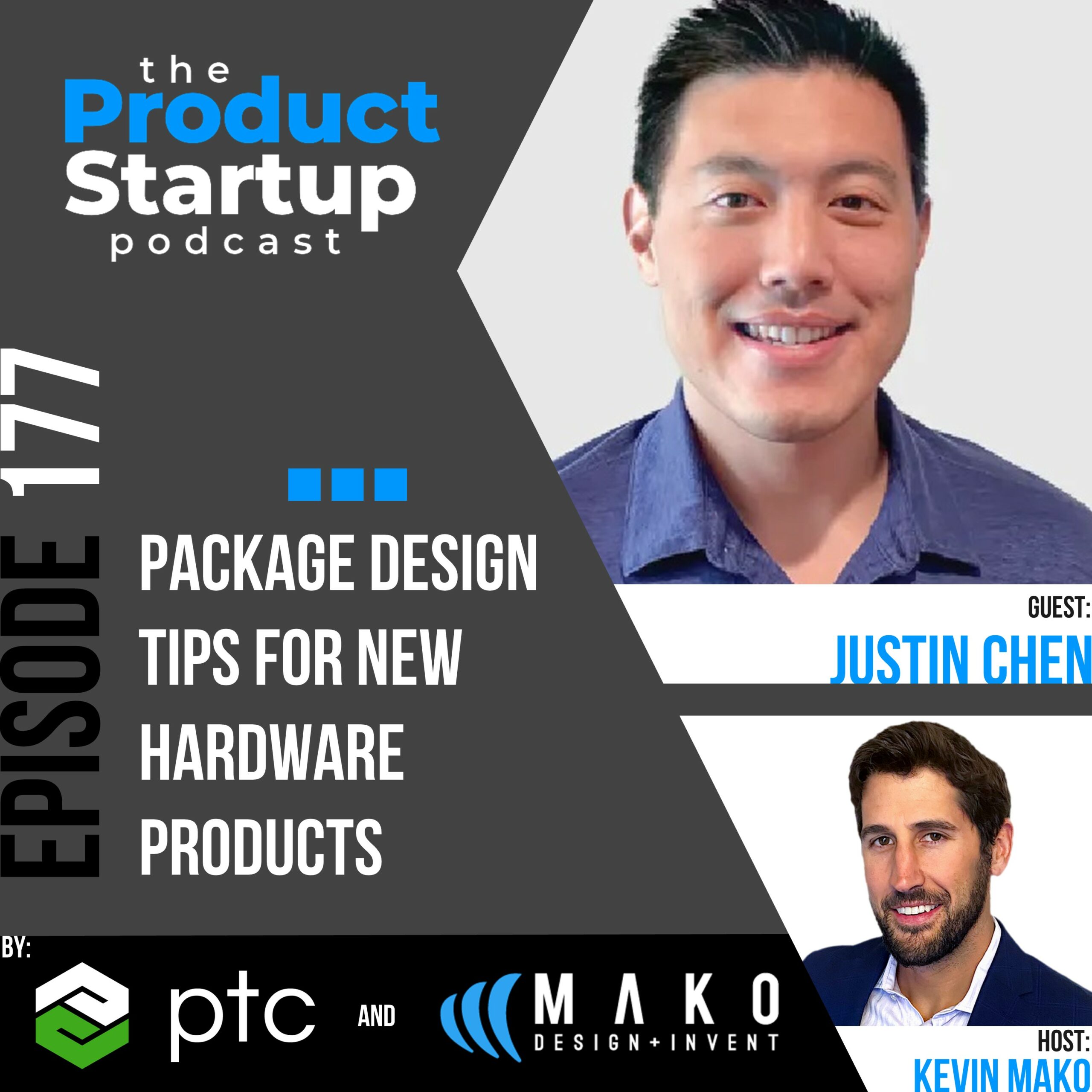
Guest: Justin Chen, Co-Founder of PickFu, a customer research platform that has collected responses to more than five million queries.
Host: Kevin Mako, founder of Product Startup and the leading expert in hardware startup consulting. A hardware entrepreneur since 1999, Kevin has advised more than 1,500 founders and built and scaled MAKO Invent through its acquisition by TriMech in 2024.
Episode Overview
Justin Chen explains why packaging is a sales asset, not a final detail to address after the product is finished. He covers competitive comparison, visual impact, information hierarchy, badges, buyer questions, ranking selling points, and using real customer feedback to improve package decisions.
What You’ll Learn in This Episode
- While friends and family feedback can be helpful, it’s crucial to also consider the competition to gauge packaging standards.
- Neglecting packaging as an afterthought can be a costly mistake since it plays a significant role in your product’s success.
- Ensure your packaging is eye-catching to stand out from competitors.
- Adding badges to your packaging can attract customers and generate interest.
- Informative packaging should highlight the essential selling points of your product.
- Gather feedback from people to rank the selling points of your packaging.
- Anticipate the questions potential buyers may have and address them in your packaging.
- Treat hardware packaging as a digital billboard, making it visually appealing and engaging.
- Incorporate images of your physical packaging into your digital marketing materials.
- Attention to detail in your product packaging instills confidence in your product’s quality.
- Create multiple variations of your packaging design, starting with broad creative options and obtaining feedback to select your favorite.
- Continuously iterate and refine your packaging design to narrow down the best option.
- Test your finalized package design against competitors to reduce packaging risks.
- Engage customers by asking them about the functionality of your new hardware product.
- Hardware startups should prioritize high-quality and informative packaging as essential factors for success.
Episode transcript
This transcript is provided for accessibility and reference. Download the SRT transcript.
Read the full episode transcript
Kevin Mako: Hello, product innovators. Today we learn many product package design tips and processes from the co-founder of a design review
Kevin Mako: platform that has worked with over 30,000 businesses.
Narrator: You're listening to the Product Startup podcast, a show to learn from top leaders in product development, product development, product selling, and everything in between.
Narrator: Hosted by Kevin Mako, the leading expert on product development for physical product startups, sponsored by PTCs 2 Best in Class 3D CAD Product Software Software Solutions, Onshape
Narrator: and Creo, and produced by Mako Design + Invent, the original firm providing world-class,
Narrator: consumer product development services tailored specifically to startups, small manufacturers, and inventors.
Kevin Mako: Welcome back, everyone. Today I'm very excited to introduce Justin Chen to the show. Justin is the co-founder of PickFu, a platform that helps businesses survey real people about
Kevin Mako: their key visual decisions. They have administered over 5 million queries over the last 12 years.
Kevin Mako: Today, Justin's going to share some valuable knowledge for inventors, startups, and small manufacturers on why hardware product packaging is so important, how to design great
Kevin Mako: packaging and how to use real feedback to iteratively improve and perfect your package design. Now on the episode.
Kevin Mako: Hey, Justin, welcome to the show. Hey, Kevin. Thanks for having me. Well, we're excited today to talk to you about package design and how you can use
Kevin Mako: iterative package design to truly figure out not only what is the best packaging for your product, but what does the market want? How does that packaging sell?
Kevin Mako: And I know packaging is one of those things, especially to a hardware startup. It's kind of an afterthought.
Kevin Mako: You've worked on developing this invention and going through all the rounds of design,
Kevin Mako: engineering prototyping, getting it to production, and then you start thinking about packaging.
Kevin Mako: Of course, how you package a product largely depends on the type of customers you have. Who are you selling to? How are you selling it? And a whole bunch of other factors.
Kevin Mako: So I love how you work with the concept of iterative packaging because it's very much something we do in the development process, concept of using real customer feedback
Kevin Mako: to figure out what truly is the best at the end of the day, especially as you go through production runs.
Kevin Mako: But in your case, you can apply that product process also to packaging. So before we get into all that. Give us a bit of a background.
Justin Chen: How did you get to where you are today? Sure. So I've been an entrepreneur for 15, 16 years. My co-founder and I were building a totally different web business before this.
Justin Chen: And along the way, we were working on a redesign. And we needed to get consumer feedback on two different designs that we were kind of at a heads with each other.
Justin Chen: Being engineers, we decided to build a solution for our problem. And we built the solution to gather rapid consumer feedback. That's where PickFu comes in.
Justin Chen: And so we're kind of like a digital focus group that helps you get feedback on anything from branding to packaging to marketing materials. And so, yeah,
Justin Chen: we solve that gap where you want to go into a coffee shop and you want to ask people, what do you think of this, whether that's your product or your packaging?
Kevin Mako: And we allow you to do it digitally. That's amazing. So let's talk about package design and going through this process to learn from
Kevin Mako: customers on how to really create the best package design that will sell the most product at the end of the day. What are some of the step to get the ball rolling in this process?
Justin Chen: I guess it depends on your category, right? And so looking at the competition, kind of understanding what the expectations are for packaging.
Justin Chen: So obviously, there are some things that might be boxed or some things where your product is actually out and you're hanging in retail shop. So you need to think about what it's
Justin Chen: going to be, what form it's going to take based off both your competition and where you're going to be selling it, whether it's retail or an Amazon or whatever it is.
Justin Chen: Packaging is a huge way that people buy stuff. It's just like what they say about books. People do judge books by their cover. And people judge products by their packaging.
Justin Chen: And so when they're shopping online or even shopping in retail, it's got to be eye-catching. It's got to catch your attention and it's got to be
Kevin Mako: informative enough to actually sell the product. You mentioned a couple things there, and that's great advice. Eye-catching and informative.
Justin Chen: Let's dive a little bit deeper under each of those. So on Amazon or something, say you're selling it digitally in a marketplace, you really got to stand out from your competition.
Justin Chen: You want to emphasize certain points that maybe aren't so obvious. A lot of times products are so amazing that once they get reviewed, people are like, oh, this is great.
Justin Chen: But that's way down the funnel. You've got to get them to first. click and you got to get them to convert, then they can actually experience how great your product
Justin Chen: is, and I'm sure it's great. But if you've won an award or maybe there's some special feature attribute, put that on the packaging.
Justin Chen: Sell it up front so that it can get in people's heads out like, oh, okay, like this is why it's different. This is why it's better than some of my
Justin Chen: competitors. And so that's eye catching. And so putting like a badge of, oh, this is one the most usable, this longest battery life.
Kevin Mako: Like those things are going to be eye catching on your package. Yeah, that's really useful, especially eye catching because you've really got a different
Kevin Mako: Now, most of the people who listen to this podcast are working on an innovative or disruptive or unique product.
Kevin Mako: That's the amazing thing that you can bring to the table to compete with your competitors. So the key is, how do you now translate that into visual form?
Kevin Mako: And really, it depends on what it is. It's going to be different when you're walking down the aisle at a retailer versus
Kevin Mako: if you're trying to sell to a wholesaler at a trade show, for example, or if you're trying to sell online through Amazon and even online, there's a lot of different ways to sell.
Kevin Mako: There's a lot of different mediums. It's a big difference between your own website to sell a product direct to consumer and
Kevin Mako: Amazon and big difference from there to something like Kickstarter Indiegogo if you're doing crowdfunding.
Kevin Mako: So each of these have unique nuances and have some differences and best practices that can be applied to your product. I want to talk about something else that you mentioned here.
Kevin Mako: You talked about eye catching, but you also mentioned informative, especially as a new innovative product.
Kevin Mako: That's really important because you need to educate your customer on exactly what that
Kevin Mako: major benefit is that makes your product unique or means that it's something that that customer
Kevin Mako: should buy. Talk a bit about best practices that you've seen around kind of the informative
Justin Chen: category on packaging. Yeah. So one of the things that we suggest people do is run one of these focus groups against what the important selling points are around a product.
Justin Chen: And so on PickFu, you can do this. You can ask people like, all right, you're a parent and you got kids and this is the solution that we've got for you.
Justin Chen: So like, what are the important issues or selling points that are important to you and just having people list them or rank them? And that's going to help you
Justin Chen: understand what you need to be emphasizing. Or maybe you put up your product on one of our
Justin Chen: pick food polls and say you're looking at this product and you're interested in buying it, what are the questions that you still have?
Justin Chen: And those are probably things that you may want to adjust, even as early as on the packaging. The packaging is essentially your digital billboard. A lot of
Justin Chen: times the best main images that we've seen actually include the packaging as well. So kind of a best
Justin Chen: practice on a lot of marketplace main images is actually including the packaging in the background.
Justin Chen: And that's why it's such an interesting opportunity to include these selling points directly on the
Justin Chen: packaging so that your product doesn't have to stand alone, especially if it's really innovative and people don't know what it is.
Kevin Mako: That's when your packaging needs to be a little bit more informative. That's brilliant.
Kevin Mako: I like the idea of using your physical packaging, some of that essentially retail store packaging to highlight your digital footprint.
Kevin Mako: That's a great tip that anybody can put in action pretty quickly. And it makes the product look more substantiated as well, I feel like a more real, more authentic product
Kevin Mako: than something that's maybe just a screen. shot or whatever other method that shows it is a real physical thing that maybe you envision
Justin Chen: would be on the shelves or should be on the shelves, even if it's not. And I think the more attention and detail you put into your packaging, I mean, take Apple,
Justin Chen: for example, they put so much love and care into making beautiful boxes and packaging. It makes you feel more confident about the product and showcasing that attention and
Justin Chen: detail in your image, I think gives you a lot of credibility and it makes you stand out against
Kevin Mako: anyone else that's just in it for the money and they're not building brand as much and it's a big differentiator. That makes a lot of sense.
Kevin Mako: Now, let's talk about the next evolution of packaging. So we've taken your advice and we've come up with this great packaging that really addresses those key questions.
Kevin Mako: How do we then use software like PickFu or at least this concept of analysis of your packaging to design your packaging iteratively to improve
Justin Chen: it over time based on real customer feedback? We see our customers iterating on their variations of
Justin Chen: designs. Basically, what PickFu is, it's kind of a micro survey where you ask a single question, you upload a few creatives, and our people are going to pick which one they like,
Justin Chen: and they're going to give written explanations why. And so what they'll do is they'll have their designer, make a few different variations.
Justin Chen: And so you can start with a lot of different concepts, maybe in different creative directions, right? Because you're kind of exploring which way to go.
Justin Chen: And then you say, you could ask a question like, if you were buying these headphones, what kind of packaging that resonates with you or something like that.
Justin Chen: And then people will choose which when they like. They'll actually give explanations why. Then you can kind of choose that winner and then iterate again.
Justin Chen: Okay, now we've got the general packaging. design, why don't we play with colors? Why don't we play with font? Why don't we play with
Justin Chen: emphasizing points in different places on the packaging and just keep iterating on that feedback
Justin Chen: until you feel like you've come up with kind of a local maxima of, all right, this is what we feel like is the best packaging design based off feedback from real
Justin Chen: consumers. Then what you need to do is actually test that packaging design against competitors. As innovative as your product is, you're still going to have competitors, right?
Justin Chen: Maybe you have like a novel take on Bluetooth headphones, but you're still competing against all the other Bluetooth headphones. So
Justin Chen: put your packaging up against other people's packaging and see why maybe they like someone else
Kevin Mako: is a little bit better. And maybe you can incorporate that into another round of that kind of iteration. This is brilliant.
Kevin Mako: You're basically taking the base of the pyramid, which is your big picture creative questions, or it could be other questions, like what are the core features or whatever else?
Kevin Mako: But thinking of what are some of the main foundational issues or opportunities or whatever else that
Kevin Mako: you want to put on the package design, figure that out and then continue to narrow the focus through focus groups.
Kevin Mako: Yes. That's really great because what you're doing is kind of solving those big picture questions first and then narrowing it down more and more without creating a lot of
Kevin Mako: confusion. And that's a big problem historically with a lot of these kind of, let's call them
Kevin Mako: customer surveys is if you throw a huge bunch of paper at somebody or sit somebody in a room for an hour, too much information, too much confusion, too much ideation
Kevin Mako: and not really for advice or very kind of intrinsic values coming out from the person who's being surveyed into that
Kevin Mako: information. But when you break it down the way you do it, kind of do it step by step so that
Kevin Mako: somebody can quite clearly show you each iteration, which they prefer and allow you to narrow
Kevin Mako: that down to you've pretty much nailed all the different micro elements of that packaging
Justin Chen: in addition to the core issues at the beginning. Yeah. We're just trying to de-risk every decision and then ultimately de-risk in the entire packaging print.
Justin Chen: It's a lot of money investment. And if it just falls flat, you got to go back to the drawing board, you got to reprint all that packaging again.
Justin Chen: So by the time you get to print and maybe you want to do some more validation after, you actually you have the physical packaging.
Justin Chen: But before you even get there, make sure that, okay, all these silly objections that maybe we were going to assume, maybe the team was just going to use their,
Justin Chen: oh, we think we know, or we're asking friends and family, just de-risk that you could ask
Kevin Mako: your target audience and just get real consumers to give you feedback. It's a great way of validating
Kevin Mako: your own ideas or the existing feedback that you have or various stakeholders, right? Because
Kevin Mako: you're going to get ideas from your investors, from your advisors, from your designers, from everybody along the chain, all the way through to and including manufacturing. You
Kevin Mako: want to take those ideas and you really want to bucket them into, you know, your library and then start prioritizing.
Kevin Mako: What's pretty difficult as the founder to assume that you have all the answers, especially on the buy side. And you're talking, what does it actually take to make a customer
Kevin Mako: who's never seen your product before and knows nothing about you to look at what you've offered
Kevin Mako: and make the buy decision, or at least to catch them to allow them to look at more information so that they then will make a purchase decision.
Kevin Mako: That's what it all comes down to at the end of day. So using this process can really de-risk and also show you opportunities of ways to essentially
Kevin Mako: make the most efficient use of that limited amount of resources, which is screen space, the amount of pixels that you're allowed to use.
Kevin Mako: You only have so many and you only have a short time window to use
Justin Chen: those pixels to convince that customer to take further action. So this really de-risks all of that.
Justin Chen: Yeah. One of my favorite tests that I've seen some customers run is they'll ask a question, what does this product do? And they'll just put up the packaging.
Justin Chen: And I've seen some products really fall flat. Honestly, I would look at it and I don't know what it does either, just asking, what does this product
Justin Chen: do? If a normal consumer can't look at your packaging and just tell what it does, then you've definitely failed on some kind of level.
Justin Chen: So typically this is done when an agency will come in and they're trying to convince the client that they need redo the packaging. But this is also a good
Justin Chen: sanity check, like kind of as you're going along the process, just kind of stepping back,
Justin Chen: stop iterating when you say like, all right, let's just go back to the general pool and say, like, what does this product do?
Kevin Mako: What are the key selling points? Like, what do you think this is? You'd be surprised how bad some packaging is.
Kevin Mako: I'm not surprised at all because I see it on the pitch side and you wouldn't believe how
Kevin Mako: many pitch decks, even from pretty sophisticated outfits, you can be six, seven, eight slides into a deck and still have no clue what the actual core product does.
Kevin Mako: It hasn't been told yet. And the difficulty is it's understandable as the inventor, you're so deep in the wids on
Kevin Mako: this product. You've potentially been doing this for years and you've really sunk in so much time and effort onto all these amazing little details and discoveries and innovations.
Kevin Mako: And it's hard to step back. And take yourself into the mind of somebody who knows nothing about your product.
Kevin Mako: Really try and say, how in three to ten seconds can I tell them about it, hook them and then get them to be in that state of buy in their mind at least so that they're really
Kevin Mako: eager and pushing forward to find supplement your information to hopefully click the end of the day that buy button if it's on the website.
Kevin Mako: So this stuff really can be helpful to ironing that out and sanity checking and all the rest.
Kevin Mako: Now, I want to ask you specific to hardware, you've mentioned a number of some really good tips and tricks here. Are there some best practices that you've seen?
Kevin Mako: You've obviously reviewed, like, thousands and thousands of these surveys and answers.
Justin Chen: Are there certain trends that you're seeing in packaging for hardware products right now that should be on the radar of hardware startups?
Justin Chen: I do think just more informative packaging is kind of what we've seen. I think, like I said, like the higher quality Apple-style packaging seems to be more popular.
Justin Chen: I know personally as a consumer, I bought a lot of products that weren't Apple that are also starting to come in kind of high-quality packaging.
Justin Chen: I know it's a big investment to add into your cost structure. If you're going to invest that level of design and production value into it, it behooves you to
Justin Chen: throw it into your marketing creatives and make that part of your brand and just really go upscale.
Justin Chen: I think higher quality in general, I think is kind of a trend that we're seeing people use to differentiate from a lot of copycat type products that are flooding the market.
Justin Chen: And especially if you're the inventor and the originator of a new concept, you want to make sure you solidify that leader quality reputation, right?
Justin Chen: And if a lower copycat brand started coming out with better packaging than yours, the general public
Justin Chen: may question which one was actually first or which one is actually the innovator here, right?
Kevin Mako: So there's a lot of stake at being the innovator in a new product category. So I think it's important to focus on the packaging quality.
Kevin Mako: I like that packaging quality and being more informative so that you make sure, I guess, back to that core question.
Kevin Mako: You said it's a great first question to ask a survey group is, what does my product do? You've looked at my packaging. What does it do?
Kevin Mako: So if you can clearly articulate that and get over that hurdle on your packaging, Next step is to make sure it's quality.
Kevin Mako: I can tell you from the design and manufacturing side of things, high quality packaging isn't a big deal.
Kevin Mako: Most hardware startups, most hardware companies, especially if they've got innovative products,
Kevin Mako: especially if they've got electronics, usually if it's your first version of a new or progressive product, you're focusing on quality of the product.
Kevin Mako: You're not going for like the cheap, high volume version of your product out of the gate.
Kevin Mako: You're usually going for the premium, low production run, high quality, well-engineered, high-quality materials, higher price point product in the beginning.
Kevin Mako: especially. The vast majority of hardware innovation, especially in these days in 2023, happens that
Kevin Mako: way. So if you look at it fractionally of what the actual packaging can do, I mean, you're talking if it's a $2030 product, your packaging is probably a dollar.
Kevin Mako: And it's 50 cents for a cheap one and a $1.25 for maybe a really high quality packaging. So you might as well just focus on that premium
Kevin Mako: effect because overall it's minor, but the perception can be major. And that really gives you that
Kevin Mako: advantage. Tying that with being informative, now you've got quality packaging that's informative.
Kevin Mako: So not only will it look at it on the shelves, but it'll look at at trade shows. It looks good
Kevin Mako: in the marketing videos, as you mentioned, using that hardware packaging to actually sell
Kevin Mako: online. And it looks good to investors and other stakeholders as well, right? It puts you at that premium brand with relatively little work compared to all
Kevin Mako: the efforts that go into design and
Justin Chen: engineering and ensuring a great quality product. The packaging is a relatively easy step, all things considered.
Justin Chen: Yeah, I mean, quality packaging, right? It turns into social word of mouth. We've all seen unboxing videos on YouTube or TikTok or even on Amazon reviews.
Justin Chen: And that only comes from starting the experience right when you open up the Amazon box. And I know personally as a consumer, if I see something that's amazing looking, like,
Justin Chen: oh, maybe this was unexpected. But now I kind of want to record the unboxing because I'm expecting like some kind of amazing
Justin Chen: experience from just like this amazing packaging, right? And so you're not going to get that if you could do it in the cardboard box or
Justin Chen: through it in a plastic bag or something like that. Like you said, take advantage of that small incremental cost to have a huge impact on
Kevin Mako: potential viral spread and even just better product videos that are going to show up in
Justin Chen: reviews and, you know, on social media. Amazing. Talk a bit about what PickFu does and where people can go to find out more. Yeah.
Justin Chen: So we provide this platform, basically a digital focus group where you can get consumer feedback on anything from product concepts, packaging, even your marketing materials.
Justin Chen: So maybe it's your main images on your product detail pages or your ad creatives, videos, that kind of stuff.
Justin Chen: We have a panel of people that we pay to vote on things that they like and give written explanations why. And written explanations are actually where all the insight happens.
Justin Chen: So really important. And it's all super fast. So done to 30 minutes to an hour, all self-service.
Justin Chen: We're trying to bring enterprise-grade consumer research down to everyone so that you're able
Justin Chen: to compete with all the big boys who've got their consumer insights teams and their five-figure actual focus groups.
Kevin Mako: Like, this is the lean way to do it. Nice. What's the website? Yeah. So P-S-E-K-FU.com, PickFu.com. It's all self-serve. You can go sign up for free. And as always,
Kevin Mako: I'll put all the show notes in the links below to anyone who's listening. And you just go and click
Kevin Mako: through. Justin, thanks so much for all your words of wisdom today on package design,
Kevin Mako: iterative design, how to make packaging drive sales of a new hardware innovation. Appreciate it.
Narrator: Yeah, thanks, Kevin. Thanks for having me. Thanks. Thanks for tuning in to this episode of the product startup podcast. If you found some value in the show,
Narrator: please do us a huge favor and leave us a quick five-star review. If you have any questions, guest suggestions, or anything else, feel free to reach out to us anytime at our email,
Narrator: podcast at MakoDesign.com. That's podcast at MakoDesign.com. This show is hosted by Kevin Mako. North America's leading expert on product development
Narrator: for physical product startups. Huge thanks to our sponsors, PTC, and their two best-in-class 3D CAD product development software solutions,
Narrator: Onshape and Creo, and Mako, design, and invent. The original firm providing world-class consumer product development services
Narrator: tailored specifically to startups, small manufacturers, and inventors. Thanks for joining and see you next time.
Packaging Strategy for Product Founders
Make the Package Sell the Product Faster
Work directly with Kevin Mako to clarify what your packaging must communicate, which selling points deserve priority, how it should stand apart, and what to test before approving production artwork.
Kevin can help you connect package decisions to positioning, perceived value, retail, eCommerce, logistics, cost, compliance planning, and the customer experience after purchase.
Request a Packaging Strategy Call
Tell Kevin what you sell, where customers encounter the package, and the decision or feedback you need before printing.