
Listen Now
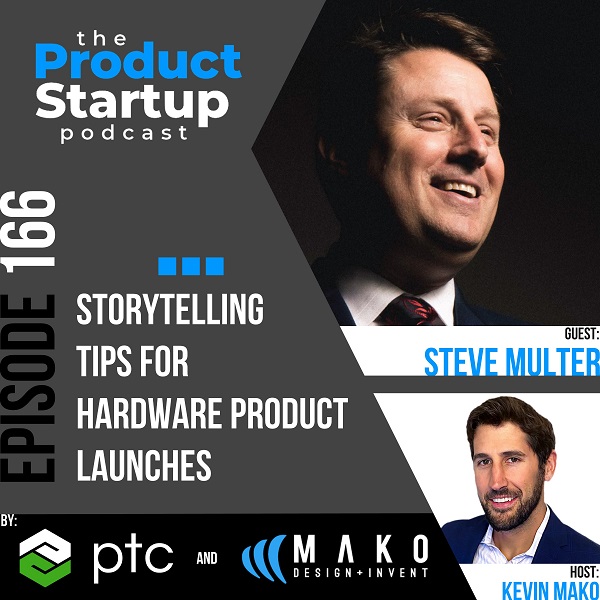
Guest: Steve Multer, corporate storyteller and author of Nothing Gets Sold Until The Story Gets Told, with experience across more than 20,000 presentations.
Host: Kevin Mako, founder of Product Startup and the leading expert in hardware startup consulting. A hardware entrepreneur since 1999, Kevin has advised more than 1,500 founders and built and scaled MAKO Invent through its acquisition by TriMech in 2024.
Episode Overview
Steve Multer explains how a product story becomes persuasive when it connects clear value with genuine passion and an audience that can see itself in the outcome. He covers audience awareness, brand messaging, founder advocacy, participation, launch communication, and maintaining engagement after the initial release.
What You’ll Learn in This Episode
- What is Corporate Storytelling?
- How to understand product metrics and corporate storytelling, as well as how to tailor brand messaging to investors and the public.
- The significance of audience awareness and how to meet their expectations through storytelling.
- The 3 essential pillars of a compelling story: Value, Passion, and Connection.
- How to use your product to create positive change in people’s lives.
- What is the importance of personal passion in advertising and branding?
- It is key to connect with your audience through these stories that resonate with them and invite participation.
- Effective advocacy for your hardware product can be achieved through authentic storytelling.
- Investors are always going to be interested in the human elements of a product.
- How to craft a cohesive narrative by combining your product and storytelling.
- How to achieve sales through storytelling techniques and the power of narrative.
- Core strategies for ensuring customer retention.
- How to grow your hardware product and brand for the long term.
- Building a community that will support your product venture will help you succeed.
- Passionate storytelling plays a critical role in securing buy-in from stakeholders, buyers and investors.
Episode transcript
This transcript is provided for accessibility and reference. Download the SRT transcript.
Read the full episode transcript
Kevin Mako: Hello, product innovators. Today we learn from a corporate storytelling author on best practices around crafting your product
Kevin Mako: and brand story to ensure a successful product launch and lasting growth.
Narrator: You're listening to the Product Startup Podcast, a show to learn from top leaders in product development, prototyping, manufacturing, product selling, and everything in between.
Narrator: Hosted by Kevin Mako, the leading expert on product development for physical product startups, sponsored
Narrator: by PTC's two best-in-class 3D CAD product development software solutions Onshape and Creo, and produced by Mako Design + Invent, the original firm.
Narrator: providing world-class consumer product development services tailored specifically to startups small manufacturers
Kevin Mako: and inventors welcome back everyone today i'm very excited to introduce Steve Multer to the show steve is the author of nothing gets sold until the story gets told which can be
Kevin Mako: found on amazon and all major book retailers he has done over 20 000 presentations and worked with major hardware brands
Kevin Mako: such as cisco panasonic semen's HP phillips xerox and over a hundred more all on crafting
Kevin Mako: product and brand messaging today steve is going to share some valuable knowledge in how inventive
Kevin Mako: vendors, startups, and small manufacturers can understand what corporate storytelling is,
Kevin Mako: what the main components of a well-crafted sales or brand story has, and best practices around
Kevin Mako: both launching a new hardware product, but also maintaining a brand connection for long-term customer loyalty. Now on to the episode.
Kevin Mako: Hey, Steve, welcome to the show. Kevin, thank you so much. Such a joy to be here with you and with your audience.
Kevin Mako: Truly appreciated. Well, I'm really excited it today to talk to you about storytelling, particularly around launching a new hardware product.
Kevin Mako: Corporate storytelling, as you term it, is a really important thing, not just for the launch of
Kevin Mako: a product, but for the ongoing success of the lifespan of the product and the product brand
Kevin Mako: itself. So what better person to talk about it than the person who has literally wrote the book on corporate stories telling.
Kevin Mako: First of all, congratulations on that big success. You launched that
Steve Multer: month ago, very successful book, and people can buy it every enough. Absolutely. Nothing gets sold until
Steve Multer: the story gets told, available in any format, pretty much everywhere that you want it. But it's just been a super exciting process. It's been a long time coming.
Steve Multer: People said to me for years, you got to write a book. And I said, oh, good. I think like 30 people will be interested in reading that book. And then I
Steve Multer: just sort of had to come to whatever I thought was going to be the most valuable, the most beneficial for people. And I think we stumbled on something good.
Kevin Mako: And it's just been really fun. Before we dive into the details on best practices around storytelling for a big product launch, especially for a hardware startup and
Kevin Mako: scaling from there, give us a bit of a history. You've been in this. space for over 25 years, thousands of keynotes all over the world. I think you said 37 countries, 38 states.
Steve Multer: That's impressive. Yeah, it's an awful lot of time in an airplane tube and living out of a suitcase. But yeah, it's loads of fun.
Steve Multer: Back when I started doing it, it was during the dot-com boom of the mid-1990s. And back then, of course, as most of us here have read about, everybody was an
Steve Multer: overnight gazillionaire and was being bought up left and right by large corporations, IBM,
Steve Multer: Disney Computer Associates, all of these companies who were just snatching up smaller brands left and right. And when I began, the learning curve was so steep because people
Steve Multer: like me who started speaking on behalf of corporations, we just ramped into it so rapidly. So every week was a different
Steve Multer: technology, a different capability, something new to onboard, a new group of people to meet. And you'll learn so much so quickly.
Steve Multer: And in the case of this particular podcast, an audience when you're talking hardware, man, the hardware engineering that I onboarded so quickly working
Steve Multer: for corporations like Cisco, like HP, like computer associates, Tiboli systems, all these
Steve Multer: different groups that I was working with, man, I learned in huge amount rapidly. And it stuck
Kevin Mako: with me for all these years. It's been a real gift. Oh, that's amazing. And corporate storytelling or telling the story about your product is a huge opportunity.
Kevin Mako: It's also a huge pitfall for hardware startups. I think everybody knows in one way or another, marketing or advertising is a form of
Kevin Mako: storytelling. But the core to storytelling is so important to make sure that that's done well. And so that
Kevin Mako: actually lasts the test of time, which is beyond just your initial launch. So before we get into both
Kevin Mako: launching a product and the ongoing community building and corporate storytelling after you launch a
Kevin Mako: product. First and foremost, just describe what is storytelling, particularly to
Steve Multer: a new hardware startup. Oh, it's a perfect place to start, Kevin. All right, so going back about 150 years now,
Steve Multer: little company called John Deere, which I'm sure everybody knows quite well, developing farming equipment. And John Deere came up with a concept back in the 1890s.
Steve Multer: This was after Deere himself had already passed away. But the company said, all right, we've been selling tractors. And we've been doing it for 50 years at this particular point.
Steve Multer: People have gotten bored with us as a company. We're old, we're stayed. We've got a lot of new startups out there who are developing new products. How can we
Steve Multer: maintain that connection to our audience or how can we even grow further from where we are right now? They came up with an idea called content marketing.
Steve Multer: They put out a publication called The Furrow in
Steve Multer: 1895. And it went to this idea that instead of selling a product, how do you tell a story that
Steve Multer: the buyer recognizes, feels a part of, and becomes invested in. And a hundred years later,
Steve Multer: we find ourselves in this realm of corporate storytelling, which is really the idea of combining
Steve Multer: the details of your product, your service, your solution, your capability, with personal
Steve Multer: experiences that your audience can relate to, that they can find value in personally and become passionate about.
Steve Multer: And if you can combine that corporate storytelling with the phenomenal capabilities of your engineering startup product, now you have something that is not only going to
Steve Multer: create incredible empowerment before your launch and through your launch, but also will stick with you post launch as you scale and as you grow out into the future so
Steve Multer: you never forget what it is that made your product or your company so special in the first place.
Kevin Mako: That's very powerful. I mean, so much can be amplified about your actual product and so many hardware startups focus on the actual features of the product, not on what the customer
Kevin Mako: actually wants. So I want to dive into these details a bit more. What are these different elements or the different structural pieces of creating a great story to
Steve Multer: be able to best sell your hardware product? All right, perfect. So it's such a good setup, Kevin. First of all, two things I'm
Steve Multer: going to mention, my mantra, and I always encourage everybody to make this their mantra as well, don't tell them what you want to tell them, tell them what they want to hear.
Steve Multer: That requires knowing your audience so well, knowing your buyer, knowing your marketplace. We frequently, get very egotistical. And it's not in a negative way.
Steve Multer: It's that we know our stuff. We are experts at what it is that we do. And we believe very, very deeply in what it is that we are trying to create within our startup.
Steve Multer: But that can create a barrier between what we are trying to accomplish and the market that we are attempting to sell to. We have to always remember the story that our
Steve Multer: audience wants to hear and tell them that story first and foremost and keep it at the forefront. So don't tell them what you want to tell them, tell them what they want to hear.
Steve Multer: Part of that is the platforms or what I call the pillars of a great corporate story. And those pillars, and we can go into detail on them as much as you'd like, are value, passion,
Steve Multer: and connection. Very quickly, value. Not what is the value of your product, but what value does your product create for the marketplace?
Steve Multer: As you are putting your engineering startup together, it's not just what problem are you trying to solve, but how do you change people's lives for the better with your product?
Steve Multer: And the better you can tell them that story, not the fine details of your product, the more you create value for their day-to-day lives that
Steve Multer: improves their status quo, the more success you're going to have at the moment of launch and then beyond. Number two, passion.
Steve Multer: We frequently lose passion for why we do what we do. Simon Sinek talks about this all the time. So as you are creating this startup, this could be a process that you
Steve Multer: are six years into, eight years into, 10 years into, you're still trying to find investors, still trying to get it off the ground, or get it to the level that you want.
Steve Multer: really easy to lose your passion during all that time. The more passionate we are about what we do,
Steve Multer: other people can feel that and they want to become passionate about it themselves. We bring them into our mindset.
Steve Multer: And as you're working through your startup, you always want to try to figure out ways to maintain that passion. And the number three, connection. How do we connect with people?
Steve Multer: We don't do it with numbers, KPIs, statistics, and data. We do it by telling them a story that they
Steve Multer: recognize and that they themselves feel a part of. Yuri Hassan of the Hassan Lab at Princeton University
Steve Multer: calls this brain coupling, the idea that we have shared experiences. So all of you as your engineering
Steve Multer: startups, as your leadership and as your C-suite of this new organization, you can establish a
Steve Multer: connection with your buying audience long before you ever talk with them, meet them, or they have any interest in your product.
Steve Multer: And you do it by establishing a recognizable story that they feel a part of and connect to. And there are phenomenal connection brands out there across the
Steve Multer: world, folks like Apple, Nike, McDonald's, who do this on a masterful level. And even if you're a
Steve Multer: small, very, very small engineering startup, and you're just creating your hardware product for
Kevin Mako: the first time, it doesn't matter if you have your budget or Apple's budget. Your storytelling can be equally powerful. Wow, that's some very powerful stuff.
Kevin Mako: And I love how you bring the concept of the CEO president head of the product, because it's a hardware startup, as an innovator, as the inventor of the product, that is you.
Kevin Mako: And so much of that, I mean, you mentioned here, passion and connection, value, these three very critical pillars to this. As the founder,
Kevin Mako: you have the ability with your own story to bring that to your audience, to your prospective
Kevin Mako: buyers. One of the biggest things that I advocate to any hardware startup, whether they're a
Kevin Mako: professional speaker or they've never once spoke in front of an audience or a crowd or a camera
Kevin Mako: in their life. It doesn't matter because that is an authentic self, passionate person who created the product and is getting it to market, you are the story.
Kevin Mako: And that's a huge edge that you have over the corporation as well. You have your own personal story that you can use to nail those three
Kevin Mako: massive pillars that Steve is talking about here.
Steve Multer: So what better person than you to be your own personal story advocate as long as it's structured the right way? Absolutely. I think, Kevin, that is such a vital point.
Steve Multer: So in a great 2014 publication called Frontiers in Human Neuroscience, they dealt with this concept of glossophobia. Glossophobia is simply,
Steve Multer: the Latin mashup term for fear of public speaking. Glossa meaning tongue, phobia meaning fear, fear of public speaking, right?
Steve Multer: The idea of glossophobia stems from a concept called FNE, fear of negative evaluation.
Steve Multer: So for those of us who are within a hardware startup or any kind of a startup organization, frequently we doubt the story that we have to tell because we're worried
Steve Multer: about negative evaluation. We're worried about judgment from others that they will hear our story and they'll deem it not worthy. And as you just said a moment ago, we are,
Steve Multer: the story. When you have your hardware startup and you are building something brand new, you are the story. When people invest, they're not investing in numbers.
Steve Multer: They're investing in you as a human being because we all process information in a hierarchy of three levels. The first level of processing,
Steve Multer: we're hit by 10,000 bits of stimuli that come in every day, every human being. So we have to make snap, knee-jerk decisions on the nature of value.
Steve Multer: And we, I always call it binning, right? We have our high value bin, our medium value bin, our low value bin, our low value bin, and our no value bin.
Steve Multer: 10,000 bits of stimuli hammering us, the smartest person in the room simply can't process that much data on an ongoing basis. We don't have the bandwidth, right?
Steve Multer: So it arrives and we throw it into the corresponding bin, and everybody wants to get the high value bin, but everything goes into the low value or no value bins.
Steve Multer: The high value bin for you as a startup with your hardware company, with your product, with your capability, the way you get into that bin is not going to be
Steve Multer: by numbers and metrics alone. Yes, I'm sure your product is fantastic and you want to prove value of
Steve Multer: the product. But the way you're going to get in the high value bin is by combining that product
Steve Multer: with the story, the passion story and the value story that goes behind it. And that is you,
Steve Multer: 100% you. So trust yourself to tell your own story. Trust yourself to share the human emotion and passion behind the story.
Kevin Mako: You will hook far more people. Investors early, buyers post launch. It's going to work for you. Wow. That's very powerful.
Kevin Mako: love how you break it into that chronological order, too, because one of the first things you might be doing is raising an investment round or getting early stakeholder buy-in.
Kevin Mako: Even if it's hiring somebody or even if it's working with an agency, you want to get the best agency to work with you that is going to be fair-priced and deliver great products.
Kevin Mako: You want them to be excited end-to-end, whether it's the sales rep that you're talking to or whether it's the designers or engineers that are working on your product.
Kevin Mako: They are a stakeholder and you want to get them to buy in at every level of a hardware in development. There is stakeholders.
Kevin Mako: And those stakeholders matter. And the better that you can essentially still both your story and, of course, the story of the product, the more engage those stakeholders will be.
Kevin Mako: And they will get more important as it comes along the pathway and more financially lucrative, especially as you get to the point of investors.
Kevin Mako: And then further down the path, you're actually trying to convince people who have never seen your product before and
Kevin Mako: know nothing about you that they should whip out their wallet and buy your thing.
Kevin Mako: And then, of course, beyond that, you want to enhance your brand and grow the business from there or whatever else or sell it or whatever your goal is.
Kevin Mako: there's going to be an even bigger stakeholder down the road that you're going to need to build that story around.
Steve Multer: All of this comes down to this foundational logic of building a great story and leveraging that story through the growth of your product's journey. Yes, that's absolutely right.
Steve Multer: Think about a good story for your startup from the passion perspective alone. Let's talk about those stakeholders, right? So any stakeholder, any investor,
Steve Multer: anybody who is in with you from the very beginning of your startup, they are looking for what? They're looking for bottom line. They want performance. They want ROI. This is where
Steve Multer: their focus is. If there is no story behind the product and its product alone, the only proof of success that you have is the dollar sign.
Steve Multer: It's the wallet. That's it. And if you don't perform, your stakeholders are not going to be happy. They're not going to be where they feel that they ought to be.
Steve Multer: However, when you add passion story and they begin to feel passionate about your product,
Steve Multer: about your hardware startup, about your engineering capability, what it is you are trying to achieve, it's not that the bottom line goes away.
Steve Multer: It's that there's now another level of investment on their part. So if it takes longer to reach the dollar signs that they are hoping for and looking
Steve Multer: for, that passion of the story, the why behind why you do what you do, that will sustain people as well.
Kevin Mako: That will make the one to invest even more deeply. And it will also give you more of a ramp to success to be able to create what it is that you are hoping to create.
Kevin Mako: Yeah, that leniency is so important, especially in hardware development. There are going to be hurdles. You're developing a new innovative product.
Kevin Mako: So inevitably, there's going to be market hurdles, design hurdles, production hurdles, intellectual property hurdles, whatever it might be, there are going to be those things.
Kevin Mako: So if you can provide yourself with a bit of rope, a little extra string attached, then just a dollar sign, allow for a bit of lenience to be able to design well
Kevin Mako: and really build a great product. This storytelling gives you that ability to essentially stretch out the dollar further, right? And stretch out your time.
Kevin Mako: And that time, those dollars are very important in a hardware startup especially. I mean, really in any organization, but a hardware startup is there with
Steve Multer: the new innovation that is really trying a number of things for the very first time, you want to build in that leniency. Yes, that's absolutely right.
Steve Multer: And you also want to build in that foundational, right? You had a great, great, great conversation earlier this month with Will Ford of LaunchBoom that I really loved.
Steve Multer: I really attached to it because he was talking about the pre-launch strategies and how you want to build a community first. Start with community, right? And he told
Steve Multer: you specifically about one story that I thought was great, where Backer Reservations, because of a really good
Steve Multer: community went up 30 times in their likelihood to commit once the launch took place. Why was a good story.
Steve Multer: It was that way of creating that foundational connection to the reason for the brand, the reason for the hardware capability first before going to market that
Steve Multer: established not only that community to begin with before that company that he was talking about when to launch, but then
Steve Multer: also helped to sustain them through the launch process and into the initial scaling in year one, year two, that first outreach, why?
Steve Multer: Why? Because people connected to the story of the company and
Kevin Mako: the story of the product. It really will make all the difference in the world to anybody putting together an engineering startup. Steve, that's amazing stuff.
Kevin Mako: First of all, thanks for listening to the episodes of the podcast. I appreciate that. And yes, that was a fantastic segment and really highlights the power of community, of course,
Kevin Mako: which is built via that corporate storytelling. That's how you get a new member into the community. It's really selling not just the product, but the reason behind the product.
Kevin Mako: A lot of the time, actually, what's hooking somebody in isn't necessarily the initial
Steve Multer: feature set of the product, but it's believing in that person or the product brand.
Steve Multer: And usually for somebody to believe in the product brand, it's because they believe in the person that's behind the brand. Let me give you one more example.
Steve Multer: And I know we're tight on time here, but I want to leave everybody with one more example. Think of this long term as well. Your post-launch, everything's been hugely successful.
Steve Multer: It's gone beautifully. You've ramped up. You've scaled really well. You've onboarded a number of clients. And now you'll find yourself a decade down the line.
Steve Multer: What is going to sustain you? What is going to sustain you? What is is going to maintain your internal corporate story, the beating heart of why you started this
Steve Multer: in the first place. And a great example of that is the partnership that's been long term now between Cisco and NetApp on the FlexPod series. So we're talking hardware anyway.
Steve Multer: FlexPod is a now 13, maybe 14 year old product. As we all know in the hardware world, that doesn't happen. It doesn't last 14 years.
Steve Multer: That's antique. Yet, the demand continues high. And every time they've tried to end
Steve Multer: the FlexPod product, the community, the buying community and the engineering community has come out and said, stop. No, no, no, don't end it. We love it. Why?
Steve Multer: Because they have continued to uplevel the corporate story behind the FlexBob product and the partnership that built it in the first
Steve Multer: place. And by maintaining the story, they have maintained the hardware. Yes, they have made it better. They have continued to improve and improve on a technical level.
Steve Multer: But the story has always
Kevin Mako: been such a passion story for both NetApp and Cisco that it's created success within the market. So the right story is going to follow you for decades.
Kevin Mako: Steve, that's a basic story. Yes, it's very rare in the product space where a product has such a legacy lifestyle. It's amazing that so much of
Kevin Mako: the reason behind that was the community focus around not only a great product to begin with, but a great product community, which supports that product brand for many, many years.
Kevin Mako: Exactly, Kevin. Yep, right on target. I think a lot of inventors as well, whatever you're working on,
Kevin Mako: whether you plan to only sell it for a few years or for a lifetime, really you want that legacy tied back to your name.
Kevin Mako: I mean, it's something that you can pass on to your children and grandchildren, at least in story, no pun intended, but ideally in, of course, profits and the impact that you had
Steve Multer: on the world, right? That you've literally potentially changed the life of thousands or hundreds of thousands of people with your innovation. It goes to our ethos, right?
Steve Multer: It's our value system and our belief system. What do we believe in? What do we really care for? What brings value to our world as well as the world of others?
Steve Multer: And if you've got the right startup, it's because it's built on your
Kevin Mako: personal ethos, you're wanting to make this happen for all of the reasons that are important to you. If you never forget that, you have started to craft your own corporate story.
Kevin Mako: Steve, before I let you go, I want to talk about your book. Nothing gets sold until the story gets
Kevin Mako: told. Obviously, we've talked about some of these things here in the show, but there's a lot more
Kevin Mako: that goes into telling a compelling story, not just for the initial stakeholders that we're talking
Steve Multer: about, not just in launch, but even continuing on until growing those legacy communities to really help accelerate a brand, especially a scaling hardware brand.
Steve Multer: Talk a bit about the book and where people can find a copy. Well, I so appreciate that. So because this came about pretty quickly, I haven't gotten
Steve Multer: my copy of the book over to Kevin yet, but Kevin, it's on its way to you very, very shortly.
Steve Multer: Thank you. Available in all formats and every one of the retailers, as I said earlier on today, the beauty of the book is that a good chunk of it is simply about preparation.
Steve Multer: How do you get your head in the right space to be able to tell the right story about your product to create success for you right out of the gate.
Steve Multer: It's so much easier if you have that foundational information in place rather than trying to chase it post-launch or post-raising revenues
Steve Multer: to be able to build out your startup. So a huge amount of it is about preparation. And then a lot of it is very hardcore examples
Steve Multer: about what to change within your corporate storytelling around how you discuss your product with anybody who you happen to be speaking with.
Steve Multer: One potential investor across the table or a
Steve Multer: nameless faceless sea of potential buyers for your engineering startup product. The book is going to kind of walk you all through it with very concrete examples.
Steve Multer: And you'll start to read the reviews if you go and you check out the book. And you'll see that this is very applicable. Everything here is
Steve Multer: proactive. It doesn't expect you to do all the work yourself. The book is going to help you do a lot of the work along the way and make it as easy as possible.
Steve Multer: And one more thing that I'll mention is I've got a freebie for anybody who is interested in doing it. If you go to the website for the book, which is corporate storytelling.com.
Steve Multer: Just add slash guide at the end. So corporate storytelling.com slash guide. And I've built out a great PDF. It's a free e-guide.
Steve Multer: It's called Five Paths to Passionate Storytelling. It's five things that anybody listening to watching the program right now can do
Steve Multer: today, regardless of your education level, regardless of your socioeconomic status, location,
Steve Multer: type of product that you are working on or trying to build where you are within your process. you add any one of these five things to your storytelling today.
Steve Multer: Very, very easy to do. You're instantly going to be telling a better story tomorrow.
Kevin Mako: And there are five ways you can do it. So again, corporate storytelling.com slash guide. And then you'll use the code sold, told 23. And you can download that guide right now.
Kevin Mako: Much appreciated for that free guide in addition to the space where anyone can go
Steve Multer: and buy a copy of the book. Much appreciated for all your words of wisdom today on how to tell a better
Kevin Mako: story to simply sell more product, let alone all the other benefits that come along with it. So thanks again.
Kevin Mako: It's such a pleasure. Thanks so much to you and to all of your audience. Thanks. We'll talk again
Narrator: soon. Thanks for tuning in to this episode of the Product Startup Podcast. If you found some value in the show, please do us a huge favor and leave us a quick five-star review.
Narrator: If you have any questions, guest suggestions, or anything else, feel free to reach out to us anytime at our email, podcast at MakoDesign.com. That's podcast at MakoDesign.com.
Narrator: This show is hosted by Kevin Mako. North America's leading expert on product development for physical product startups.
Narrator: Huge thanks to our sponsors, PTC, and their two best-in-class 3D CAD product development software solutions Onshape and Creo and Mako Design + Invent.
Narrator: The original firm providing world-class consumer product development services tailored specifically to startups, small manufacturers, and inventors.
Narrator: Thanks for joining and see you next time.
Product Storytelling Strategy for Founders
Tell the Story That Makes the Product Matter
Work directly with Kevin Mako to sharpen the customer problem, value proposition, founder conviction, proof, product demonstration, and emotional connection inside your launch story.
Kevin can help you adapt the message for crowdfunding, video, website, retail, investor, media, and sales conversations so every audience hears a clear reason to care.
Request a Product Story Strategy Call
Tell Kevin what the product changes for customers and where your current launch story is losing attention.